
Workmanship · San Antonio, Texas
Bad Roof Jobs: How to Spot Poor Roofing Work on a San Antonio Home
A new roof or repair should look neat and keep water out. If something about yours looks off, this guide helps you sort real workmanship problems from normal variation, shows what you can check from the ground and the attic, and explains exactly what to do next.
The short answer
Bad roof jobs come from workmanship that ignores the shingle manufacturer’s installation instructions and local building code. On an asphalt shingle roof, the warning signs include wavy or crooked shingle lines, lifted tabs, buckling, nail heads showing on the surface, broken or scuffed shingles, heavy smears of roof cement where metal flashing belongs, a missing metal edge at the eaves, and nails and debris left behind. Slight color shading is normal and is not a defect. If you spot real problems, photograph them from the ground, gather your paperwork, contact the contractor in writing, hold the final payment until the work is finished, and get an independent inspection.
What makes bad roof jobs different from normal variation?
A bad roof job is one where the installer did not follow the shingle manufacturer’s instructions or the local code.
The Asphalt Roofing Manufacturers Association (ARMA) says proper nailing is essential to good shingle performance, and that installers must follow the shingle manufacturer’s instructions and the applicable codes. [1] The Texas Department of Insurance (TDI) is just as direct: the roofer must install asphalt shingles in strict accordance with the manufacturer’s installation instructions printed on the shingle wrapper. [3]
ARMA also points out that roofing is not an exact science. Installation quality depends on the craftsmanship of the crew, and quality is judged with criteria that allow reasonable field variances. [2] So a shingle line that drifts slightly over a long run is not automatically poor work; a pattern of problems that affect how the roof sheds water and holds up in wind is. Our guide on why quality roofing matters explains how workmanship shows up over the life of a roof.
Signs of bad roof jobs you can see from the ground
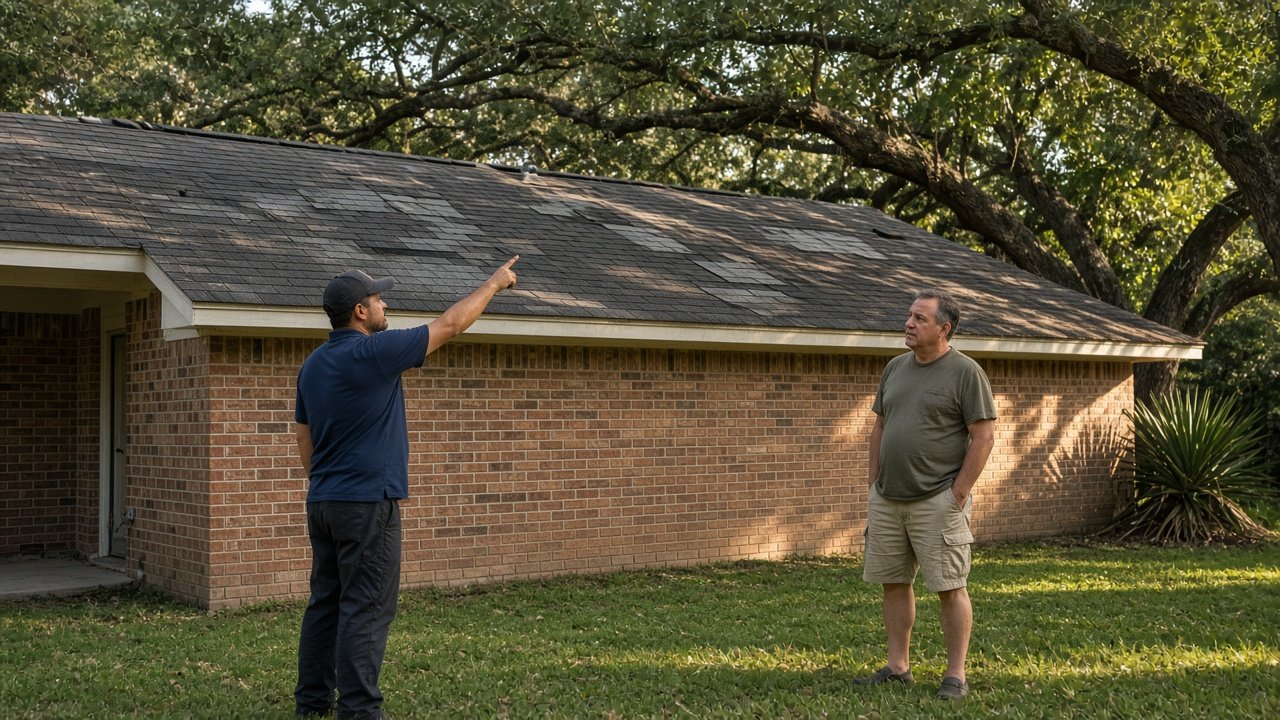
Most workmanship problems on a shingle roof are visible from the yard. Stay off the roof and use binoculars or your phone’s zoom.
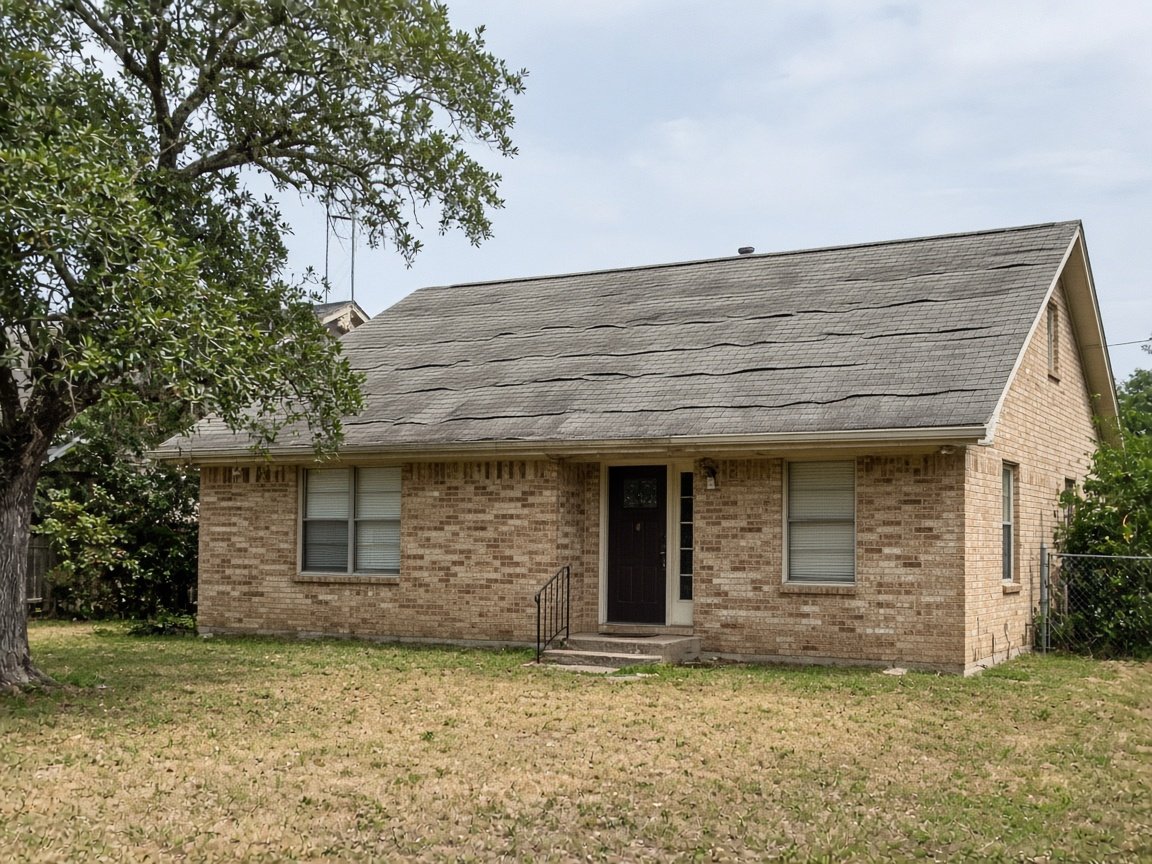
- Wavy or crooked shingle lines. Rows that bow, step, or run at an angle to the eaves rather than following them.
- Raised or lifted tabs. Shingle edges that stick up instead of lying flat and sealed.
- Buckling. Ripples or humps running across the shingles.
- Nail heads showing on the surface. ARMA says nails should never be placed where they will be visible, and improperly located or driven nails can lead to sealing failures, blow-offs, raised tabs, and buckling. [1]
- Broken, torn, or scuffed shingles. ARMA’s final inspection checklist calls for finding broken, torn, or damaged shingles, because damaged shingles cause leaks, and for checking for scuff marks. [2]
- Heavy smears of roof cement. In RRSATX’s experience, thick black patches around chimneys, walls, and pipes often mean cement was used in place of proper flashing.
- Missing or uneven metal edge at the eaves and rakes. ARMA says drip edge sheds water at the rakes and eaves and protects the wood beneath from rotting, is strongly recommended, and may be required by local codes. [2]
- Nails, cut-offs, and debris left behind. ARMA’s final cleanup step removes loose shingles, cuttings, nails, and debris and cleans the site. [2] Scraps on the roof or nails in the yard suggest the crew skipped that step.
Lifted or cupped edges can also come from age and heat. Our guide to curling shingles in San Antonio explains the difference.
Nailing problems in plain English
Nails hold the roof together, and poor nailing is behind many of the problems you can see. ARMA notes that building codes require roofing nails for asphalt shingles, and TDI adds that the code does not permit staples. [1][3]
ARMA says a poorly adjusted nail gun can lead to sealing failures, raised tabs, distortions, and blow-offs, and that nail heads should bear tightly against the shingle. [1]
| Problem | What you may notice | Why it matters |
|---|---|---|
| Underdriven nails | Tabs that won’t lie flat, or bumps under the shingle | The nail head doesn’t sit tight against the shingle, so the shingle above may not seal. [1] |
| Overdriven nails | Cracked or cut shingles around a nail, sometimes torn after wind | ARMA says nails must not break or cut through the shingle. [1] |
| Crooked nails | Raised edges or a nail head tilted to the side | ARMA says nails must not be driven crookedly; improperly driven nails can lead to sealing failures and raised tabs. [1] |
| Nails too high or exposed | Shiny nail heads on the surface or shingles that lift in wind | Improperly located nails can lead to sealing failures, blow-offs, raised tabs, and buckling. [1] |
| Nails in knot holes or deck cracks | Usually not visible from outside; may show as loose or lifted shingles | ARMA says not to drive nails into knot holes, cracks, or spaces in the deck. [1] |
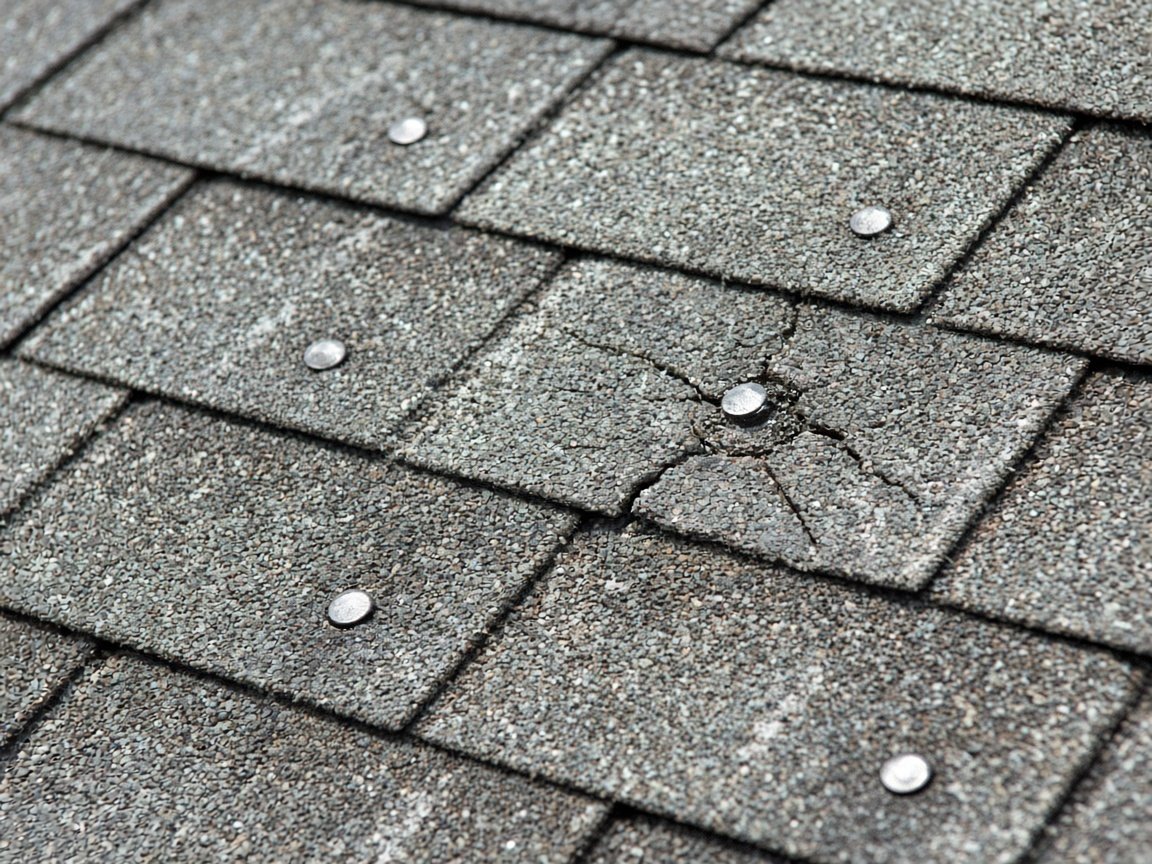
The fix is immediate repair. ARMA says underdriven nails should be tapped down; overdriven or crooked nails should be removed, the hole sealed with asphalt roof cement, and another nail placed nearby, or the shingle replaced. [1]
Check the roof edges and the decking
The edges and the wood beneath the shingles are where shortcuts hide. ARMA lists overhangs and shingle distortion among the items to examine at final inspection. [2]
Walk around the house and look along the eaves and rakes for a clean, continuous metal edge. Ragged shingle ends over bare or water-stained wood suggest the edge metal was skipped or installed poorly.
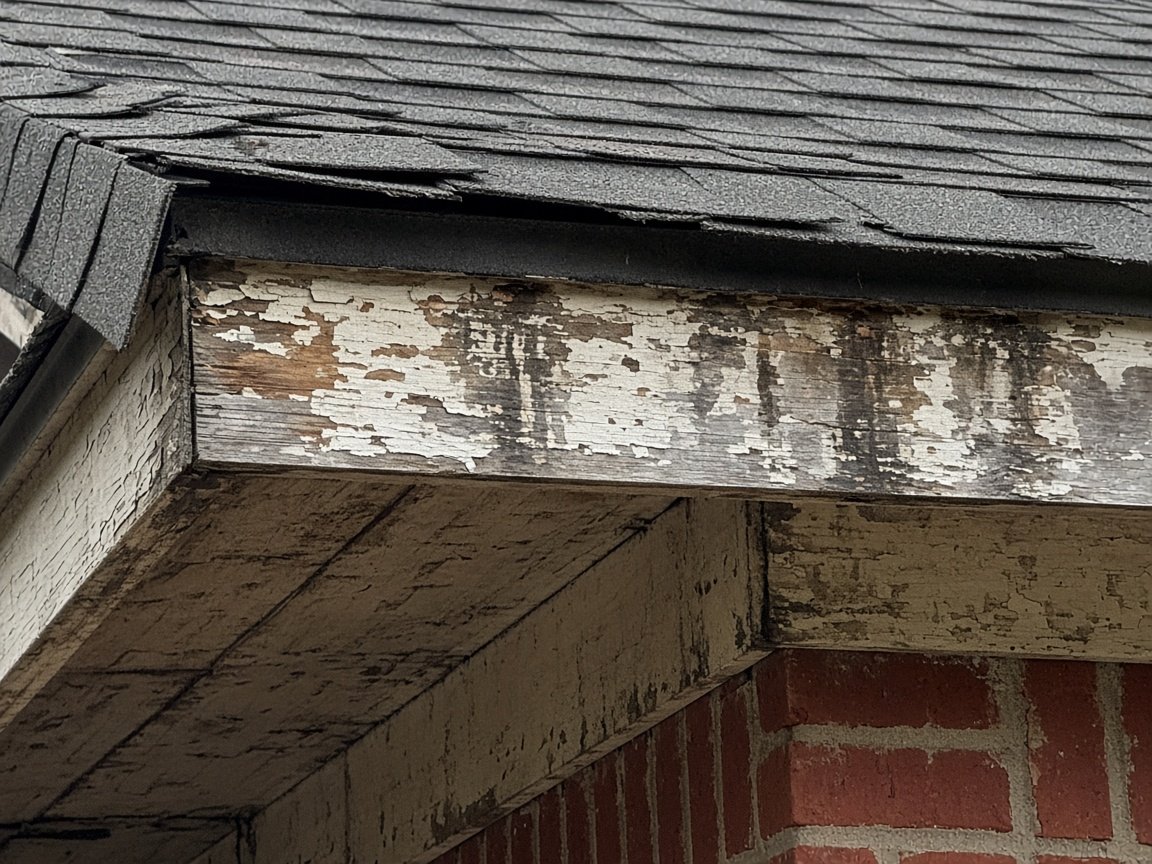
Decking matters just as much. TDI recommends having the roof deck inspected and replacing deteriorated or damaged decking before the new roof covering goes on. [3] If you notice soft spots, dips, or sagging areas after a replacement, treat that as a red flag. It can mean damaged wood was covered over instead of replaced.
If you can safely reach your attic, take a flashlight and look at the underside of the roof deck. RRSATX suggests watching for water stains, damp or darkened wood, and spots of daylight where there shouldn’t be any. Stay on the framing. Our guide to how roof decking impacts longevity explains why the deck matters.
Flashing and roof cement shortcuts
Flashing seals the joints where the roof meets chimneys, walls, and valleys, and it is a common place for bad roof jobs to cut corners. ARMA lists chimney flashings, sidewall flashings, valley construction, and hip and ridge shingles among the items to examine at final inspection. [2]
Well-installed flashing usually looks like neat metal pieces worked in with the shingles. What RRSATX often sees on poor work is a thick, messy smear of black roof cement around a chimney or along a wall instead. Cement has its place, and ARMA says areas where asphalt cement was used should be checked for proper adhesion and no bubbles. [2] But a heavy coat of cement standing in for metal flashing is a shortcut that tends to crack and leak.
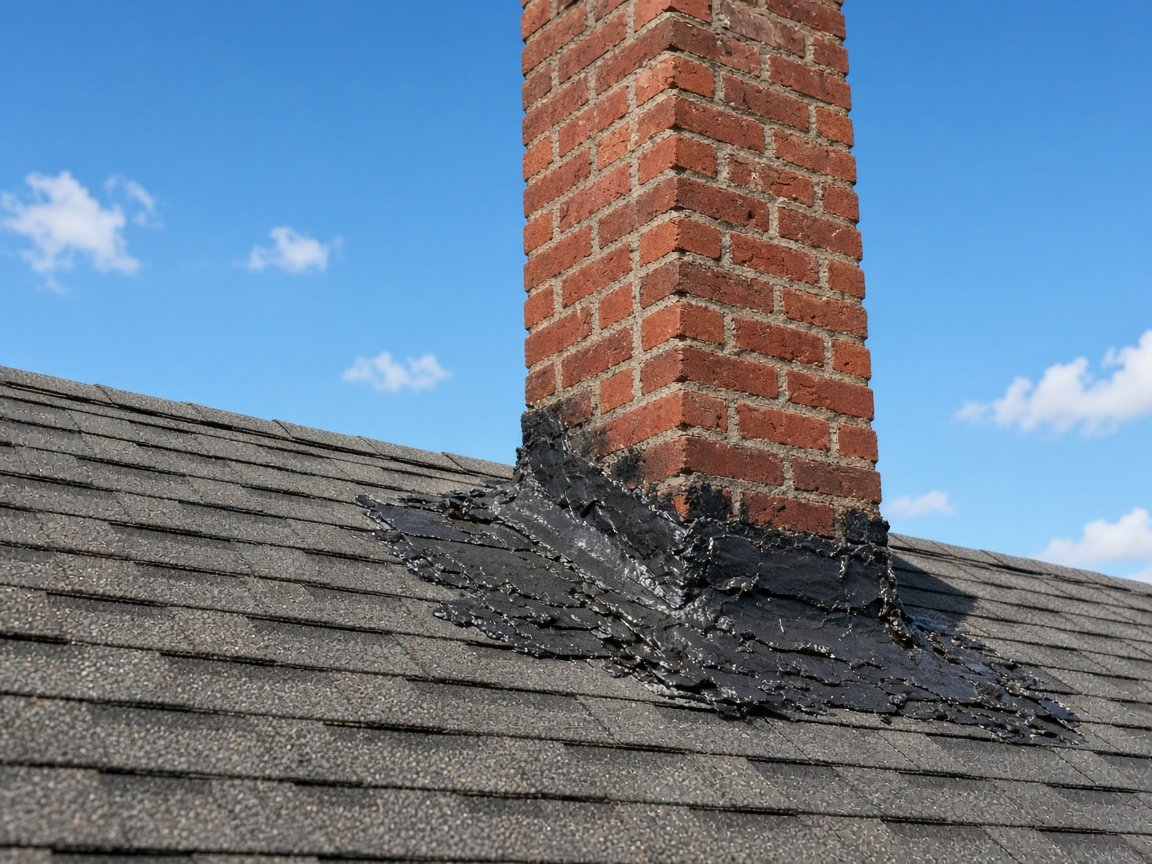
For more detail, see our chimney flashing repair guide and our guide to roof flashing repair.
What is not a bad roof job
Some things that worry homeowners after a new roof are normal.
Normal on a new shingle roof
Color shading. ARMA explains that areas of a new roof can look lighter or darker depending on the light and your viewing angle. This is a visual effect from slight variation in the shingle texture, slight shading is normal, and it does not affect performance. [2]
Backing material and storage staining. Backing material that rubs off onto the shingle surface and light staining from storage usually weather off naturally, according to ARMA. [2]
Concern is warranted when you see the signs above in a pattern, or when you find a leak.
Spotted signs of bad roof jobs? What to do next
Document everything and give the contractor a fair chance to fix it, in writing.
- Take dated photos from the ground. Do not climb on the roof. Photograph shingle lines, edges, flashing, debris, and any ceiling stains.
- Find your paperwork. Pull out your contract, invoice, and warranty papers. TDI recommends keeping copies of all agreements and warranty terms. [4][3] Our guides to understanding your roof’s warranty and warranties for new roofs explain what a workmanship warranty usually covers.
- Contact the contractor in writing. Describe each problem, attach photos, ask for a callback inspection, and keep copies.
- Hold the final payment until the work is finished. TDI advises not making final payments until the contractor finishes all work. [3]
- Get an independent inspection. Another roofer can tell you which issues are real defects and which are normal. RRSATX offers a roof inspection with written findings and photos. Our guide to roof inspection after installation covers what a post-install check looks at.
- If the contractor won’t respond, file a consumer complaint. The Office of the Texas Attorney General accepts consumer complaints. Include the business name and address, a detailed description, and the steps you’ve taken to resolve it, including your communications; you can upload supporting documents. The office cannot give legal advice, complaints are open to the public under Texas law, and they are reviewed to help the Attorney General monitor consumer protection issues. [5]
If the work was part of a storm insurance claim, RRSATX suggests telling your insurance adjuster too.
Repair or replace after a bad roofing job?
How widespread the problems are usually decides the fix.
In RRSATX’s experience, isolated defects, such as a few raised tabs, a flashing detail, or some exposed nails, are usually handled with targeted repairs through our roof repair service in San Antonio. If water is already getting in, our roof leak repair team traces the source first.
Widespread nailing problems, the wrong underlayment, or decking work that was skipped can mean re-roofing sections or the whole roof, because those problems sit under every shingle. RRSATX handles that through its roof replacement service, and our asphalt roofing page explains how we approach shingle roofs. Any recommendation depends on an inspection of your roof.
How to avoid bad roof jobs next time
The best protection is choosing the contractor carefully and getting everything in writing. TDI recommends verifying a contractor’s name, address, phone number, and references, and confirming the contractor has insurance or a bond. [3]
TDI also says to beware of contractors who only accept cash, want money before materials are on site, are not established, have no insurance or bond, or offer “specials” or “extra-cheap work.” [3] Make sure the contract lists the materials the contractor will use, keep an eye out for defective or low-quality materials while work progresses, and read every document before signing. [4]
- Use our guide on how to vet a roofing contractor online
- Check your paperwork against what a roofing contract should include
- Learn the warning signs in roof repair scams and how to protect your home
- Review common roof replacement mistakes before you sign
Local roofing service
About Affordable Roofing Contractors San Antonio
Affordable Roofing Contractors San Antonio, also known as RRSATX, provides roof inspections, roof repair, roof leak repair, roof replacement, and asphalt shingle roofing in San Antonio. When you call about recent roof work, tell us what you’ve noticed and when the work was done. Photos taken from the ground help.
- Phone
- (713) 504-2341
- sales@affordableroofingcontractorssanantonio.com
- Address
- 4324 Monterey St, San Antonio, TX 78237
- Contact
- Request a free roof inspection
Bad roof jobs in San Antonio: questions answered
How can I tell if my new roof was installed badly?
Look from the ground for wavy shingle lines, lifted tabs, buckling, visible nail heads, broken shingles, heavy roof cement where flashing belongs, and a missing metal edge at the eaves. If several show up together, get an independent inspection.
Why does my new roof look lighter in some areas?
That is usually color shading. ARMA says it is a visual effect from slight texture variation that changes with light and viewing angle, and it does not affect performance. [2]
Are exposed nails on a shingle roof a problem?
Yes, unless the installation instructions specifically call for exposed fasteners. [2] ARMA says nails should never be placed where they will be visible, and incorrect nails should be repaired right away. [1]
Can a roofer use staples on asphalt shingles?
No. TDI says the code does not permit staples for asphalt shingles. [3]
Should I pay the final bill if I think the work is bad?
TDI advises not making final payments until the contractor finishes all work. [3] Put your concerns in writing and check your contract’s terms. For a payment dispute, talk with a Texas attorney.
Can the Texas Attorney General fix my roofing dispute?
The office accepts consumer complaints and reviews them to monitor consumer protection issues, but it cannot give legal advice. [5] Don’t count on a complaint alone to resolve your individual dispute.
Explore the roofing topic
More help after roof work
Not sure your roof was done right?
Ask RRSATX for a free roof inspection and written findings for your San Antonio home.