
[et_pb_section fb_built=”1″ admin_label=”section” _builder_version=”4.16″ global_colors_info=”{}”][et_pb_row admin_label=”row” _builder_version=”4.16″ background_size=”initial” background_position=”top_left” background_repeat=”repeat” global_colors_info=”{}”][et_pb_column type=”4_4″ _builder_version=”4.16″ custom_padding=”|||” global_colors_info=”{}” custom_padding__hover=”|||”][et_pb_code _builder_version=”4.27.7″ _module_preset=”default” hover_enabled=”0″ sticky_enabled=”0″]
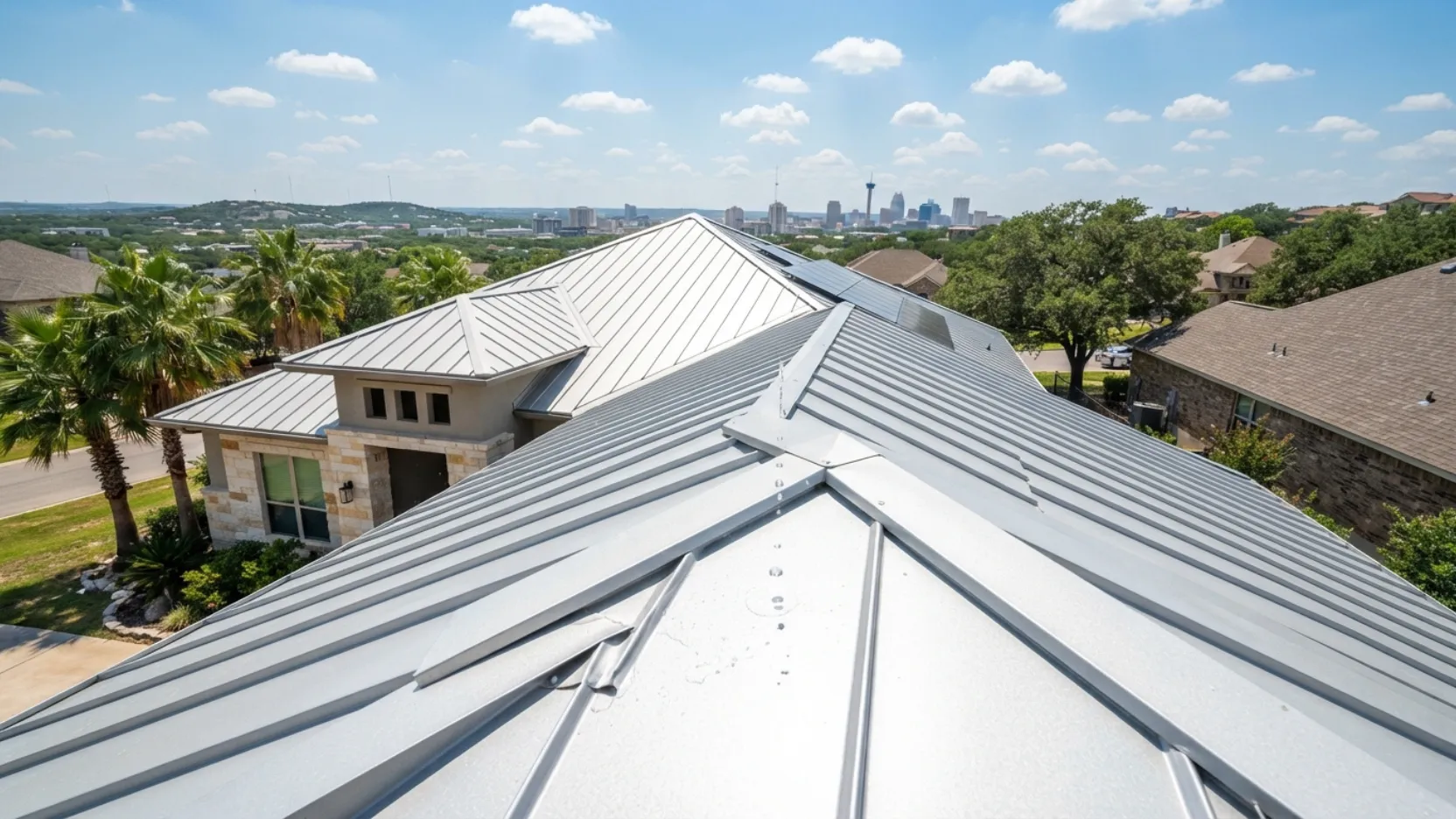
San Antonio throws everything at a roof: brutal summer heat, golf ball hail, tropical-system winds, and flash flooding that overwhelms gutters in minutes. This guide explains exactly how metal roofing holds up against each weather threat in Bexar County and why it outperforms asphalt shingles across every category that matters in Texas.
San Antonio homeowners face a roofing challenge that very few cities in the United States can match. The climate shifts from triple-digit heat waves in July to hailstorms large enough to total cars in April, with periodic flooding, high winds, and UV exposure intense enough to degrade standard asphalt shingles in 12 to 15 years instead of the 20 to 25 they are rated for under more forgiving conditions. What works on a roof in Denver or Charlotte simply does not translate to South Texas.
Metal roofing was designed for exactly these conditions. Not because metal is a new material, but because the properties that make metal challenging to work with in other contexts its high thermal conductivity, its rigidity, its surface hardness turn out to be exactly what the San Antonio climate demands from a roofing system. This guide walks through each major weather threat San Antonio roofs face and explains, without marketing language, how metal roofing holds up against each one.
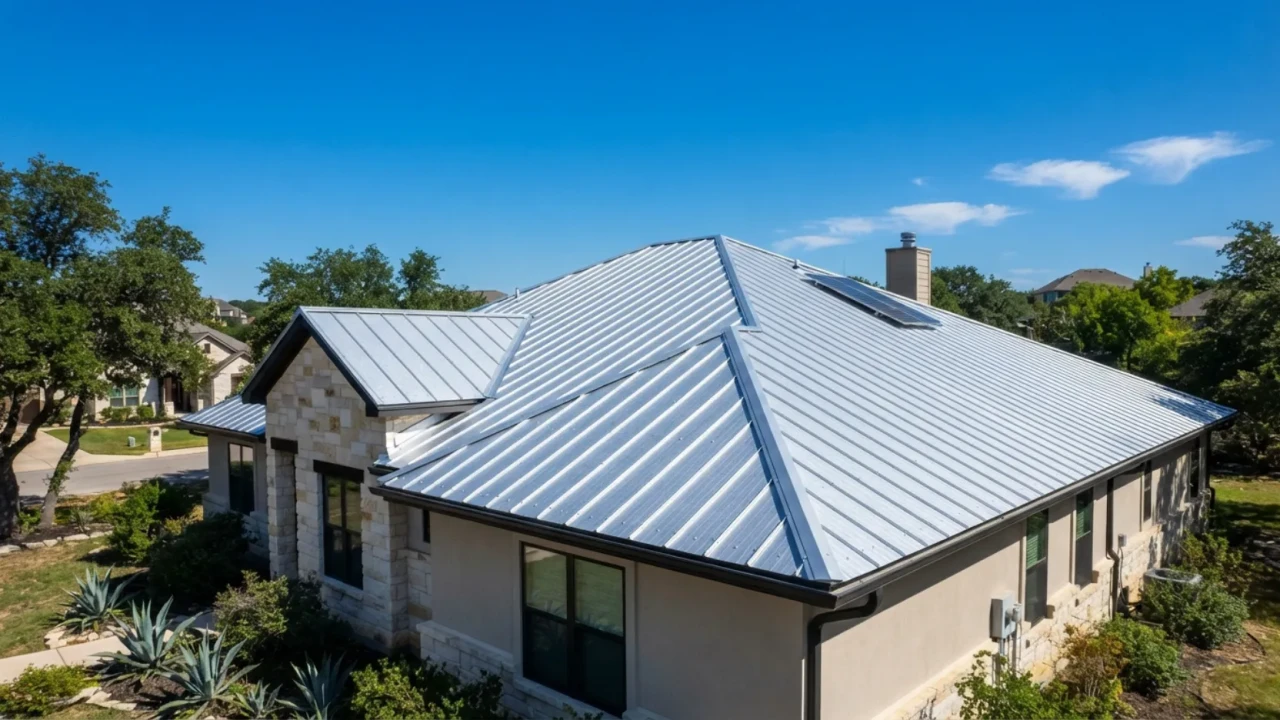
In most of the country, roofing decisions are primarily about cost and aesthetics. In San Antonio, weather performance has to come first. A roof that looks great but fails after one major hail event, loses shingles in a thunderstorm wind gust, or bakes the attic to 180 degrees Fahrenheit in July is a roof that costs you far more over its lifetime than its original price. Metal roofing’s long-term value case in San Antonio is built on exactly this point: the weather conditions here are severe enough that the durability gap between metal and asphalt becomes a financial difference, not just a performance one.
Summer Heat
San Antonio averages more than 100 days per year with temperatures above 90 degrees Fahrenheit. On a clear July afternoon, the surface of a dark asphalt shingle roof can reach 185 to 195 degrees Fahrenheit, and that heat radiates into the attic below for hours after the sun goes down. Metal panels, particularly those with reflective PVDF coatings, handle solar heat in a fundamentally different way.
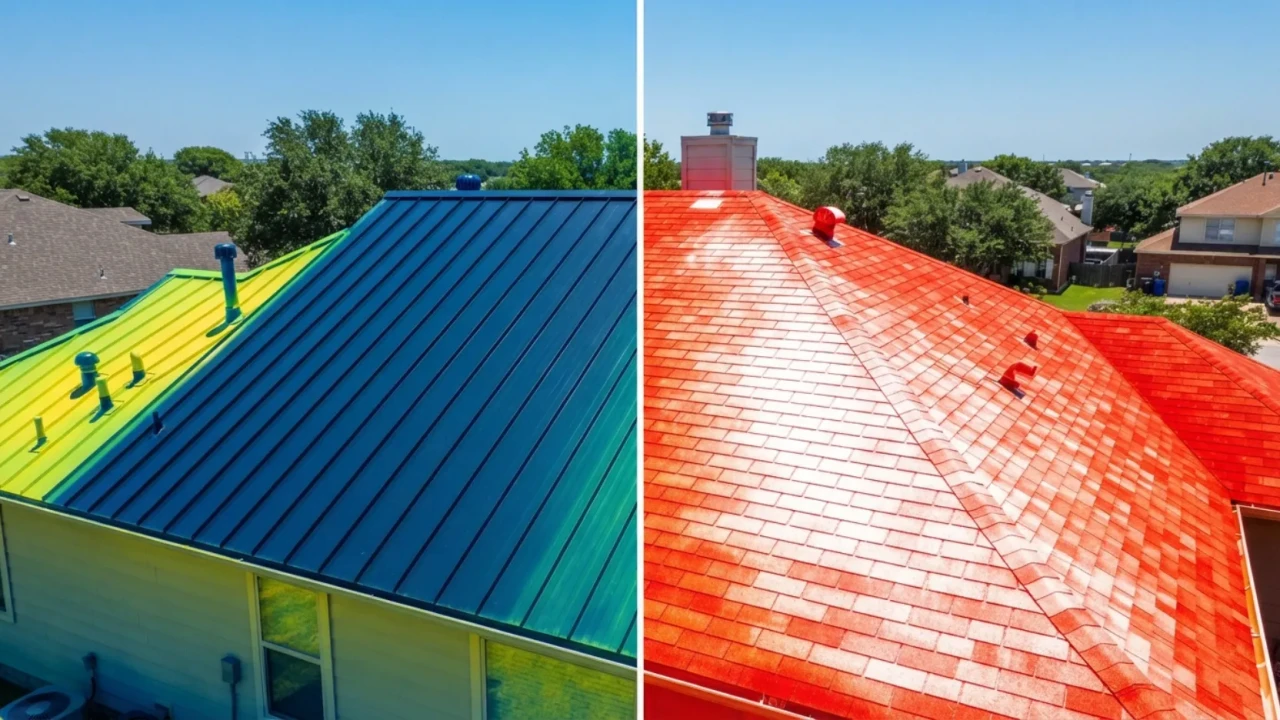
Thermal emittance is where metal roofing earns its energy efficiency reputation. Metal panels release absorbed heat quickly once direct sunlight stops hitting them. Asphalt shingles store heat in their granule layer and continue radiating it into the attic through the evening. This means the attic temperature difference between a metal and asphalt roof is largest during the cooling hours of late afternoon and evening, exactly when your air conditioning is working hardest.
Cool-pigment coatings on modern metal panels reflect near-infrared solar radiation even in darker colors. A white or light-colored metal panel with a PVDF finish can reflect 60 to 75 percent of solar energy. A standard dark asphalt shingle reflects only 5 to 15 percent. That difference translates directly to attic temperature and cooling load.
- PVDF cool-pigment coating confirmed for the specific panel and color being installed
- Solar reflectance value of at least 0.25 or higher for the panel ask for the manufacturer data sheet
- Attic ventilation system sized correctly to work with the reduced heat load the metal roof delivers
- Radiant barrier considered as an add-on for maximum attic temperature control
- Insulation at R-38 or better to capture the full energy benefit of the reflective roof above
Hail Resistance
Hail is the single most destructive weather event for roofs in the San Antonio area. The city sits squarely in a stretch of Central and South Texas that sees large, damaging hail multiple times each year. Insurance claim data consistently shows that roof hail damage is the leading driver of residential property claims in Bexar County, and asphalt shingle roofs bear the overwhelming share of that damage.
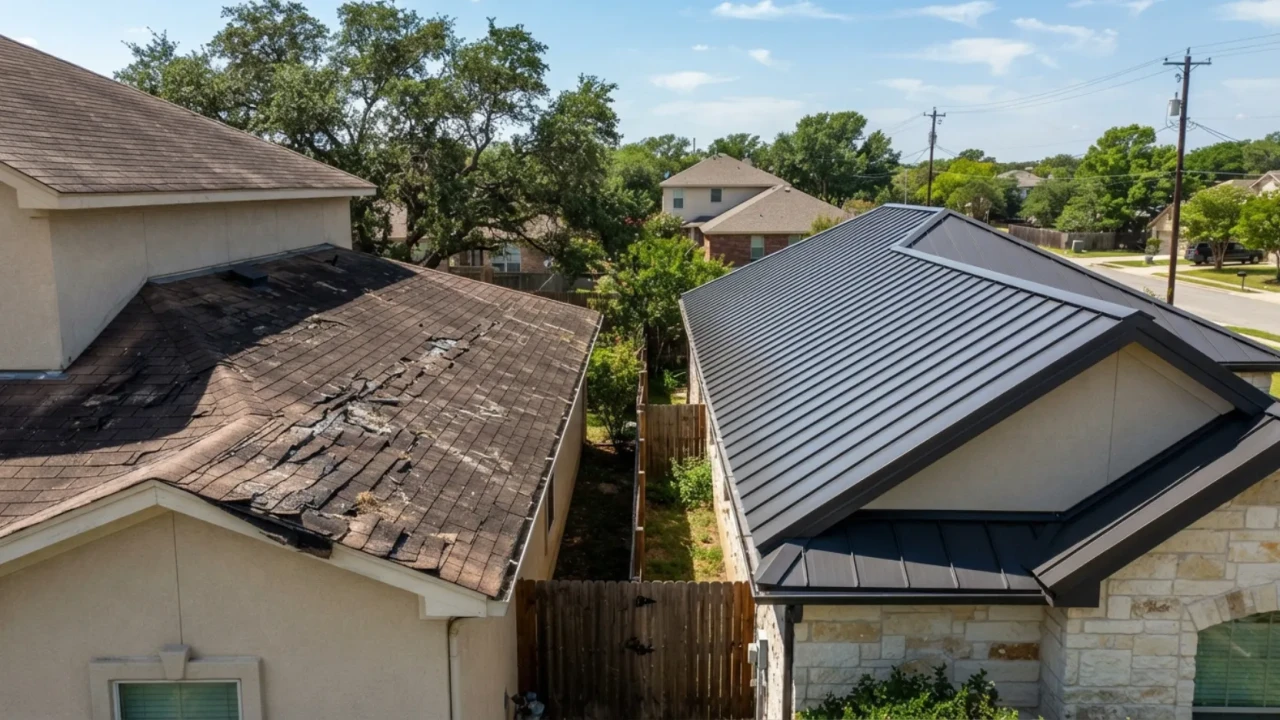
The reason metal roofing handles hail so much better comes down to material science. Asphalt shingles consist of a fiberglass or organic mat coated in asphalt and topped with a layer of protective granules. Hail impact knocks granules off, exposing the asphalt layer to UV degradation. A roof that looks intact after a storm may have lost years of its remaining service life at the granule level. Metal panels have no granule layer to lose. A hail impact that would functionally destroy an asphalt shingle may leave a small dent in a metal panel but leaves the waterproof integrity of that panel completely intact.
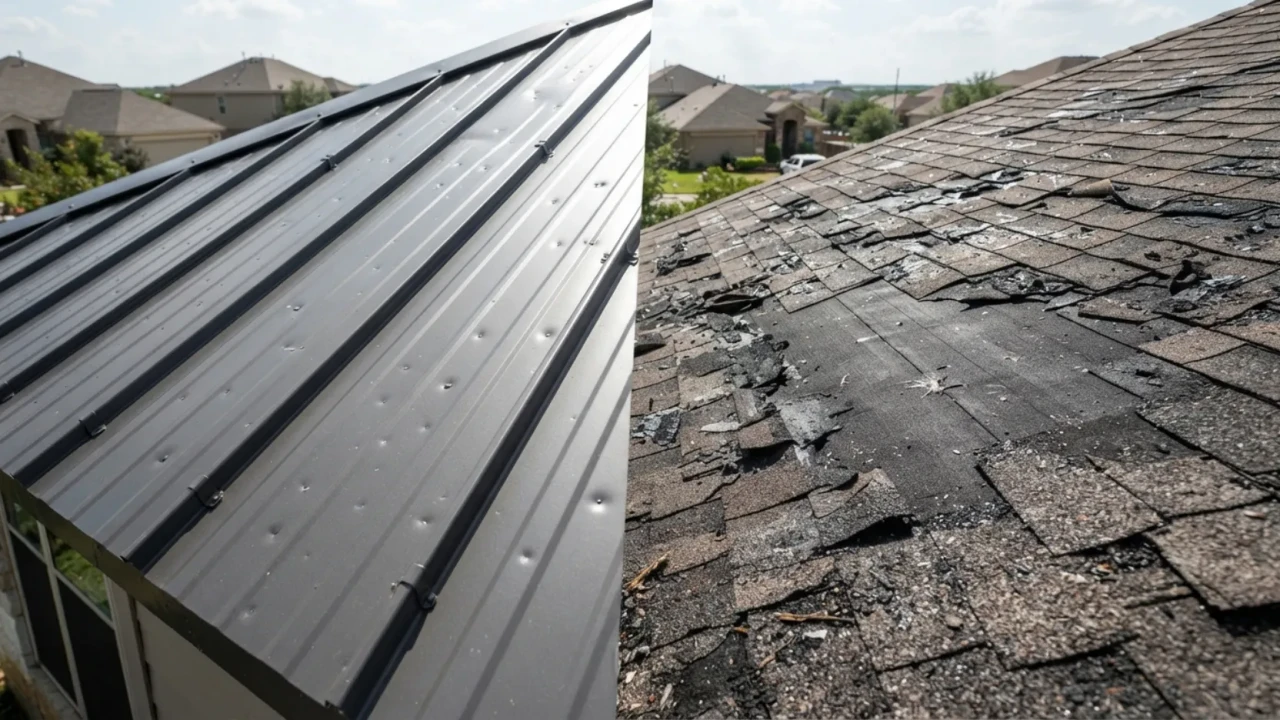
If your metal roofing panel carries a Class 4 UL 2218 impact rating, you are entitled to request a hail-resistant roof discount on your Texas homeowners insurance policy. Most major insurers operating in Texas offer this discount, and it can reduce your annual premium by 20 to 35 percent depending on the carrier. Over the lifespan of a metal roof, that discount alone can offset a meaningful portion of the price difference between metal and asphalt. Ask your contractor for the impact rating documentation before installation, and provide it to your insurance agent the moment the roof is complete.
- UL 2218 Class 4 impact rating confirmed for the specific panel model not just the product line
- Panel gauge specified in writing: 24-gauge steel recommended for San Antonio hail conditions
- Standing seam system considered to eliminate exposed fastener vulnerability at panel penetrations
- Impact rating documentation provided by contractor for insurance submission before installation is complete
- Post-storm inspection protocol discussed: even a durable metal roof should be inspected after hail above 1.5 inches
Wind Resistance
Severe thunderstorms are a weekly occurrence across Bexar County from April through September. Straight-line winds from these storms commonly reach 60 to 80 miles per hour, and occasional events push past 90. Asphalt shingles are rated for wind uplift based on nail pattern and adhesive strip performance, but in real San Antonio conditions, shingles begin lifting, creasing, and losing adhesion well below their rated limits, particularly on older roofs where the adhesive strips have dried out in the Texas heat.
Metal roofing handles wind in a fundamentally different way. Standing seam panels interlock continuously along their length rather than depending on individual fastener points and adhesive strips. The lateral load of a wind gust distributes across the entire panel system rather than concentrating at individual attachment points. This is why metal roofs rarely experience the pattern of lifted corners and scattered debris that asphalt shingle roofs show after major San Antonio wind events.
- Panel wind rating confirmed: UL 580 Class 90 or equivalent for standing seam systems
- Fastener type and spacing specified in writing for exposed-fastener panel systems
- Ridge cap attachment method reviewed: ridge caps are the highest-risk point for wind uplift on all metal roofs
- Eave and rake edge flashing installed and sealed wind enters the roof system at edges first
- Roof deck attachment verified: metal panel wind resistance depends on the deck below being fully secured
- Contractor familiar with local building code wind speed requirements for Bexar County
Rain and Flooding
San Antonio sits on the Balcones Escarpment, a geological feature that interacts with Gulf moisture to produce some of the most intense localized rainfall events in the United States. Flash flooding is not an unusual weather event in Bexar County it is a recurring one. A roof that slows water movement, holds moisture in its structure, or develops micro-leaks under hydrostatic pressure is a roof that will fail in these conditions.
Metal roofing’s smooth, low-friction surface sheds water at a rate that absorbent materials like asphalt and wood simply cannot match. Water moves off a metal roof faster, which reduces the volume of water pressing against seams and penetrations at any given moment during a heavy downpour. Metal panels also do not absorb moisture. Asphalt shingles, particularly older ones, can absorb water and experience swelling, warping, and accelerated granule loss as a result of repeated saturation and drying cycles, which is common after San Antonio storm seasons.
Metal roofing’s water-shedding advantage over asphalt only holds if the penetrations, flashing, and seam sealants are installed correctly. A standing seam panel with a failed ridge cap seal or an improperly flashed vent pipe will leak just as readily as any other roof material. In San Antonio’s high-rainfall storm environment, the quality of the penetration details matters as much as the panel itself. Any contractor quoting a metal roof installation should be able to walk you through their specific approach to vent, chimney, and edge flashing before work begins not after.
- Underlayment type specified: synthetic underlayment recommended under metal panels in San Antonio’s rain conditions
- All penetrations flashed before panel installation, not patched after
- Ridge cap sealed with compatible sealant and fastened correctly not just set in place
- Gutter system capacity reviewed: fast runoff from metal roofs requires gutters sized for the increased flow rate
- Low-slope areas of the roof reviewed: standing seam required where pitch falls below 3:12
- Panel end laps and side laps sealed per manufacturer specification for San Antonio’s rainfall intensity
Lifespan and UV
Ultraviolet radiation is the slow, invisible threat that cuts the effective service life of asphalt shingles in San Antonio roughly in half compared to their rated performance in northern climates. Asphalt binds to the fiberglass mat below the granule layer, and that asphalt compound degrades under sustained UV exposure, becoming brittle and prone to cracking. The granule layer is supposed to protect the asphalt from UV, but once granules start loosening from hail, thermal cycling, or simple age the degradation accelerates rapidly.
Metal roofing does not have an asphalt binder to degrade. The structural integrity of a steel, aluminum, or copper panel is not meaningfully affected by UV radiation. The coating on top of the panel does experience UV exposure, which is why coating quality matters enormously in San Antonio’s climate. A PVDF coating system rated for 30-plus years of UV resistance in Texas conditions will hold its color and surface integrity for decades. A lesser polyester coating may begin chalking and fading within 5 to 10 years under the same South Texas sky.
| Material | Rated lifespan | Actual SA lifespan | UV vulnerability |
|---|---|---|---|
| Standard 3-tab asphalt shingle | 20 to 25 years | 12 to 15 years | High: granule loss accelerates UV damage to asphalt binder |
| Architectural asphalt shingle | 25 to 30 years | 15 to 20 years | Moderate to high: thicker granule layer provides more UV protection but still degrades |
| Metal panel with SMP coating | 30 to 40 years | 25 to 35 years | Low: coating fades and chalks but structural panel is unaffected |
| Metal panel with PVDF coating | 40 to 70 years | 40 to 60 years | Very low: PVDF resists UV degradation; rated for 30-plus year color retention |
| Galvalume steel (unpainted) | 40 to 60 years | 35 to 55 years | Very low: no organic coating to degrade; develops protective oxide layer |
- Coating type confirmed in writing: PVDF (Kynar 500 or equivalent) is the standard for San Antonio UV conditions
- Finish warranty reviewed: minimum 30 years for color retention and chalk resistance on PVDF panels
- Substrate material confirmed: Galvalume steel or aluminum for corrosion resistance in addition to UV performance
- Panel gauge specified: 24-gauge steel standard for residential; 22-gauge for commercial or high-load conditions
- Manufacturer warranty on the panel reviewed separately from the coating warranty both should be documented
Energy efficiency claims for roofing materials can be vague. Here is what the numbers look like in a San Antonio context, where cooling accounts for the majority of residential energy consumption from May through October.
| Energy factor | Metal roofing | Standard asphalt | San Antonio impact |
|---|---|---|---|
| Solar reflectance (light-colored PVDF panel) | 0.60 to 0.75 | 0.05 to 0.25 | Major: reflects the majority of solar energy instead of absorbing it |
| Thermal emittance | 0.85 to 0.90 | 0.85 to 0.90 | Similar: both materials release absorbed heat efficiently |
| Peak attic temperature reduction | 20 to 40°F cooler | Baseline | Major: directly reduces AC load during peak cooling hours |
| Evening heat release | Fast: dissipates quickly after sunset | Slow: granules retain heat into evening | Significant: metal stops adding heat load earlier in the evening |
| Cooling cost reduction estimate | 15 to 25% in SA climate | Baseline | Compounds over 40 to 70 year roof lifespan |
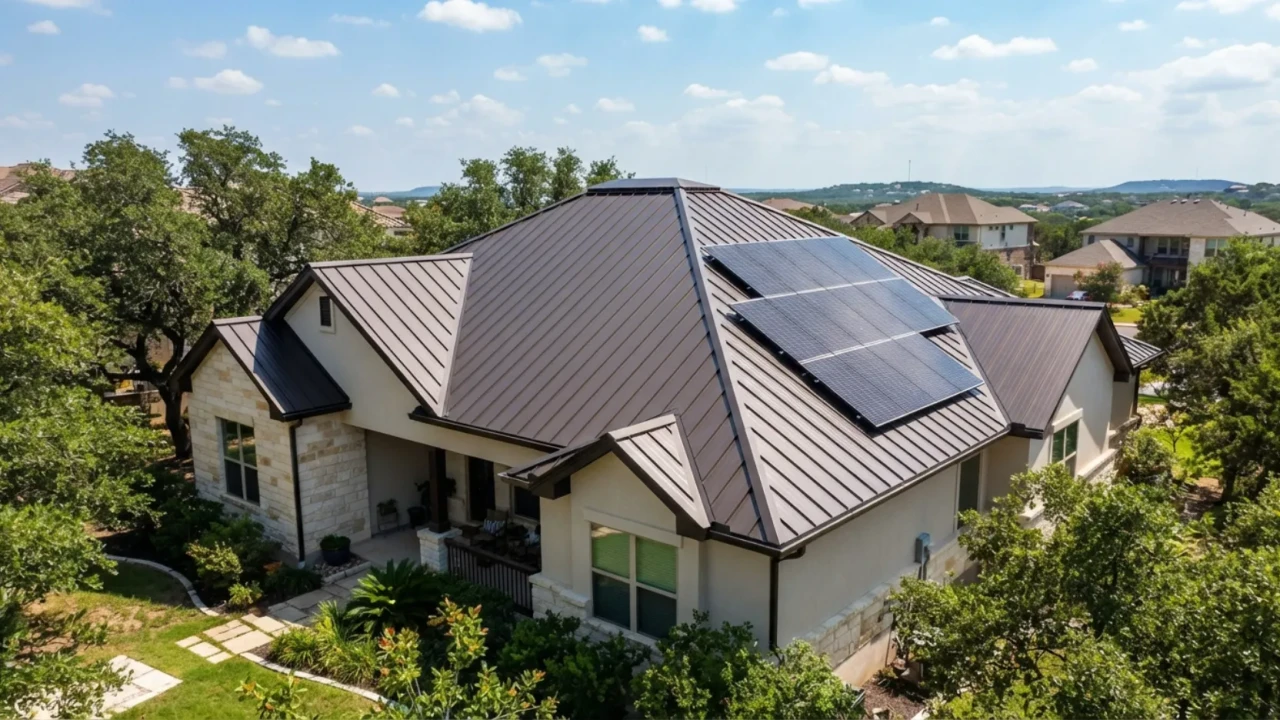
| Solar panel compatibility | Excellent: no-penetration standing seam mounts | Moderate: penetration mounts required; creates leak risk | Metal roofing is the preferred base for residential solar in SA |
- Panel type confirmed: standing seam or exposed fastener each has different performance and cost profiles in SA conditions
- Panel gauge specified: 24-gauge steel for residential installations in San Antonio’s hail environment
- Coating confirmed as PVDF (Kynar 500 or equivalent) with 30-year minimum finish warranty
- UL 2218 Class 4 impact rating documented for the specific panel model being installed
- Wind uplift rating confirmed and appropriate for Bexar County building code requirements
- Substrate material reviewed: Galvalume steel or aluminum for long-term corrosion resistance
- Underlayment type specified: synthetic underlayment required, not felt, under metal in San Antonio conditions
- All penetration flashings reviewed in the contract scope chimney, vents, skylights, HVAC curbs
- Ridge cap attachment and sealing method explained by the contractor before work begins
- Eave and rake edge flashing specified and included in the contract price
- Attic ventilation plan reviewed alongside the roofing scope metal roofing changes airflow dynamics
- Gutter system reviewed: metal roof runoff rate is significantly higher than asphalt and may require gutter upgrades
- Contractor license and insurance verified minimum $1 million general liability for roofing work in Texas
- Manufacturer’s material warranty terms reviewed: most premium metal panels carry 40-year or lifetime coverage
- Workmanship warranty confirmed in writing: separate from the material warranty and contractor-backed
- Impact rating documentation received for insurance discount submission to your carrier
- Post-installation inspection scheduled within 30 days of completion before the first storm season
Does metal roofing hold up better than asphalt shingles in San Antonio?
Will a metal roof make my house hotter in the San Antonio summer?
Is metal roofing loud during rain and hailstorms in San Antonio?
How does a metal roof perform during San Antonio flooding?
Does a metal roof save money on homeowners insurance in Texas?
How long does a metal roof last in the San Antonio climate?
Get a free metal roofing inspection in San Antonio
Tell us about your current roof, your weather concerns, or anything you are not sure about. We will inspect it for free, explain exactly how metal roofing would perform on your specific home, and give you a written estimate at no cost.
[/et_pb_code][/et_pb_column][/et_pb_row][/et_pb_section]