
[et_pb_section fb_built=”1″ admin_label=”section” _builder_version=”4.16″ global_colors_info=”{}”][et_pb_row admin_label=”row” _builder_version=”4.16″ background_size=”initial” background_position=”top_left” background_repeat=”repeat” global_colors_info=”{}”][et_pb_column type=”4_4″ _builder_version=”4.16″ custom_padding=”|||” global_colors_info=”{}” custom_padding__hover=”|||”][et_pb_code _builder_version=”4.27.6″ _module_preset=”default” hover_enabled=”0″ sticky_enabled=”0″]
Everything San Antonio homeowners need to know about asphalt shingle roofing: types, costs, installation, lifespan in the Texas climate, and how to choose the right contractor for the job.
Asphalt shingles are the most common roofing material on San Antonio homes for a reason: they offer a proven combination of affordability, visual variety, and reasonable durability at a price point that works for most Texas households. But not all asphalt shingles perform the same way in San Antonio’s specific climate a city that deals with intense summer heat, UV exposure, periodic hailstorms, and occasional heavy rain events that can stress any roof system.
This complete guide covers everything you need to know about asphalt shingle roofing in San Antonio: the different shingle types available, what each costs installed in 2026, how long you can realistically expect them to last in Texas conditions, what to look for when choosing a contractor, and how to handle storm damage claims. Whether you are planning a new installation, facing a full roof replacement, or trying to figure out whether a repair or replacement is the right call, this guide gives you the factual information to make a confident decision.
San Antonio homeowners who skip the upgrade from 3-tab to architectural shingles or from standard architectural to impact-resistant shingles often pay for that choice after the first major hail event. The cost difference between shingle grades at installation time is relatively small. The cost difference after a hail claim, or after premature failure from heat cycling, is far larger. This guide walks you through the options so you can make that choice with full information.
Shingle Types
Not all asphalt shingles are built the same way, and the type you choose has a direct effect on how long your roof lasts, how it performs after a hail event, and what it costs to insure. San Antonio contractors primarily install three categories of asphalt shingles, each with different performance profiles for the Texas climate.
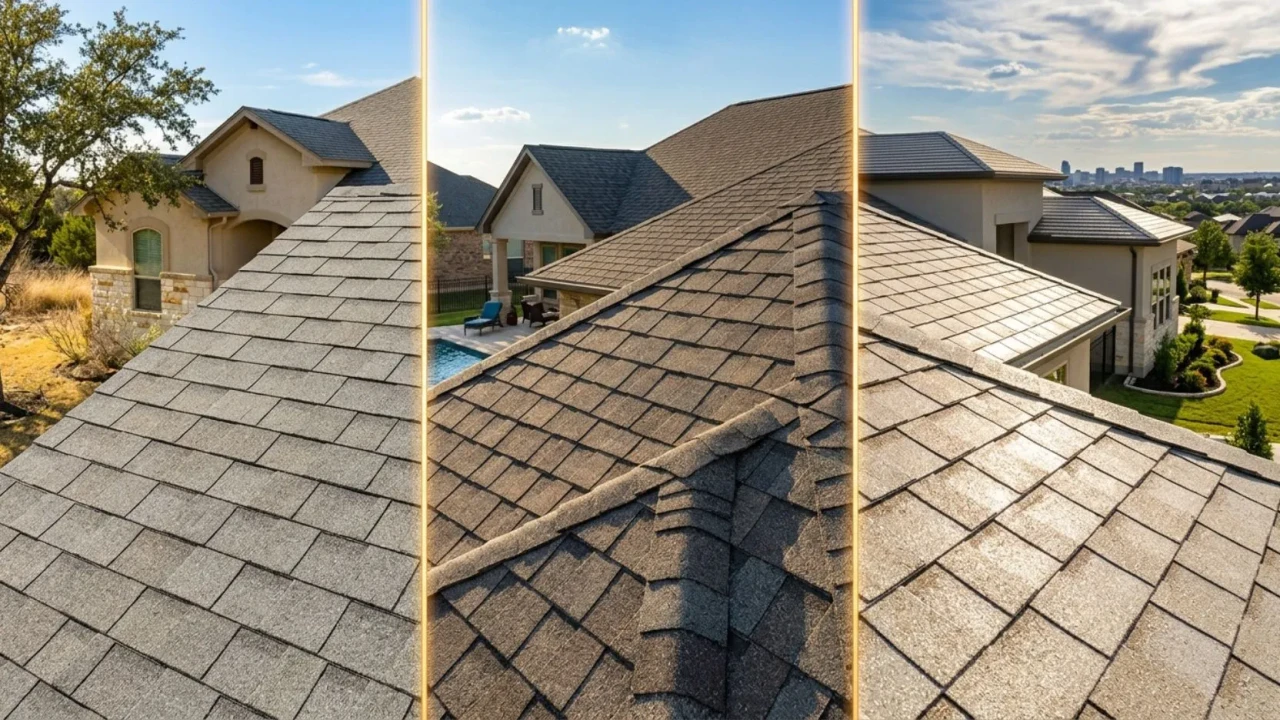
3-tab shingles: The original single-layer asphalt shingle with a flat, uniform appearance and three cutouts per strip. They are the lightest and least expensive option, but they carry lower wind ratings (typically 60 mph) and shorter warranties than architectural grades. In San Antonio’s hail environment, 3-tab shingles are a poor long-term value despite the lower upfront cost.
Architectural (dimensional) shingles: The standard recommendation for San Antonio homes. Two-layer laminated construction gives them a dimensional appearance, better wind resistance (typically 110 to 130 mph), and 25 to 30-year warranties. They hold up meaningfully better than 3-tab in heat cycling and moderate hail events.
Impact-resistant (IR) shingles: Architectural-grade shingles built with a modified asphalt formula, rubber polymer additives, or a fiberglass mat that is reinforced to resist cracking under hail impact. Class 4 IR shingles (the highest rating) can pass the UL 2218 test, which simulates a 2-inch steel ball dropped from 20 feet. In San Antonio, where hail events are a recurring reality, Class 4 shingles are the upgrade most worth the additional cost and many Texas insurers offer premium discounts for homes with Class 4 roofs.
Ask your insurance agent about the discount for Class 4 impact-resistant shingles before you choose your shingle grade. Several major Texas insurers offer 15% to 30% premium discounts on homeowners policies for homes with Class 4 roofs. In some cases, that annual discount pays back the cost upgrade between standard architectural and Class 4 shingles within four to six years. Get the discount amount in writing before you commit to a shingle grade it may change the math considerably.
- 3-tab shingles are not recommended for San Antonio homes the hail and heat exposure shortens their functional life significantly
- Architectural shingles are the minimum standard for any full roof replacement in Bexar County
- Get an insurance discount quote for Class 4 shingles from your agent before choosing a shingle grade
- Wind rating confirmed: architectural shingles should carry at least a 110 mph wind warranty for San Antonio wind exposure
- Shingle brand and product line specified in writing in the contractor’s quote not just “architectural shingles”
- Warranty type clarified: manufacturer’s warranty covers the shingle material; contractor’s workmanship warranty covers the installation
Cost Guide
Asphalt shingle roofing costs in San Antonio vary based on the shingle grade you choose, the size and complexity of your roof, and the quality of the contractor you hire. The ranges below reflect real San Antonio market rates in 2026, including labor, materials, tear-off of the existing roof, and disposal. They do not include structural repairs to the decking or fascia if those are needed.
- Get at least three written quotes asphalt shingle pricing in San Antonio varies significantly between contractors
- Confirm the quote includes full tear-off of existing shingles, not just an overlay installation on top of the old roof
- Decking repair rate confirmed in writing before work begins expressed as cost per sheet or per square foot
- Ice-and-water shield and synthetic underlayment specified in the material list, not just the shingles
- Disposal and haul-away of old materials included in the quoted price
- Payment terms confirmed: a deposit is normal; full payment before job completion is a red flag
Installation
A shingle roof is only as good as the installation behind it. In San Antonio, we see failed roofs that used quality shingles but were installed with inadequate underlayment, poor ventilation, or improperly sealed flashing. These failures show up within two to five years of installation as leaks, premature shingle curling, or storm damage that spreads faster than it should. Understanding the installation sequence helps you verify that your contractor is doing the job correctly.
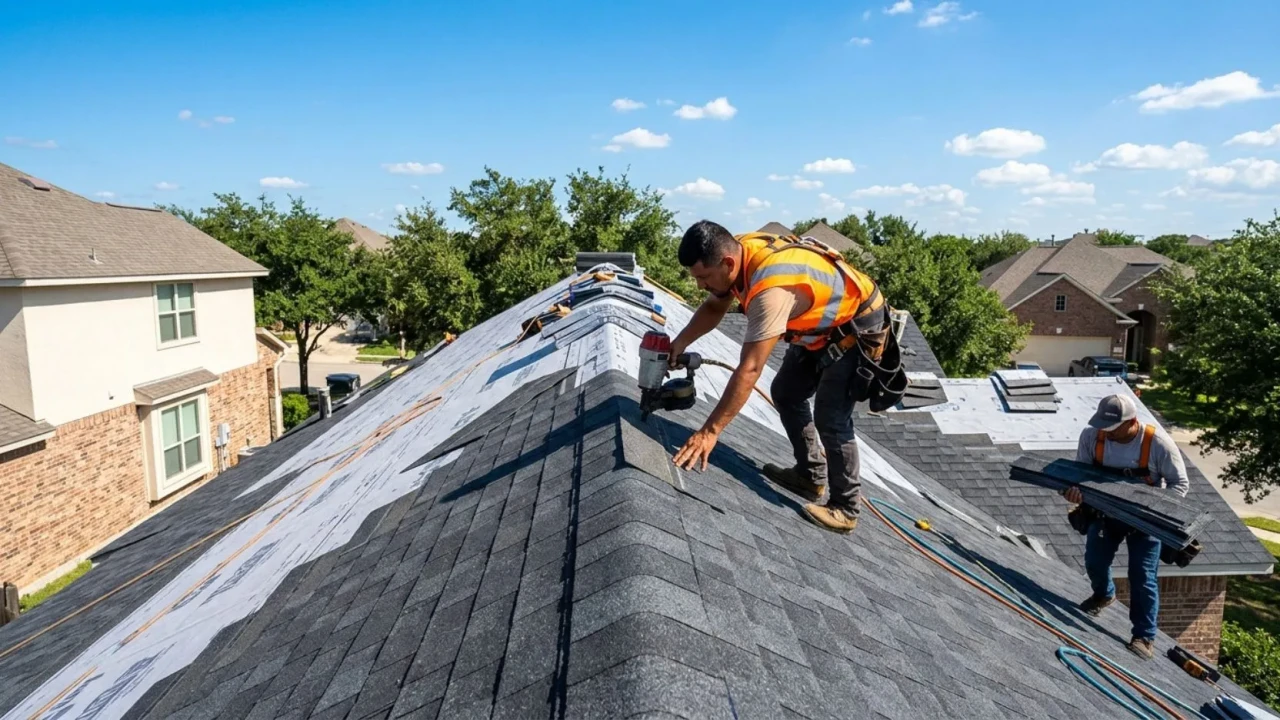
Step 1 Tear-off and decking inspection: All existing shingles, underlayment, and damaged flashing removed down to the bare decking. Every sheet of decking inspected for soft spots, rot, and delamination. Any damaged sections replaced before new materials go on.
Step 2 Underlayment installation: Synthetic underlayment applied across the entire deck surface, lapped correctly at seams. Ice-and-water shield installed at eaves, valleys, and around penetrations. This layer is the roof’s secondary water barrier it is what keeps the interior dry if shingles are blown off in a storm.
Step 3 Flashing installation: Metal drip edge installed along eaves and rakes. Step flashing installed at every wall-to-roof intersection. Chimney, skylight, and vent flashings set and sealed. Flashing is the highest-maintenance component of any asphalt shingle roof and one of the most common sources of premature leaks.
Step 4 Shingle installation: Starter strip applied at eaves to seal the first course. Shingles installed from the bottom up with correct nail placement nails driven through the nailing strip, not above or below it. Nail guns set to the correct depth to avoid over- or under-driving. Ridge cap shingles installed last. On impact-resistant shingles, the manufacturer’s required nail pattern must be followed to preserve the wind warranty.
Attic ventilation is one of the most overlooked factors in San Antonio shingle roof longevity. An attic that runs 160 degrees Fahrenheit in July because the ridge vents and soffit vents are blocked or absent will cook shingles from below blistering the asphalt and causing premature granule loss. Before any new shingle installation, confirm that the ventilation is calculated correctly for your attic square footage. The industry standard is 1 square foot of net free ventilation per 150 square feet of attic floor area. A contractor who does not inspect and address ventilation as part of a full roof replacement is cutting a corner that will shorten the life of the new roof.
- Full tear-off completed no overlay installation covering an existing shingle layer
- Decking fully inspected and all damaged sections replaced before underlayment goes down
- Synthetic underlayment installed, not felt paper confirmed in the material specification
- Ice-and-water shield confirmed at all eaves, valleys, and around every penetration
- Drip edge installed at both eaves and rakes per current Texas building code
- Attic ventilation checked: ridge and soffit vents balanced for the attic square footage
- Nail gun depth setting verified: nails driven flush, not over-driven or under-driven
- Manufacturer’s nailing pattern followed for the specific shingle product installed
Lifespan
Shingle manufacturers issue warranties of 25, 30, or even 50 years on their architectural products. What they do not always make clear is that those warranties are issued under controlled laboratory test conditions, not the actual conditions your roof will experience on a San Antonio home. The Texas climate imposes specific stresses on asphalt shingles that accelerate wear beyond what you would see in cooler, less UV-intense parts of the country.
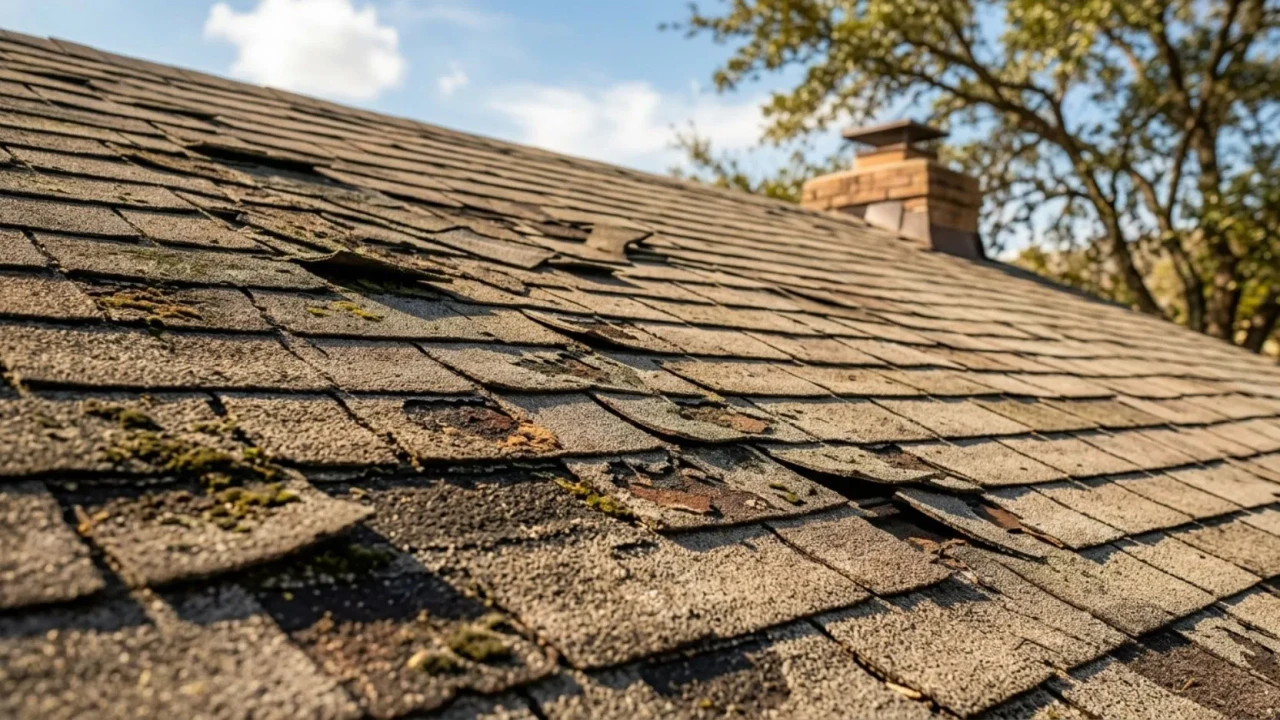
Heat cycling: San Antonio roof surfaces can reach 160 to 180 degrees Fahrenheit on summer afternoons and drop 50 to 60 degrees overnight. This daily thermal expansion and contraction works on shingle adhesion and the sealant strip that bonds courses together. Over years, this cycling loosens shingles and compromises the self-sealing layer that is the roof’s primary wind resistance.
UV degradation: The asphalt in shingles breaks down under UV exposure, becoming brittle and losing flexibility. A shingle that feels pliable when installed will feel stiff and fragile after 15 to 20 years of San Antonio sun. Brittle shingles crack more readily under hail impact and foot traffic.
Granule loss: The ceramic granules on the shingle surface protect the asphalt beneath from UV exposure. As granules shed from age or hail impact, the exposed asphalt accelerates its own deterioration. Granules in the gutters after a rainstorm are an early indicator of shingle aging or hail damage.
| Shingle type | Manufacturer warranty | Realistic San Antonio lifespan | Primary failure mode |
|---|---|---|---|
| 3-Tab (15 to 20-year) | 15 to 20 years | 12 to 16 years | Wind uplift, granule loss, brittleness from heat |
| Architectural (30-year) | 25 to 30 years | 18 to 25 years | Granule loss from UV and hail, sealant strip failure |
| Class 4 Impact-Resistant | 30 to lifetime | 22 to 30 years | UV degradation; performs well in hail events |
| Designer / Luxury Shingles | Lifetime (prorated) | 25 to 35 years | Higher mass and thicker asphalt layer resists aging best |
- Annual inspection scheduled after year 15 earlier if the roof experienced hail events
- Gutters checked for granule accumulation after every significant storm an early aging indicator
- Attic inspected for daylight through decking or water staining on rafters signs of advanced shingle failure
- Sealant strip condition assessed during inspections curling or lifting shingles indicate sealant failure
- Tree limbs trimmed to at least 6 feet from the roof surface abrasion from branch contact accelerates granule loss
- Algae or moss growth treated promptly biological growth traps moisture and degrades asphalt
Storm Claims
San Antonio experiences some of the highest hail claim frequencies in the country. Asphalt shingles are more vulnerable to hail damage than metal roofing, and the damage pattern can be subtle visible only through close inspection of the shingle surface rather than from the ground. Understanding how insurance claims work for asphalt shingle damage puts you in a better position when dealing with adjusters after a storm event.
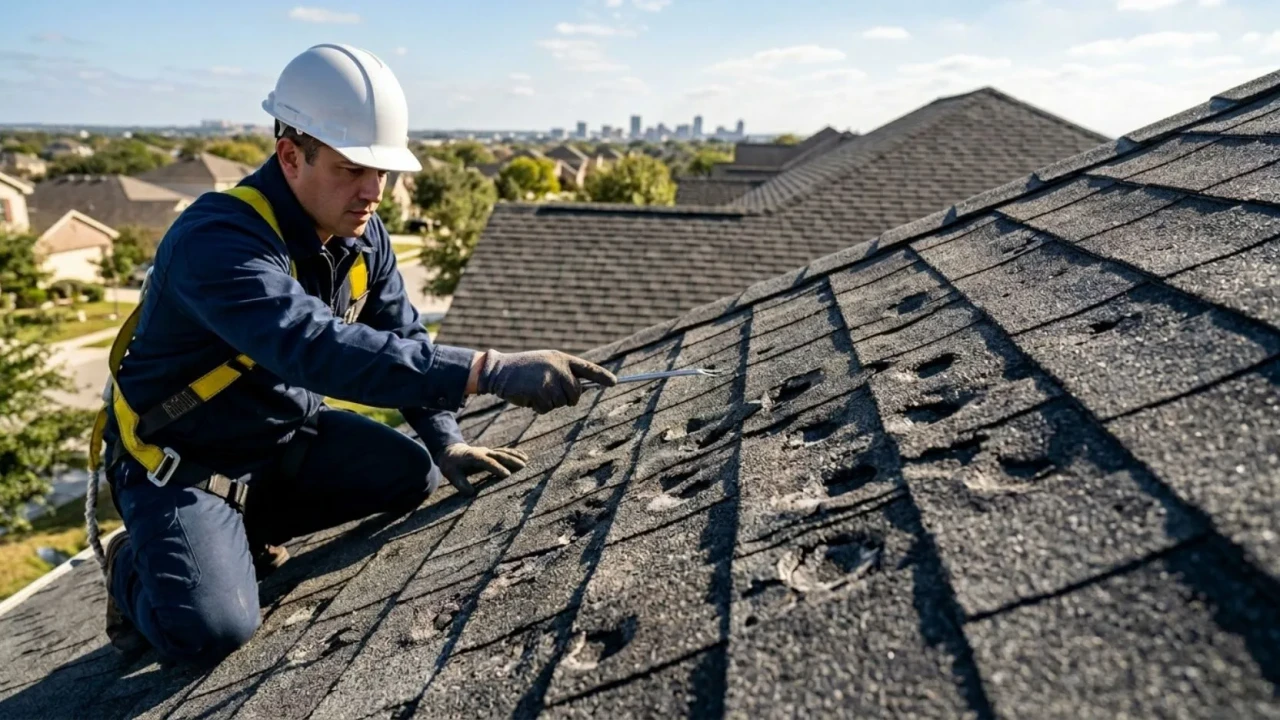
What hail damage looks like on asphalt shingles: The primary indicator is bruising a soft, spattered impact mark where the granule layer has been knocked off and the underlying asphalt mat is exposed or cracked. These marks feel soft when pressed, unlike older granule loss which feels harder. Hail hits also create a random scatter pattern across the roof surface, which distinguishes them from installation or manufacturing defects.
Minimum hail size for insurance triggers: Most Texas homeowners insurance policies consider hail at or above 1 inch (quarter-size) as a covered event for standard architectural shingles. Class 4 IR shingles can withstand larger hail without damage, which is why the insurance discount exists fewer claims over the life of the roof.
After any hail event in San Antonio, the correct sequence is: (1) get a professional roof inspection from a licensed contractor within 30 days; (2) document damage with photos before filing a claim; (3) file the claim within your policy’s reporting window commonly one year in Texas; (4) be present during the adjuster’s inspection or have your contractor present to point out damage; (5) compare the adjuster’s scope of loss against your contractor’s independent estimate before accepting settlement.
Never let an adjuster inspect the roof without a contractor present or a prior professional inspection in hand. Insurance adjusters process hundreds of claims at once after a major San Antonio hail event. An adjuster who spends 20 minutes on your roof may miss bruising on north-facing slopes or granule loss on lower-pitch sections. Your contractor’s documented inspection report is your reference point for disputing an inadequate settlement offer. You are entitled to your own independent assessment, and the cost of a professional inspection is generally covered if the claim is approved.
- Professional inspection completed within 30 days of the storm event not just a visual check from the ground
- Damage documented with date-stamped photos before any temporary repairs or claim work begins
- Hail event date recorded and confirmed the date determines whether damage falls within your policy period
- Insurance claim filed within the policy window most Texas policies allow one year from the event date
- Contractor or homeowner present during the insurance adjuster’s inspection
- Adjuster’s scope of loss compared line-by-line against contractor’s independent estimate before settlement acceptance
- Public adjuster consulted if the gap between adjuster’s scope and contractor’s estimate exceeds $2,000
Contractor Selection
After a major hail event, San Antonio sees an influx of out-of-state and out-of-area roofing contractors who follow the storm path. Some of them do quality work. Many do not. Evaluating a roofing contractor properly before signing anything especially one who shows up unsolicited after a storm protects you from poor workmanship, voided manufacturer warranties, and contractors who disappear after receiving payment.
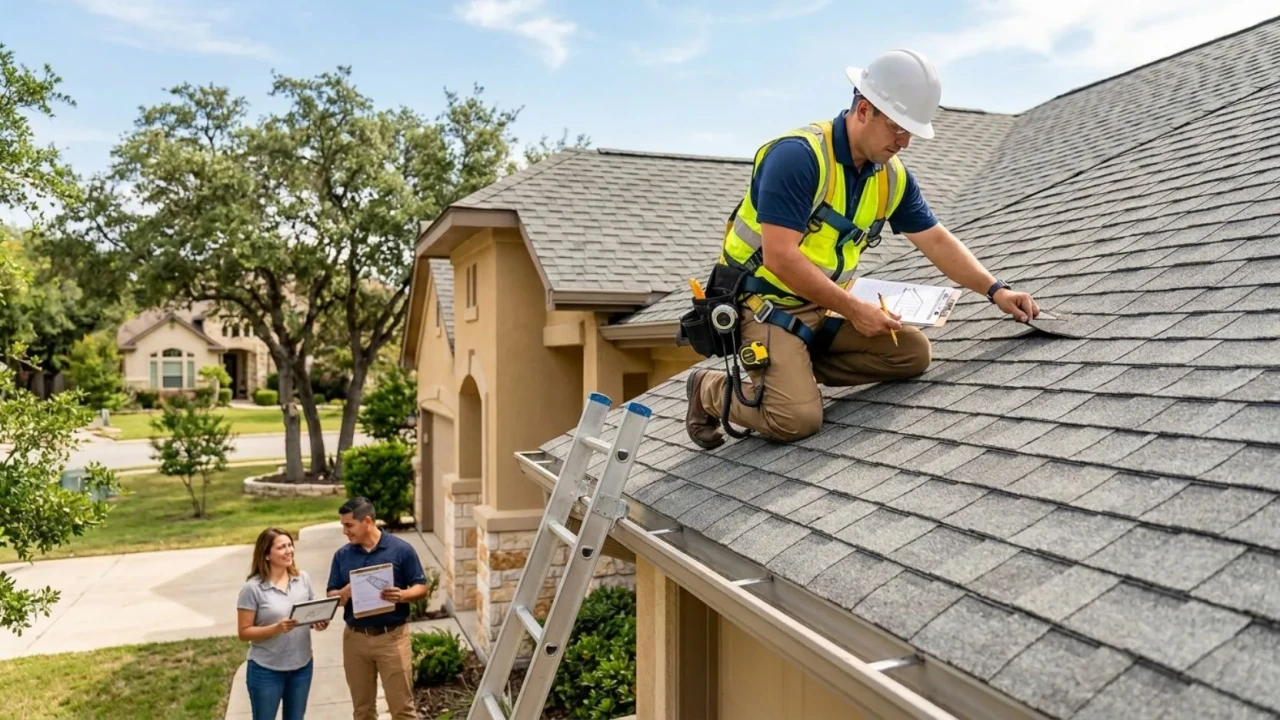
What to verify before signing any contract: Ask for a certificate of insurance showing general liability coverage of at least $1 million and active workers’ compensation coverage. A contractor without workers’ comp coverage means you could be liable if a worker is injured on your property. Verify the policy is current ask for the insurance company’s direct phone number and call to confirm.
Red flags to walk away from: Any contractor who requires full payment before work begins, cannot provide a written material specification with shingle brand and product name, asks you to sign over your insurance claim (assignment of benefits), or offers to waive your deductible is presenting a risk that is not worth taking regardless of price.
- Certificate of insurance received and verified: general liability at minimum $1M, active workers’ compensation
- Local San Antonio business address confirmed not a PO box or out-of-state address
- At least three local references provided and contacted by you directly
- Written quote includes: shingle brand, product name, underlayment type, flashing specification, and warranty terms
- Workmanship warranty of at least 5 years on labor confirmed in writing
- No full payment required before work begins 30 to 50% deposit is the normal standard
- No assignment of benefits clause in the contract you retain control of your insurance claim
- Manufacturer certification verified if installer claims a preferred or elite contractor status
The price ranges below reflect real San Antonio market rates in 2026 for a standard 2,000-square-foot single-story home. Costs increase for steeper pitches, multi-story homes, complex roof geometry, and premium shingle products. Get written quotes from at least three licensed, insured local contractors before committing.
| Project type | Typical cost range (San Antonio 2026) | Notes |
|---|---|---|
| 3-tab shingle replacement (2,000 sq ft) | $8,000 to $12,000 | Not recommended for San Antonio upgrade to architectural at minimum |
| Architectural shingle replacement (2,000 sq ft) | $10,000 to $16,000 | Standard recommendation; 25 to 30-year warranty shingles |
| Class 4 impact-resistant replacement (2,000 sq ft) | $14,000 to $22,000 | Best long-term value in San Antonio; qualifies for insurance discounts |
| Decking repair (per sheet) | $80 to $140 per sheet | Budget a contingency for older roofs; always confirmed in writing before work begins |
| Ridge cap replacement only | $400 to $900 | Common after wind events; done as part of full replacement or as a standalone repair |
| Flashing replacement (chimney or skylight) | $300 to $800 | Commonly needed at the time of full shingle replacement on older roofs |
| Single-section repair (wind or minor hail) | $600 to $2,500 | When damage is limited to one roof slope or section; matching shingles must be sourced |
| Ventilation correction (ridge and soffit) | $500 to $1,800 | Strongly recommended at time of full replacement if existing ventilation is inadequate |
- Shingle grade decision made: 3-tab (not recommended), architectural (standard), or Class 4 impact-resistant (best for San Antonio)
- Insurance discount for Class 4 shingles checked with your agent before committing to a shingle grade
- At least three written quotes received from licensed, insured local contractors
- Each quote reviewed for material specifications: brand, product line, underlayment type, and flashing details
- Contractor insurance verified: current general liability and workers’ compensation certificates
- Local references checked: at least three calls to homeowners the contractor has worked with in San Antonio
- Full tear-off confirmed not an overlay installation on top of existing shingles
- Decking inspected and any damaged sections photographed and documented before replacement
- Synthetic underlayment and ice-and-water shield confirmed as installed per specification
- Drip edge installed at both eaves and rakes
- Attic ventilation checked ridge and soffit vents confirmed as balanced and unobstructed
- Nail pattern and depth confirmed for the shingle product being installed
- Job site kept clean old shingles, nails, and debris removed daily
- Final walkthrough completed and work approved before final payment is made
- Manufacturer warranty registration completed within the required window
- Contractor’s workmanship warranty document received with coverage period and contact information
- Attic inspected for any fastener penetrations or gaps in the new roof
- First post-installation inspection scheduled for 12 to 18 months after completion
- Annual gutter check to monitor for granule accumulation as a shingle aging indicator
How much does a new asphalt shingle roof cost in San Antonio in 2026?
How long do asphalt shingles last in San Antonio’s climate?
Are impact-resistant shingles worth the extra cost in San Antonio?
What is the difference between 3-tab and architectural shingles?
How do I know if my asphalt shingle roof needs to be replaced or just repaired?
Does homeowners insurance cover asphalt shingle roof replacement in San Antonio?
Can asphalt shingles be installed over an existing roof in San Antonio?
Get a free asphalt shingle roof inspection in San Antonio
Whether you are planning a replacement, dealing with storm damage, or just not sure what your roof needs, we will inspect it for free and give you a clear written estimate at no cost or obligation.
[/et_pb_code][/et_pb_column][/et_pb_row][/et_pb_section]