
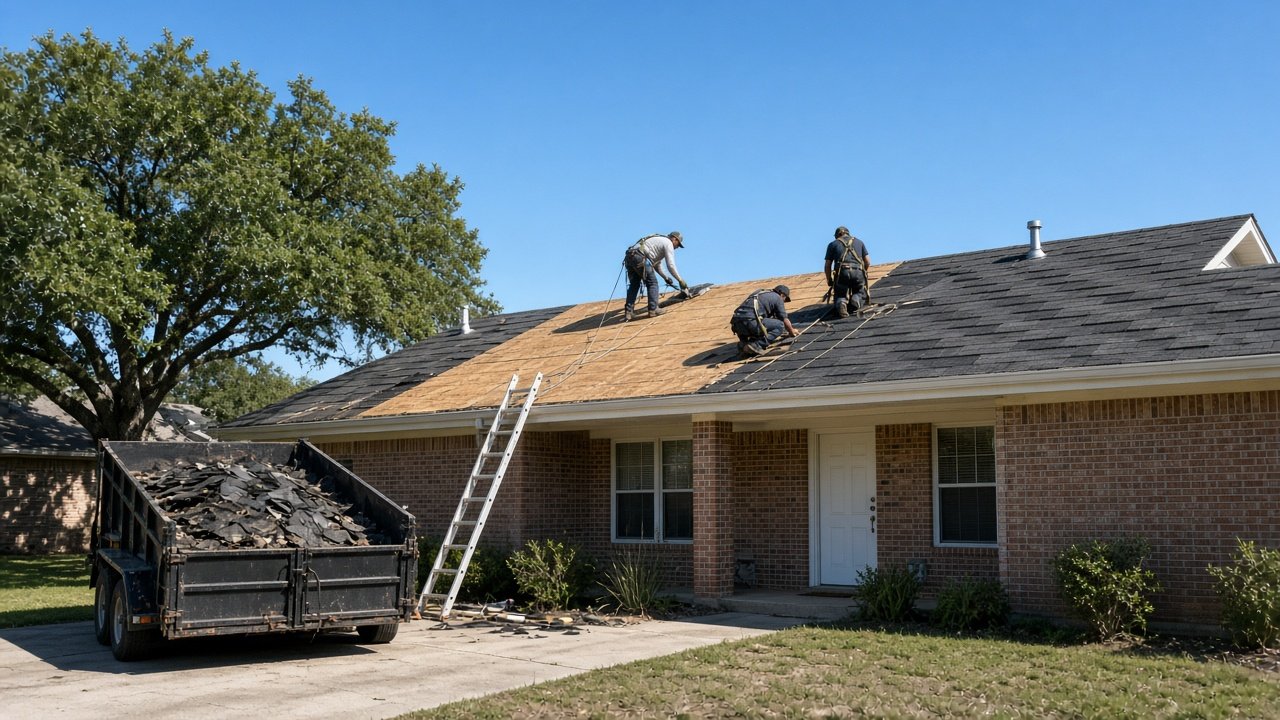
Roof replacement · San Antonio, Texas
How Hard Is It to Replace a Roof? A San Antonio Homeowner’s Reality Check
Maybe you’re wondering whether you could tackle a new roof yourself, or you just want to understand why roofers treat it as such a big job. This guide gives you an honest answer: what a full replacement involves, why the work is dangerous, what the City of San Antonio requires, and how to hire well if you decide to leave it to a crew.
The short answer
How hard is it to replace a roof? For most homeowners, very hard. A full replacement combines heavy tear-off and material handling, fall and heat hazards that OSHA highlights for roofers, [2] a City of San Antonio re-roof permit with inspections, [1] and installation details such as deck repair, underlayment, flashing and correct nailing that decide whether the roof leaks. That mix of physical work, risk and hidden skill is why a full replacement is usually a job for a professional crew rather than a weekend project.
What a full roof replacement actually involves
A replacement is a chain of stages, and each stage has to be right before the next covers it. It isn’t just new shingles laid on top of the house.
- Tear-off and disposal. The old shingles, underlayment and worn flashing come off down to the wood deck. All of that debris has to be carried or chuted off the roof, loaded and hauled away.
- Deck inspection and repair. With the deck exposed, soft, rotted or damaged boards are found and replaced so the new roof is nailed into sound wood. Our guide on whether you need to replace the plywood too explains this stage.
- Underlayment and drip edge. Underlayment goes over the deck as an extra layer of protection, and metal drip edge finishes the roof edges.
- Flashing. New flashing is fitted where the roof meets walls and chimneys, and new pipe boots seal around plumbing pipes.
- Shingles. Starter rows go along the edges, then shingles are laid course by course up each slope and nailed the way the manufacturer specifies.
- Ridge caps. Cap shingles close the peaks and hips where the slopes meet.
- Cleanup and final inspection. The yard and driveway are cleared of debris and nails, the roof is checked, and the City completes its final building inspection.[1]
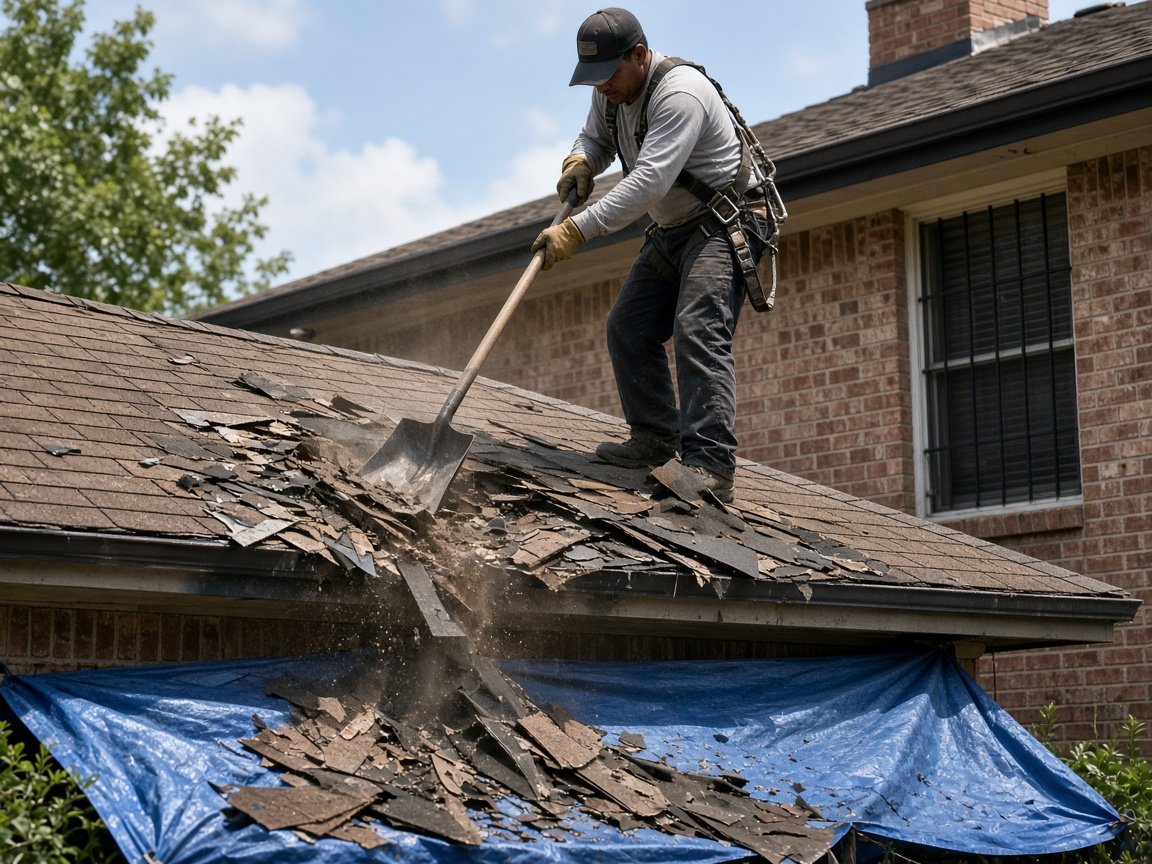
For a closer look at each stage, see step by step: how roofs are installed, what roof replacement includes, and what happens during roof replacement.
How hard is it to replace a roof? Why the work is physically demanding and dangerous
The labor is heavy, and it happens in a genuinely dangerous place to work. OSHA says falls are the leading cause of death in the construction industry and the leading cause of work-related injuries and deaths among roofers. [2]
Falls aren’t the only risk. OSHA lists hazards roofers face from working at heights, ladders, power tools, electricity, noise, hazardous substances and extreme temperatures. [2]
- Edges and openings. OSHA says workers must be protected from falling through skylights and other holes and openings in the roof, not just off the edge. [2]
- Ladders and heavy loads. Carrying shingle bundles up a ladder is heavy, awkward work, and every bundle has to go up while every piece of the old roof comes down.
- South Texas heat. The San Antonio sun makes a roof deck brutally hot, and dark shingles and bare wood hold that heat under your knees and hands.
- Nail guns. OSHA calls for hearing and eye protection when using nail guns. [2]
- Training. OSHA requires employers to provide fall protection training for their workers. [2] Most homeowners have never been trained to set an anchor or wear a harness correctly.

RRSATX crews plan around these hazards on every job. Our guide to roofing safety tips for install day covers what you and your family should know while a crew is working on your home.
San Antonio re-roof permits and inspections
A full replacement in San Antonio is permitted work with City inspections, whether a contractor or the homeowner does it. The City’s Development Services Department handles re-roofs through its Re-Roof Permit Application. [1]
What the City’s Re-Roof Permit Application says
- Homeowner’s permit. The application has a homeowner’s-permit option for an owner who owns the home and will occupy or rent it after the project. That homeowner becomes responsible for all the required inspections. [1]
- Slope or tile changes. If the roof slope changes, or the roofing material changes to tile, an engineer’s assessment report is required to clear the framing inspection. [1]
- Final inspection. The City’s Inspection Division performs a final building inspection. [1]
- Roof penetrations. Mechanical, electrical and plumbing permits and inspections are required when existing roof penetrations are extended above the new roofline, and those permits must be secured by licensed trade contractors. [1]
- Layers. The application notes that the IRC allows a maximum of two layers of roofing materials. [1]
- Who owns the permit. When a contractor applies, the permit belongs to the property owner. [1]
Requirements can change. Confirm the current rules for your property with the City of San Antonio Development Services Department before work starts.
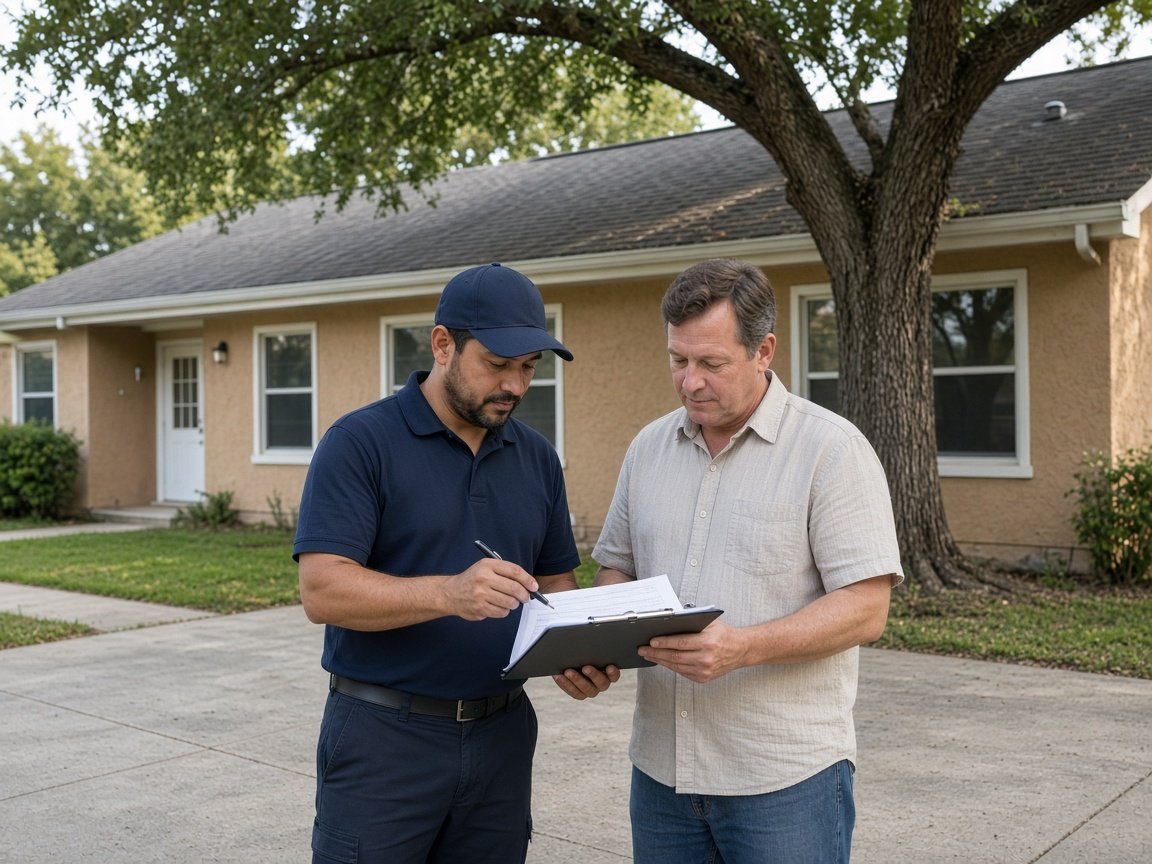
A homeowner’s permit means you, not a contractor, answer to the inspector. Our guide on how to check if roofing is up to code explains what inspectors look for, and can you re-roof over old shingles? covers layering. If you’re thinking about switching to tile, start with our tile roofing page, since that change brings the engineer’s assessment into play.

DIY roof replacement vs. a professional crew
The gap between a DIY attempt and a crew is less about effort and more about equipment, experience and speed under the weather. Here’s how the main tasks compare.
| Task | What a DIYer faces | What a roofing crew brings |
|---|---|---|
| Tear-off and disposal | Stripping the roof by hand, renting a dumpster or trailer, and hauling heavy debris | Tools, extra hands and a disposal plan arranged before work starts |
| Getting materials up | Carrying bundle after bundle up a ladder | Material delivery and loading methods that keep bundles off the ladder where possible |
| Fall protection | Buying, anchoring and learning to use a harness system | Fall protection gear and trained workers |
| Deck repair | Judging which boards are bad and cutting in new wood on a sloped roof | Experience spotting soft or rotted decking and replacing it quickly |
| Underlayment and flashing | Learning layering and flashing details on the job | Crews who flash walls, chimneys and pipe boots on every roof |
| Shingle installation | Reading the manufacturer’s instructions and getting nailing right course after course | Practiced installers who follow the manufacturer’s instructions |
| Permit and inspections | Pulling a homeowner’s permit and taking responsibility for every inspection | Permit handling and scheduling, with the permit belonging to you as owner |
| Weather | An open roof if a storm rolls in before the job is dried in | Enough people to dry in quickly and tarps ready if weather turns |
| Cleanup | Picking up nails and scraps from the yard and driveway | Magnet sweeps and debris removal as part of the job |
This comparison reflects RRSATX guidance and is not a price comparison. Ask any roofer for a written scope of work.
Smaller roof jobs vs. a full replacement
Not every roof problem calls for a new roof. If only a section is damaged, a repair may be enough.
A handful of missing shingles, a cracked pipe boot or a loose piece of flashing is a very different job from replacing the whole roof. Our guides to DIY roof repair and DIY roof repairs explain which small fixes a handy homeowner may consider and when to stop. Even small jobs put you on a ladder and a sloped surface, so the same safety rules apply.
If you aren’t sure how far the damage goes, have the roof looked at before you decide. An RRSATX roof inspection shows whether a targeted roof repair will do the job or whether the roof has reached the point where replacement makes more sense.
If you hire a roofer: how to hire well in San Antonio
Hiring out the work removes the physical risk, but you still have to choose carefully. The Texas Department of Insurance warns that out-of-town scam artists may be the first to knock on your door after a disaster. [3]
- Hire local contractors, get written bids, and check references. [3]
- Read every document before you sign, and don’t sign a contract with blank spaces. [3]
- Make sure the contract lists the materials that will be used. [3]
- Be wary of a contractor who asks for a large or full down payment. [3]
- Know that it is against the law for a contractor to offer to waive your insurance deductible. [3]
- Ask who will pull the City permit and who will be on site for inspections.

For more on vetting roofers, see how to choose a roof replacement contractor and what a roofing contract should include. When you’re ready for a bid, RRSATX’s roof replacement in San Antonio service starts with an inspection and a written scope.
How to make a roof replacement easier on your household
You don’t have to climb the roof to make the job go smoothly. A little preparation on the ground helps the crew and protects your home.
- Move cars out of the driveway so materials and the dump trailer have room.
- Clear patio furniture, grills and planters away from the walls of the house.
- Keep children and pets inside or away from the work area.
- Plan your schedule around the work window, and ask your roofer how they handle rain.
Our guide on how to prepare for roof replacement has a fuller checklist, and how long it takes to replace a roof explains what affects the schedule. If you’re replacing a shingle roof, our asphalt roofing page explains your shingle options for the San Antonio climate.
Local roofing service
About Affordable Roofing Contractors San Antonio
Affordable Roofing Contractors San Antonio, also known as RRSATX, provides roof replacement, roof repair, roof leak repair, roof inspections, and asphalt and tile roofing in San Antonio. When you call, tell us what’s going on with your roof and whether you’re weighing a repair or a full replacement. Photos taken from the ground help.
- Phone
- (713) 504-2341
- sales@affordableroofingcontractorssanantonio.com
- Address
- 4324 Monterey St, San Antonio, TX 78237
- Contact
- Request a free roof inspection
Replacing a roof in San Antonio: questions answered
Can I replace my own roof in San Antonio?
The City’s Re-Roof Permit Application includes a homeowner’s-permit option for an owner who owns the home and will occupy or rent it after the project, and that homeowner becomes responsible for all the required inspections. [1] Whether you should is a different question, given the fall risk, heat and hidden details covered above. Confirm current requirements with Development Services.
Do I need a permit to replace my roof in San Antonio?
Re-roofs go through the City’s Re-Roof Permit Application, with a final building inspection by the City’s Inspection Division. [1] Check with the City of San Antonio Development Services Department for the current rules for your property.
Can new shingles go over my old roof?
The City’s application sets a limit on roofing layers under the IRC, as noted in the permit section above. [1] Even where layering is allowed, it hides the deck from view. See can you re-roof over old shingles?
What is the hardest part of replacing a roof?
For most people it’s the combination: heavy tear-off in the heat, working safely at height, and getting the flashing, decking and nailing right where nobody will see them again. Those hidden details decide whether the new roof leaks.
If my roofer pulls the permit, whose permit is it?
According to the City’s Re-Roof Permit Application, when a contractor applies, the permit belongs to the property owner. [1]
A roofer offered to cover my insurance deductible. Is that OK?
No. The Texas Department of Insurance says it is against the law for a contractor to offer to waive your insurance deductible. [3] Treat that offer as a warning sign.
Explore the roofing topic
More help with planning a roof replacement
Related guideHow to choose a roof replacement contractorWhat to ask and check before you hire a roofer.
Related guideCommon roof replacement mistakesThe errors that lead to leaks and how to avoid them.
Thinking about a new roof? Start with an inspection
Ask RRSATX for a free roof inspection and written findings, so you know whether you need a repair or a replacement.