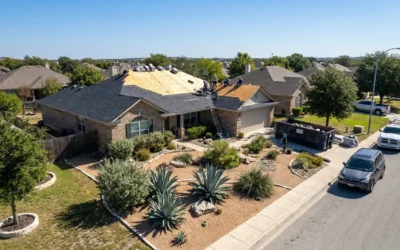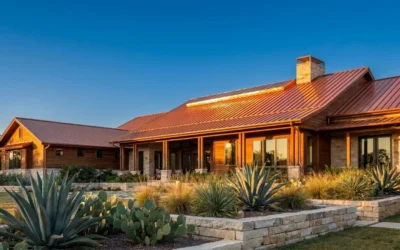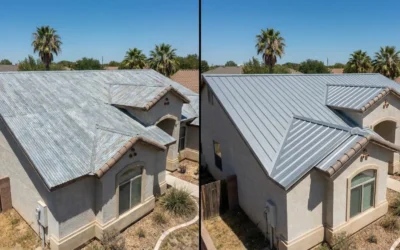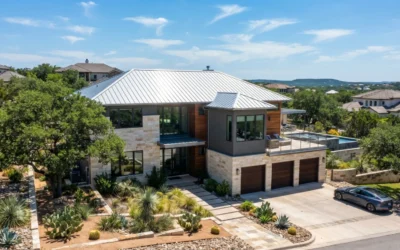
Metal roofs are durable and long-lasting, but they come with real trade-offs that every San Antonio homeowner should understand before signing a contract. This guide covers every significant disadvantage of metal roofing, what each one means in the Texas climate, and how to decide if metal is the right choice for your home.
Metal roofing gets a lot of attention in San Antonio. Contractors promote it as the last roof you will ever need. Energy companies point to its reflective properties. Homeowners see it on newer construction and assume it must be the best option available. Some of that reputation is earned. Metal roofs genuinely do last longer, perform better in high winds, and resist fire better than asphalt shingles.
But metal roofing also has real drawbacks that do not always come up in a sales pitch. The upfront cost is significantly higher. The noise during a Texas rainstorm can be jarring. Thermal expansion causes problems that most homeowners do not hear about until a leak appears. Denting from hail is a legitimate concern in Bexar County. Repairs require specialists. And not every roofing contractor in San Antonio is qualified to install metal correctly.
This guide covers every significant disadvantage of metal roofing with the detail you need to make an informed decision. If metal is right for your home, you will know why. If the disadvantages outweigh the benefits for your situation, you will know that too.
Metal roofing is not universally superior to asphalt shingles. For a homeowner who plans to stay in their home for 30 or more years, has the upfront budget, and wants low long-term maintenance, metal can be an excellent investment. For a homeowner who is on a tighter budget, plans to sell in the next decade, or lives on a street where metal roofing looks out of place with neighboring homes, the disadvantages may outweigh the benefits. Understanding both sides is how you make the right call for your specific situation.
Metal roofing costs two to three times more than a comparable asphalt shingle roof in San Antonio. That is not a minor difference. It is a meaningful gap that changes the financial calculation for many homeowners, especially those who are not planning to stay in the home long enough to recoup the investment through lower maintenance costs and longer lifespan.
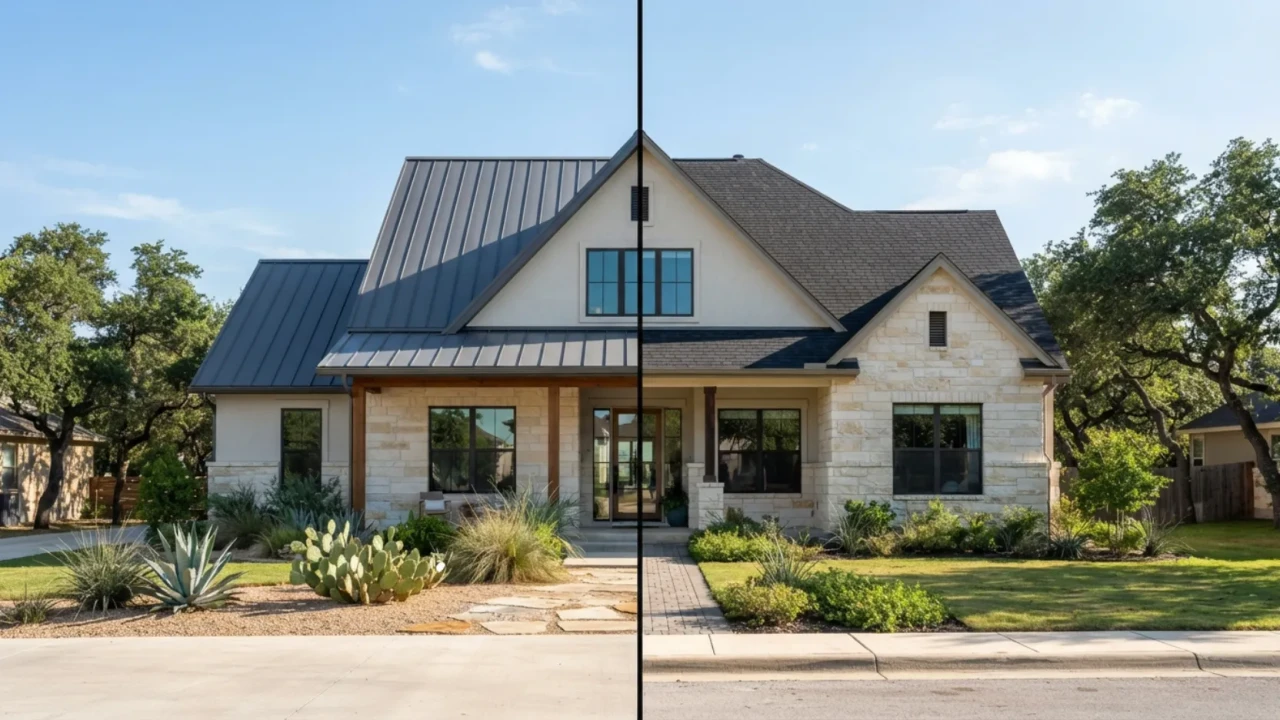
A standard three-tab asphalt shingle roof on a 2,000-square-foot San Antonio home typically runs $8,000 to $14,000 installed. A corrugated metal panel roof on the same home runs $15,000 to $22,000. A standing seam metal roof, which is the premium option, can run $22,000 to $38,000 or more depending on the panel profile and the pitch of the roof.
The long-term math can favor metal if you stay in the home long enough. An asphalt shingle roof in San Antonio needs full replacement every 15 to 20 years under Texas heat. A metal roof that lasts 40 to 70 years theoretically eliminates two or three replacement cycles. But that only pencils out if you own the home through those cycles.
- How long do you plan to stay in the home? The break-even timeline is typically 25 to 35 years.
- Can your current budget absorb the upfront difference without financial strain?
- Have you compared the total lifetime cost, not just the sticker price of installation?
- Have you accounted for ongoing maintenance costs that metal still requires?
- Have you gotten at least two written quotes from qualified metal roofing contractors in San Antonio?
Rain on a metal roof is louder than rain on asphalt shingles. That is not a myth. The degree of noise depends heavily on the installation method, the presence of underlayment, and whether the roof has solid decking beneath the panels. But even a well-installed metal roof will be noticeably louder than an asphalt roof during a heavy San Antonio rainstorm, and significantly louder during a hail event.
San Antonio averages around 30 inches of rain per year and sits in one of the most active hail corridors in the country. That means noise is not a rare occurrence. It is a regular part of life under a metal roof here. Some homeowners genuinely enjoy the sound. Others find it disruptive, particularly during sleep or when working from home.
The noise level of a metal roof is significantly influenced by the installation method and the underlayment used. A metal roof installed over solid OSB or plywood decking with a high-mass underlayment beneath it is dramatically quieter than a metal roof installed over open purlins with no underlayment. Adequate attic insulation is also a major factor. If noise is a concern for you, ask your San Antonio contractor specifically about the decking and underlayment they plan to use and whether additional insulation is recommended for your attic space. Do not assume a new metal roof will be as quiet as your current asphalt roof without confirming the installation details.
- Will the metal roof be installed over solid decking or open purlins?
- What type of underlayment is specified, and does it have sound-dampening properties?
- Is additional attic insulation recommended as part of this installation?
- Is there an option to visit a completed metal roof installation nearby during a rain event before committing?

Not all metal roofing is equally resistant to denting. The material matters, the gauge matters, and the panel profile matters. Aluminum and copper panels are softer metals that dent more easily under hail impact. Steel panels are harder and more resistant. The panel gauge, which describes the thickness of the metal, also plays a major role. A 26-gauge steel panel is significantly more dent-resistant than a 29-gauge panel made from the same alloy.
San Antonio regularly sees hail events producing stones in the 1 to 2 inch range. Golf-ball-sized hail at 1.75 inches will dent aluminum panels and can leave visible impact marks on softer steel panels. Baseball-sized hail at 2.75 inches can cause structural damage to panel seams and coatings regardless of the material, though steel performs better than aluminum at this size.
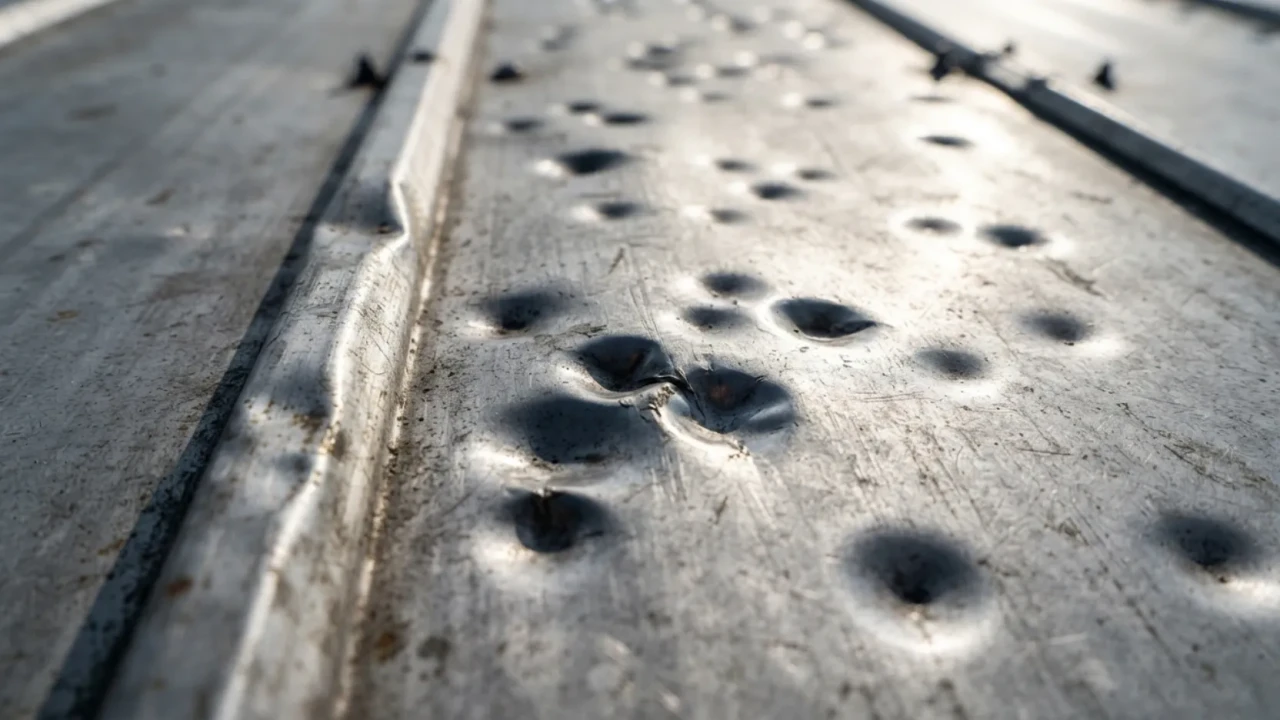
Aluminum panels are lightweight and corrosion-resistant, but they are the softest common metal roofing material. Even moderate hail leaves visible dents. If you choose aluminum, expect cosmetic damage after any significant San Antonio hailstorm, even if the roof remains watertight.
Steel panels (Galvalume or galvanized) are harder and more hail-resistant. A 24-gauge steel standing seam roof in a Class 4 impact-resistant configuration is the best combination of hail resistance and longevity available for San Antonio homeowners who want metal roofing.
Stone-coated steel panels are more resistant to visible denting, but large hail can chip or crack the stone coating, exposing bare metal to moisture and starting a corrosion process that develops over the following years.
- Choose 24-gauge steel over 26-gauge or thinner where hail resistance is a priority
- Confirm the panel's UL 2218 impact rating Class 4 is the highest available
- Avoid aluminum panels in hail-prone areas unless the aesthetic is a specific requirement
- Ask your insurance agent about premium discounts for Class 4 impact-rated roofing before finalizing the product selection
- Check that foot traffic guidelines are provided: most metal panels should not be walked on without specific care for the rib profile
Metal expands when it heats up and contracts when it cools down. This is basic physics, and it becomes a serious roofing issue in a climate like San Antonio's, where a metal panel can reach 170 degrees Fahrenheit on a July afternoon and drop to 30 degrees on a January night. That range of temperature fluctuation causes every metal panel to move, stretch, and contract over and over, day after day, year after year.
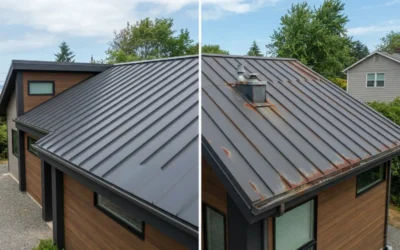
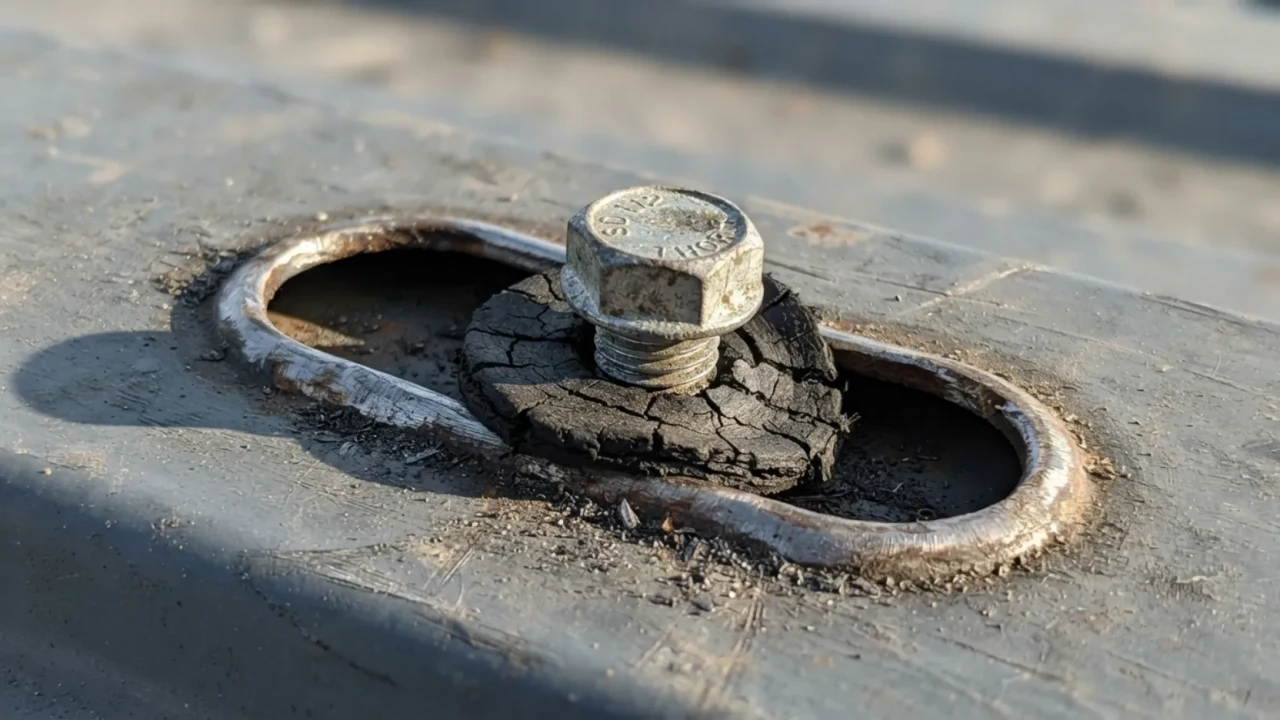
On a screw-down metal panel system, this movement works fasteners loose over time. Screws back out of their holes. Rubber EPDM washers compress and crack. Sealant joints at ridges, valleys, and penetrations get stressed and eventually fail. Most metal roof leaks on aging screw-down systems in San Antonio trace back to thermal expansion working its way through the fastener field over 10 to 15 years.
Standing seam systems are designed to accommodate thermal movement through floating clips that allow the panel to slide rather than stress the fastener. This is one of the primary structural reasons standing seam metal roofing is considered the superior installation method. But it is also why standing seam costs significantly more.
San Antonio's temperature range is more extreme than many parts of the country, which accelerates the thermal stress on metal roofing components. A metal roof that is installed without adequate expansion provisions, or that is sealed with a sealant not rated for Texas-level UV exposure and temperature cycles, will begin showing fastener and sealant failures before the 10-year mark. Any qualified San Antonio metal roofing contractor should be able to explain exactly how the installation they are proposing accommodates thermal movement and what maintenance is required to keep those joints watertight over time.
- Is the system screw-down or standing seam? Each handles thermal movement very differently.
- For screw-down systems: what is the recommended fastener inspection interval?
- What sealant products are specified, and are they rated for the Texas temperature range?
- Is there a maintenance plan included or recommended by the contractor?
- Is the warranty voided if recommended maintenance intervals are not followed?
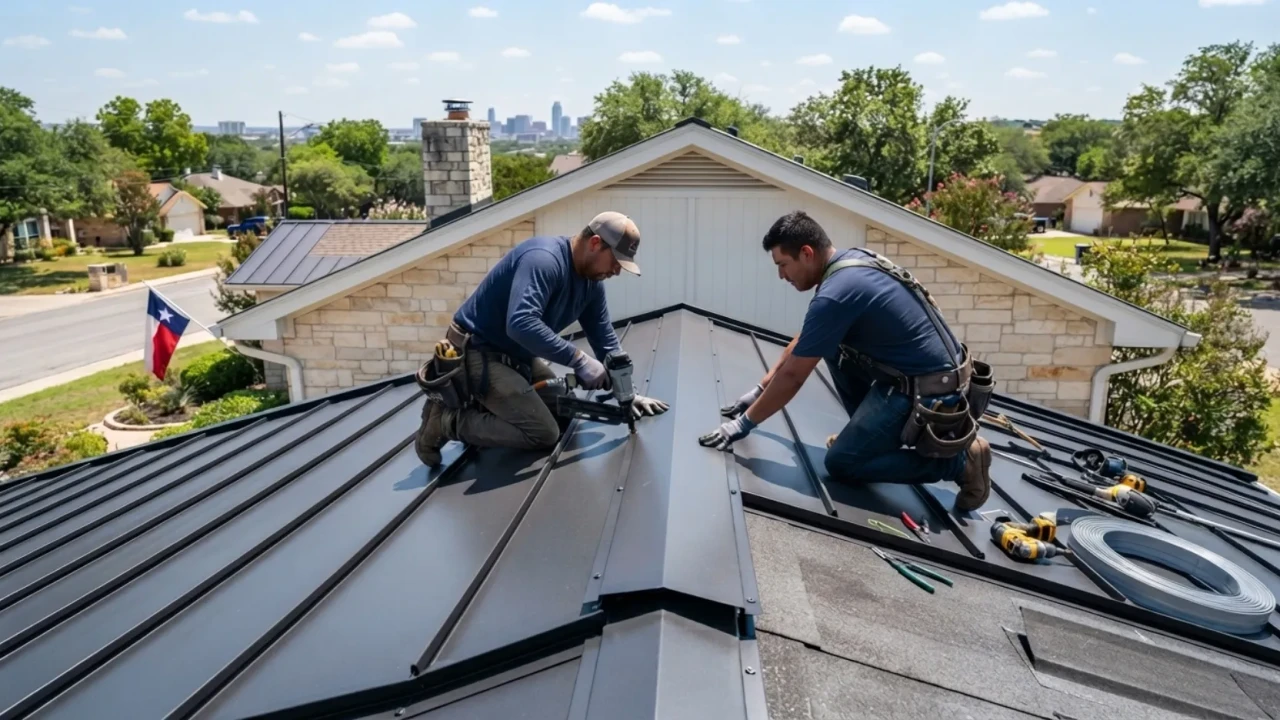
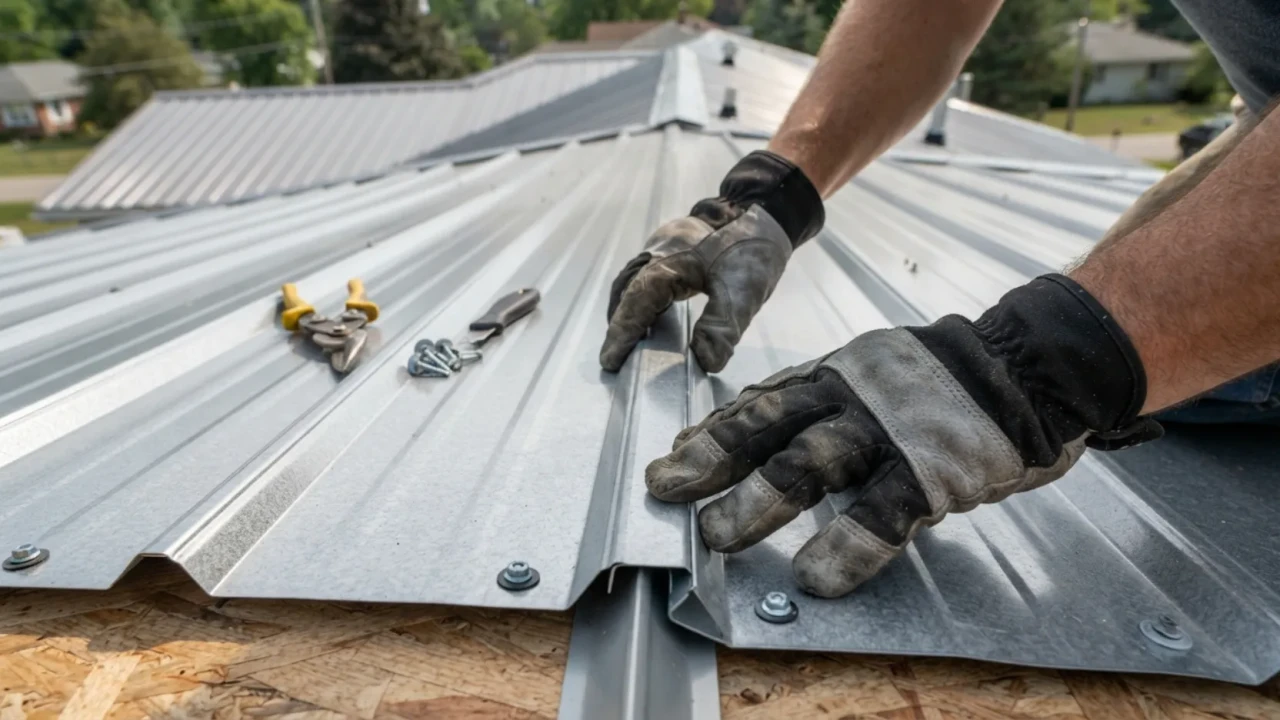
Asphalt shingles can be installed by virtually any roofing crew with basic training. Metal roofing is a different trade. The panel handling, fastener placement, thermal gap allowances, seam sealing, and flashing details are all specific to metal and require hands-on experience to execute correctly. In San Antonio, there are many general roofing contractors who will offer to install a metal roof, but relatively few who have the depth of experience needed to do it correctly on a complex residential roof.
The consequences of poor metal roof installation include premature fastener failure from over-driving, oil-canning from improper panel tension, leaks at inadequately sealed penetrations, and corrosion from dissimilar metals in contact at flashings. Many of these problems do not appear immediately. They develop over five to ten years and by the time they surface, the original installer may be long gone.
Before hiring any San Antonio contractor to install a metal roof, ask for specific references from metal roofing jobs they completed five or more years ago. Contact those homeowners and ask whether there have been any leaks, fastener issues, or repairs needed since installation. A contractor who has been doing quality metal roofing work in San Antonio for years will be able to provide these references without hesitation. A contractor who does mostly asphalt shingles and offers metal as an add-on service may not be able to provide them.
- Ask specifically how many metal roofs they have installed, not how long they have been in business generally
- Request references from metal roofing jobs completed at least five years ago
- Confirm they are familiar with the specific panel profile they are proposing to install
- Ask who on their crew has hands-on metal roofing experience and whether subcontractors will be used
- Verify the workmanship warranty covers labor, not just the materials
- Confirm they hold a valid Texas roofing contractor license and current liability insurance
When an asphalt shingle needs replacing, the process is straightforward. A qualified roofer slides out the damaged shingle and slides in a new one. Matching is easy because asphalt shingles are widely available at any roofing supply house. The repair takes an hour or two and costs a few hundred dollars.
Metal roof repairs are more involved. Replacing a damaged metal panel requires locating a matching profile and color, which can be difficult if the original panel profile has been discontinued by the manufacturer. Standing seam panel repairs require specific seaming tools and techniques. Any repair that involves penetrating the panel creates a new fastener point that must be properly sealed. And the labor rate for experienced metal roofers in San Antonio is higher than for asphalt shingle installers because qualified metal crews are less common.
Panel matching becomes a growing challenge as a metal roof ages. A roof installed ten or fifteen years ago may use a panel profile that is no longer in production. Finding a close match is possible, but visible color and profile differences between new and existing panels are common. On a prominent roof slope, this is a cosmetic issue that some homeowners find unacceptable.
This is one area where standing seam metal roofs have an advantage over exposed-fastener systems. Because standing seam panels can often be replaced individually without disturbing adjacent panels, and because the exposed profile is simpler, repairs tend to be less visible. But they still require a contractor with specific standing seam experience and the correct locking tools for the panel system installed.
- Document the exact panel profile, gauge, and manufacturer at the time of installation
- Keep a few extra panels from the original installation run for future patch use
- Confirm the manufacturer's current production status for your specific panel before signing a contract
- Ask for the paint or coating color code so touch-ups can be matched in the future
- Establish a relationship with a San Antonio metal roofing contractor who will be available for future maintenance
Metal roofing is routinely marketed as an energy-efficient choice for Texas homeowners. The pitch is that reflective metal panels bounce solar radiation off the roof rather than absorbing it, reducing attic temperatures and lowering cooling costs. This is partially true. A light-colored or bare Galvalume metal roof does reflect more solar energy than a dark asphalt shingle roof.
But the energy savings in practice are often smaller than the marketing suggests. The primary driver of your home's cooling costs is not the roof surface color. It is your attic insulation level. A well-insulated attic under an asphalt shingle roof performs comparably to a poorly insulated attic under a metal roof. If you are expecting a metal roof to significantly reduce your San Antonio energy bills, you may be disappointed unless the installation includes adequate attic insulation as part of the project.
If a contractor is selling you a metal roof primarily on energy savings and quoting dramatic cooling cost reductions, ask them to show you the data specific to San Antonio homes with similar attic insulation levels to yours. The most honest answer is that a light-colored metal roof with a reflective coating, combined with upgraded attic insulation, can meaningfully reduce your cooling costs. The metal roof alone, without addressing the attic, is unlikely to deliver the dramatic savings sometimes promised in sales conversations.
- Choose a light color or bare Galvalume finish rather than a dark panel color
- Confirm the panel has a factory-applied reflective coating rated by the Cool Roof Rating Council
- Ask about upgrading attic insulation as part of the installation project
- Request Energy Star documentation if the contractor claims an Energy Star certification
- Get realistic cooling cost reduction estimates in writing, not verbal projections made during a sales call
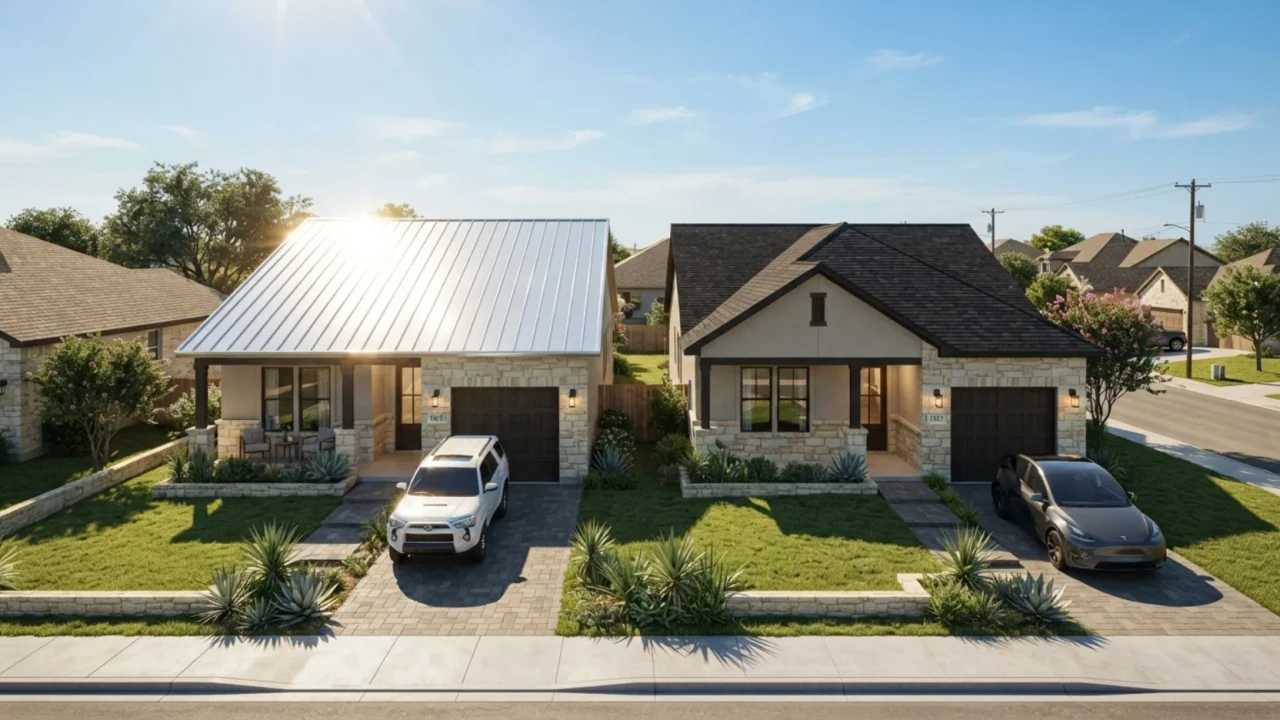
Use this table to see exactly where metal roofing outperforms asphalt shingles and where asphalt is the stronger choice. No single roofing material is right for every home or every homeowner.
| Factor | Metal Roofing | Asphalt Shingles | Winner in San Antonio |
|---|---|---|---|
| Upfront cost | $15,000 to $38,000+ for most homes | $8,000 to $14,000 for most homes | Asphalt shingles |
| Lifespan | 40 to 70 years with proper maintenance | 15 to 20 years under Texas heat | Metal roofing |
| Noise during storms | Noticeably louder, especially with hail | Quieter under rain and hail events | Asphalt shingles |
| Hail resistance | Better structural resistance, but dents on softer metals | Granule loss and bruising common in hail events | Metal (with Class 4 rating) |
| Wind resistance | Excellent up to 140 mph with proper fastening | 130 mph maximum on premium products | Metal roofing |
| Maintenance requirements | Fastener and sealant inspection every 10 to 15 years | Annual inspection recommended; granule loss monitoring | Roughly equal |
| Repair ease | Complex panel matching, specialty skills required | Simple any qualified roofer can patch shingles | Asphalt shingles |
| Energy efficiency | Reflective coatings reduce heat absorption | Dark colors absorb heat; some cool-roof options available | Metal (marginal advantage) |
| Fire resistance | Class A fire rating | Class A available on fiberglass-based products | Roughly equal |
| Resale value impact | Higher perceived value but may not recover full cost premium | Expected by buyers neutral effect on value | Depends on buyer and market |
| Environmental impact | Recyclable at end of life; longer replacement cycle | Shingles typically go to landfill at replacement | Metal roofing |
| Installation complexity | High requires experienced metal roofing crew | Moderate more contractors qualified to install correctly | Asphalt shingles |
- You have gotten written quotes from at least two qualified metal roofing contractors in San Antonio
- You have compared the total lifetime cost, including future maintenance, not just the installation price
- You have considered how long you plan to own the home and whether the break-even timeline is realistic
- You have checked with your insurance agent about premium discounts for Class 4 impact-rated metal panels
- You have confirmed the contractor's payment terms and deposit structure in writing
- You have confirmed the panel gauge, material (steel vs. aluminum vs. stone-coated), and profile
- You have asked about the UL 2218 impact rating and confirmed Class 4 if hail resistance is a priority
- You have checked whether the panel profile is currently in production and likely to remain available for future repairs
- You have confirmed the panel color code for future touch-up matching
- You have requested documentation of the panel's Cool Roof Rating Council reflectance rating if energy efficiency is part of your decision
- You have verified the contractor's Texas roofing license and current liability insurance
- You have asked for and contacted references from metal roofing jobs completed five or more years ago
- You have confirmed the contractor's experience specifically with the panel type they are proposing
- You have confirmed whether subcontractors will be used on the installation and who is responsible for warranty coverage
- You have received the workmanship warranty in writing with specific coverage terms and duration
- The installation plan includes solid decking and an appropriate underlayment for noise reduction if that is a concern
- The contractor has explained how thermal expansion will be managed in the installation design
- All flashings have been specified with compatible metals to avoid galvanic corrosion
- An attic insulation assessment has been completed as part of the project planning
- A maintenance schedule has been provided in writing, including recommended fastener and sealant inspection intervals
Still have questions about metal roofing for your San Antonio home?
Talk to our team. We will give you an honest assessment of whether metal roofing is the right investment for your specific home, budget, and ownership timeline, with no sales pressure.