
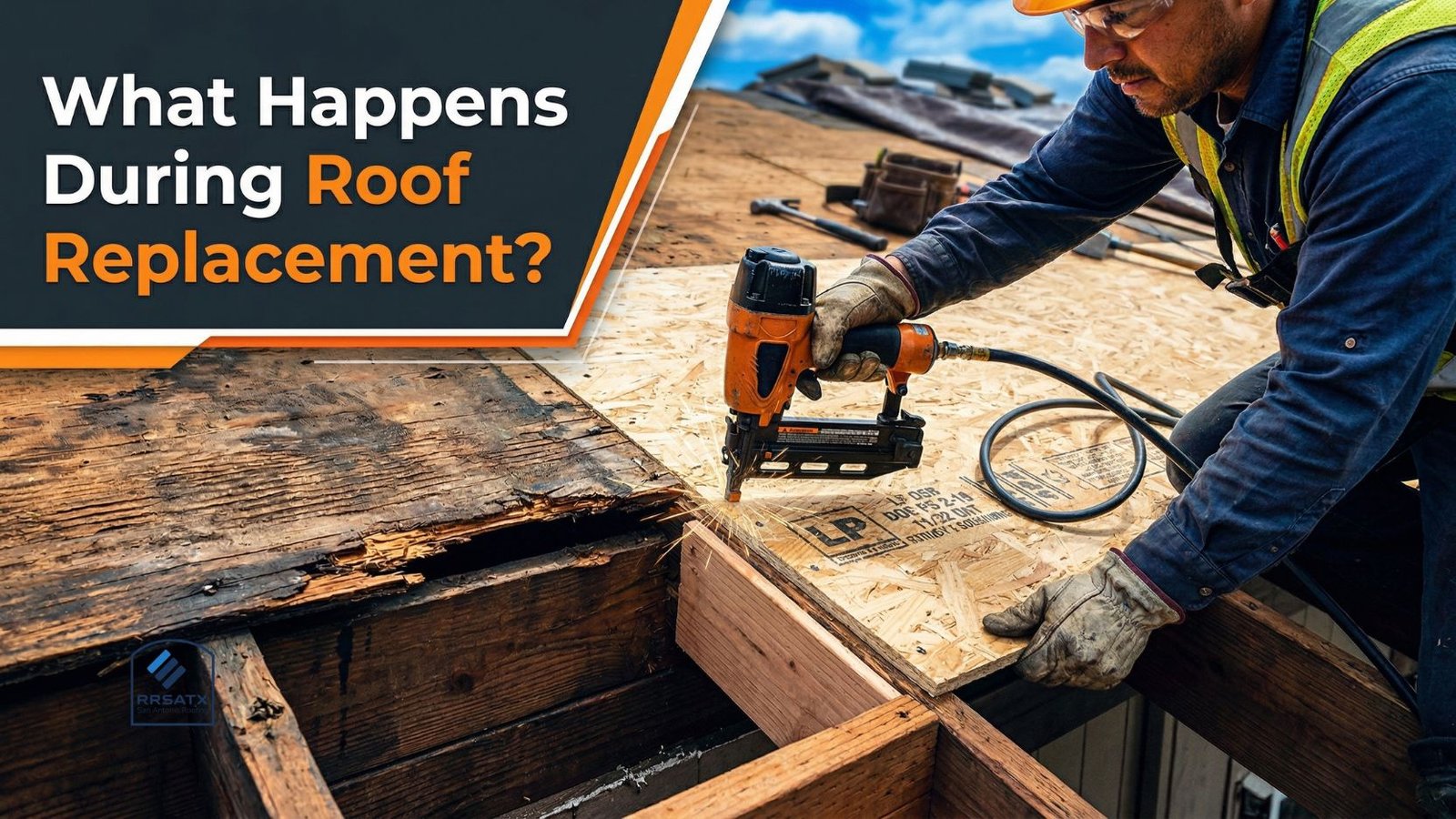
At RRSATX: San Antonio Roofing Company, our team works on roofs affected by South Texas heat, hail, wind, and heavy rain. Based on real roofing conditions in San Antonio, roof replacement typically involves inspecting the roof, removing old materials, checking and repairing the deck as needed, installing new underlayment and flashing, putting on the new roof covering, and finishing with cleanup and a final walkthrough.
That is the direct answer: during roof replacement, the old roof is removed and a new roofing system is installed in layers so the home or building is protected long term. It is a system rebuild, not just a surface update.
What Happens First During Roof Replacement?
The first step in roof replacement is a detailed inspection and project setup. Before materials come off, the contractor needs to confirm the roof’s condition, measurements, access points, and safety needs.
This early stage usually includes:
- Roof inspection
- Material and color selection
- Written estimate and scope review
- Scheduling
- Delivery of roofing materials
- Property protection planning
For homeowners, this is also the time to move vehicles, protect fragile items inside, and prepare for noise during the project.
What Happens When The Old Roof Is Removed?
The old roofing material is torn off so the contractor can inspect the surface underneath and build the new roof correctly. This step is called tear-off.
During tear-off, the crew may remove:
- Old shingles
- Felt or synthetic underlayment
- Damaged flashing
- Old fasteners
- Worn edge materials
- Sections of failed roofing on flat or low-slope systems
Removing the old roof is important because it exposes hidden issues that cannot be seen from the ground.
Key takeaway: A true roof replacement starts by removing worn materials, not by covering them up.
What Happens After The Tear-Off?
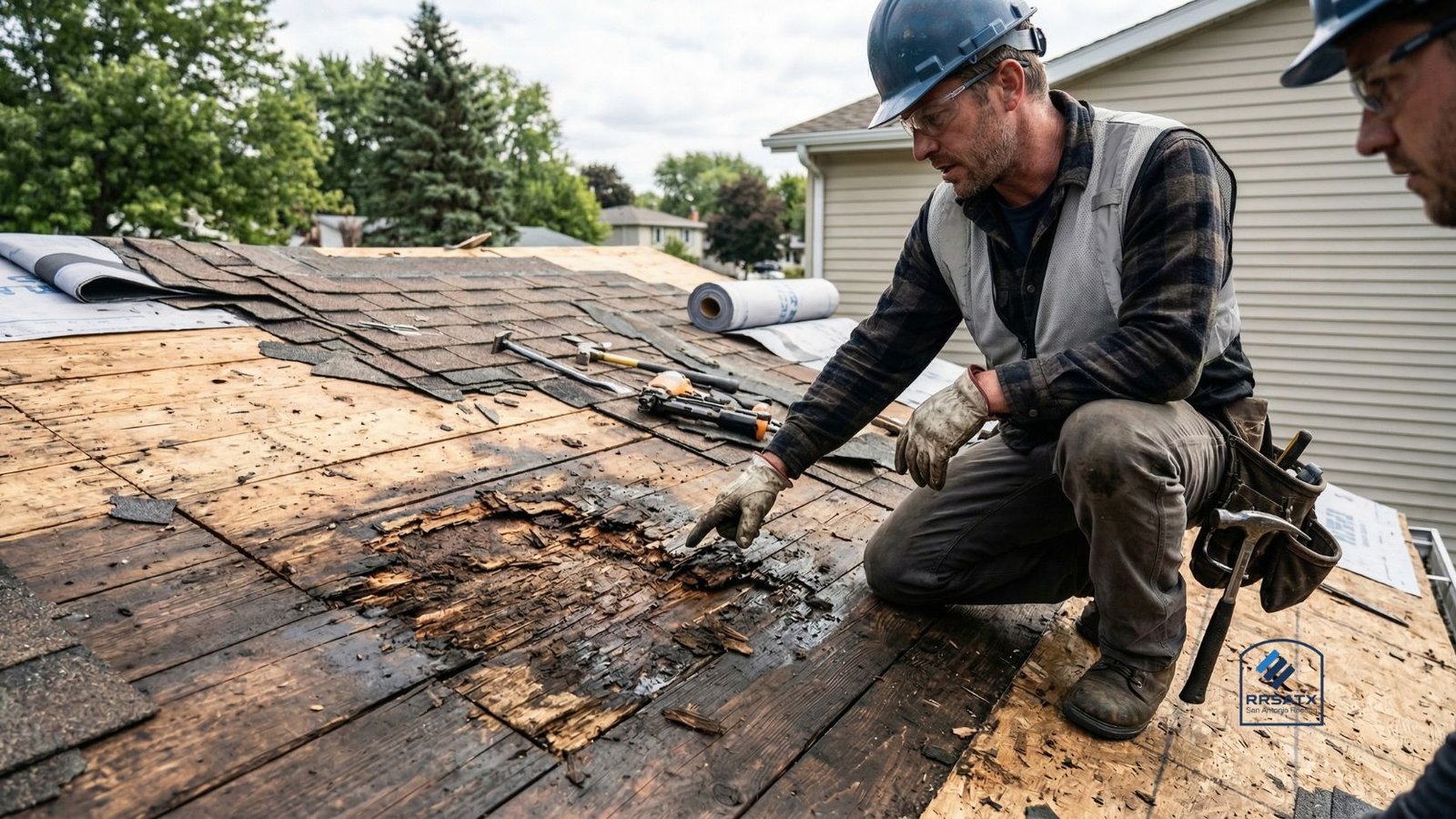
After tear-off, the roof deck is inspected for damage, rot, moisture issues, and structural weakness. This is one of the most important parts of the process.
The contractor will look for:
- Soft or rotted decking
- Water-damaged wood
- Sagging areas
- Mold or long-term moisture exposure
- Loose or weak attachment points
If damaged decking is found, those sections are replaced before the new roof goes on.
This step matters because even the best shingles or metal panels will fail early if they are installed over a compromised base.
What Waterproofing Materials Are Installed During Roof Replacement?
Once the deck is sound, new waterproofing layers are installed before the final roofing material goes on. These layers are what help keep water out when wind-driven rain or storm conditions hit.
Common Waterproofing Components Include:
| Component | What it does |
| Underlayment | Adds a protective moisture barrier over the deck |
| Flashing | Seals penetrations, walls, valleys, and transitions |
| Drip edge | Helps direct water off the roof edge |
| Ice and water barrier or specialty membrane | Adds extra protection in vulnerable areas where applicable |
In San Antonio, flashing and underlayment are especially important because heat and storm exposure can wear down weak details long before the main roofing material completely fails.
What Happens When The New Roof Is Installed?
After prep layers are in place, the new roofing material is installed according to the roof type and design. This is the stage most property owners think of when they picture roof replacement.
Depending on the building, installation may involve:
- Asphalt shingles
- Metal panels
- Tile roofing
- TPO or flat-roof membrane systems
- Ridge caps and finishing components
- Sealants at critical details
The installation process must follow manufacturer requirements and proper sequencing so the roof sheds water correctly and resists wind uplift.
How Long Does Roof Replacement Usually Take?
Many residential roof replacements take one to a few days, but the timeline depends on roof size, weather, materials, and underlying repairs. Commercial and complex projects often take longer.
Factors That Affect Timing:
- Roof square footage
- Number of roof sections and valleys
- Material type
- Decking repairs discovered after tear-off
- Weather delays
- Access and safety requirements
A straightforward residential shingle roof may move quickly. A larger building with structural repairs or specialty materials will take more time.
What Should Homeowners Expect During The Project?
Homeowners should expect noise, worker activity, material movement, and temporary disruption during roof replacement. The process is normal, but preparation helps.
What to expect on project day:
- Loud tear-off and installation sounds
- Trucks, trailers, and dumpsters on site
- Vibrations inside the home
- Limited driveway access
- Debris control and cleanup activity
- Crew movement around the property
If you are living in the home during the project, it is smart to protect attic items, wall hangings, and vehicles.
Key takeaway: Roof replacement is disruptive for a short time, but good planning reduces stress and helps the project run smoothly.
What Happens After The New Roof Is Finished?
After installation, the crew should clean the site, inspect the work, and review the completed roof with the property owner. The final stage matters just as much as the first.
A proper closeout usually includes:
- Removal of leftover debris
- Magnetic sweep for nails
- Final inspection of installation details
- Review of workmanship and materials used
- Discussion of warranty information
- Confirmation that the property is left in good condition
For property owners near 4324 Monterey St, San Antonio, TX 78237 and 318 E Nakoma Dr #210, San Antonio, TX 78216, this final review is especially important after storm-related projects, when insurance scope and documentation may also be part of the process.
What Problems Can Be Found During Roof Replacement?
Roof replacement can reveal hidden damage that was not visible before tear-off. This is common with older roofs, leak-prone areas, and storm-damaged systems.
Hidden issues may include:
- Rotten decking
- Improper past repairs
- Trapped moisture
- Ventilation problems
- Flashing failure
- Structural weak points around penetrations
This is one reason estimates sometimes include language about additional decking or repair costs if damage is discovered once the roof is open.
FAQs
Can I Stay In My House During Roof Replacement?
Yes, in many cases you can stay home, but expect significant noise and activity during the day.
Does Roof Replacement Happen All In One Day?
Sometimes. Smaller residential roofs may be completed in one day, but many projects take longer depending on scope and weather.
What If It Rains During Roof Replacement?
Roofing crews use staging and weather monitoring to reduce risk. If rain threatens, they typically use tarps or temporary waterproofing to protect exposed areas.