

At RRSATX: San Antonio Roofing Company, our team works on residential and commercial roofs exposed to South Texas heat, hail, wind, and heavy rain. Based on real-world roofing conditions in San Antonio, a full roof replacement means removing the existing roof system down to the deck as needed, inspecting the underlying structure, replacing damaged components, and installing a completely new roofing system designed for long-term protection.
In simple terms, a full roof replacement is not a patch job and not just a new top layer. It is a full-system roofing project meant to restore the roof’s weather resistance, durability, and service life.
What Does A Full Roof Replacement Mean?
A full roof replacement means the old roofing materials are removed and replaced with a new roof system. This usually includes more than just shingles or metal panels.
A full replacement often involves:
- Tearing off the old roofing material
- Inspecting the roof decking
- Replacing damaged wood or substrate where needed
- Installing new underlayment
- Replacing flashing around roof penetrations
- Installing new edge materials and ventilation components
- Putting on new roofing material
- Completing cleanup and final inspection
Key takeaway: A full roof replacement addresses the entire roofing assembly, not just the visible surface.
How Is A Full Roof Replacement Different From A Roof Repair?
A roof repair fixes a specific problem area, while a full roof replacement renews the roof as a whole. If the issue is isolated, repair may be enough. If the roof has widespread wear, age-related failure, or repeated leaks, full replacement is often the better long-term solution.
Roof Repair VS Full Roof Replacement
| Roof Repair | Full Roof Replacement |
| Fixes one section or issue | Rebuilds the full roofing system |
| Lower short-term cost | Higher upfront cost, often better long-term value |
| Best for isolated damage | Best for widespread deterioration |
| May not solve age-related failure | Resets the roof’s lifespan |
For older roofs in San Antonio, repeated repairs can become less cost-effective when UV damage, storm wear, and material breakdown are affecting multiple sections.
When Do You Need A Full Roof Replacement?
You may need a full roof replacement when the roof is old, storm-damaged, leaking in multiple areas, or failing across the system. Repairs can only go so far when the base materials are worn out.
Common signs include:
- The roof is 15–20+ years old
- Leaks keep coming back
- Shingles are curling, cracking, or missing in many places
- Hail or wind damage affects multiple slopes
- The roof deck has soft spots or rot
- Flashing and seals are failing in several areas
- Repair costs are adding up repeatedly
For homeowners and property managers, the decision often comes down to isolated damage versus system-wide failure.
What Is Included In A Full Roof Replacement?
A full roof replacement usually includes tear-off, decking inspection, waterproofing layers, flashing, ventilation review, and installation of the new roof covering. The exact materials depend on whether the roof is shingle, metal, tile, flat, or low-slope.
Typical Full Roof Replacement Components
- Old roof removal and disposal
- Roof deck inspection
- Decking repair or replacement where damaged
- New underlayment
- Ice and water protection or specialty waterproofing where applicable
- Flashing replacement
- Drip edge installation
- Ventilation component replacement or correction
- New roofing material installation
- Ridge caps, sealants, and finishing details
- Cleanup and final walkthrough
Key takeaway: If the estimate only mentions new shingles but not flashing, underlayment, or deck inspection, it may not describe a true full replacement scope.
Does A Full Roof Replacement Include The Roof Deck?
A full roof replacement includes checking the deck, but not always replacing the entire deck. If the decking is sound, it may remain. If it has rot, water damage, or structural weakness, damaged sections should be replaced.
Deck issues are especially common when:
- Leaks have gone unnoticed for a long time
- Storm damage allowed moisture intrusion
- Previous roofing layers trapped water
- The roof has sagging or soft areas
This step matters because new roofing materials perform only as well as the surface underneath them.
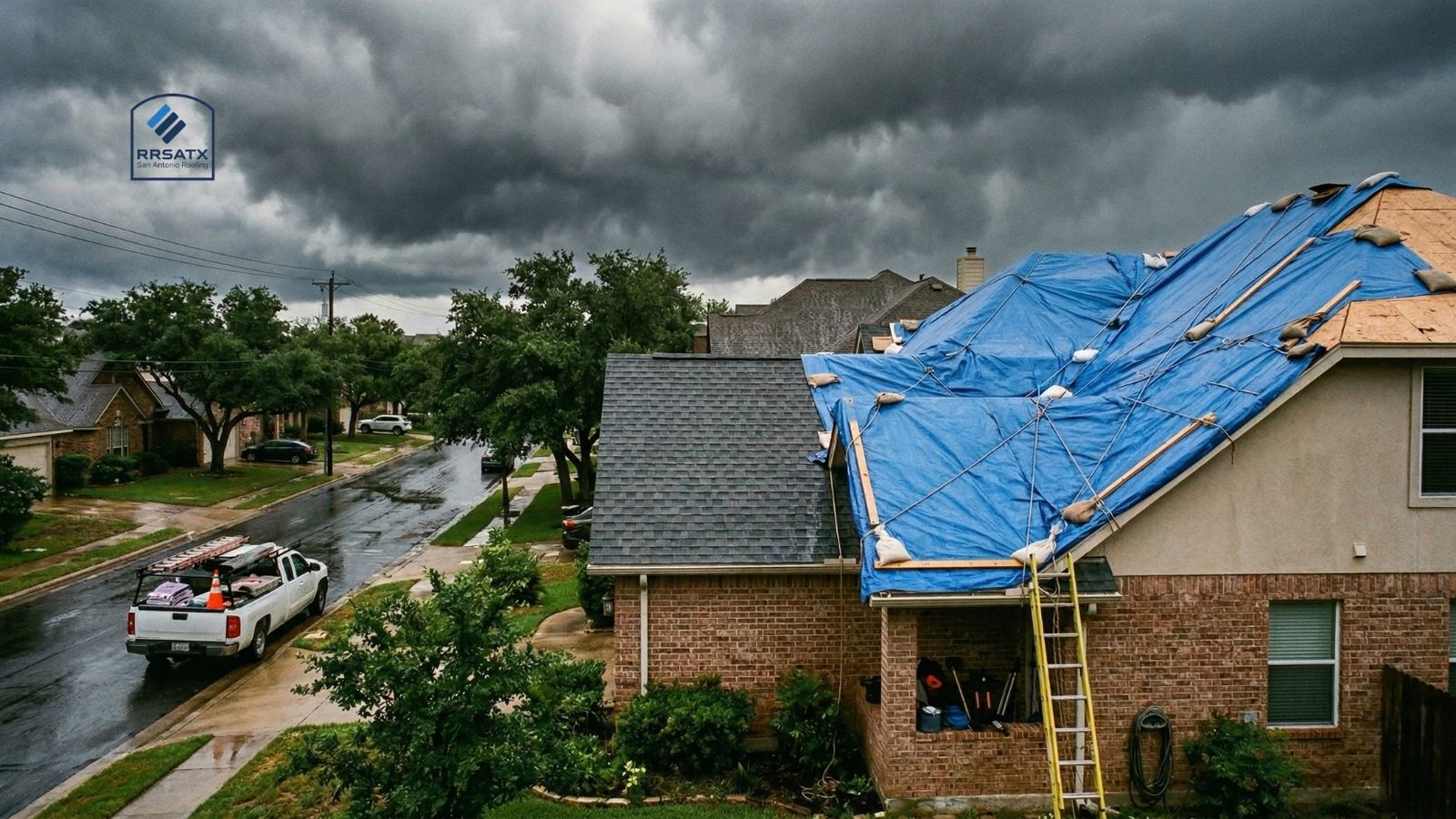
How Long Does A Full Roof Replacement Take?
Most residential full roof replacements take one to a few days, but timing depends on roof size, material, weather, and hidden damage. Commercial buildings and complex rooflines often take longer.
Factors that affect project length:
- Roof size and slope
- Type of material being installed
- Number of penetrations or roof features
- Decking repairs needed after tear-off
- Weather conditions
- Access to the property
In San Antonio, scheduling can also be affected by storm seasons and extreme summer heat.
Is A Full Roof Replacement Worth It?
Yes, a full roof replacement is often worth it when the existing roof is near the end of its life or has repeated failure points. While it costs more upfront than repair, it can reduce future leak risk and avoid ongoing patchwork expenses.
Potential benefits include:
- Better protection against leaks
- Improved storm resistance
- Longer roof lifespan
- Better curb appeal
- Higher buyer confidence during a sale
- Reduced need for repeated repairs
This is especially relevant for:
- Homes with aging roofs
- Properties with insurance-related storm damage
- Buyers and sellers needing roof certainty
- Commercial owners trying to avoid disruption from recurring leaks
What Should San Antonio Property Owners Ask Before Agreeing To A Full Roof Replacement?
San Antonio property owners should ask exactly what will be removed, inspected, replaced, and warranted. A vague estimate can lead to expensive surprises.
Ask these questions:
- Will the old roof be fully removed?
- Is deck inspection included?
- How are damaged decking sections priced?
- Will flashing be replaced?
- What underlayment will be used?
- Are ventilation corrections included if needed?
- How will cleanup and disposal be handled?
- What warranty applies to materials and workmanship?
For roofs near 4324 Monterey St, San Antonio, TX 78237 and 318 E Nakoma Dr #210, San Antonio, TX 78216, these questions matter because local roofs often face cumulative wear from heat, hail, and seasonal storms.
FAQs
Is A Full Roof Replacement The Same As A New Roof?
Usually yes, but “new roof” can be vague. A full roof replacement specifically means the existing system is removed and replaced, not just covered over.
Can You Live In Your Home During A Full Roof Replacement?
In many cases, yes. Most homeowners stay in place during the project, although there will be noise and activity during tear-off and installation.
Does Insurance Pay For A Full Roof Replacement?
Sometimes. Insurance may cover it if the roof has qualifying storm damage, but coverage depends on the policy and inspection findings.