
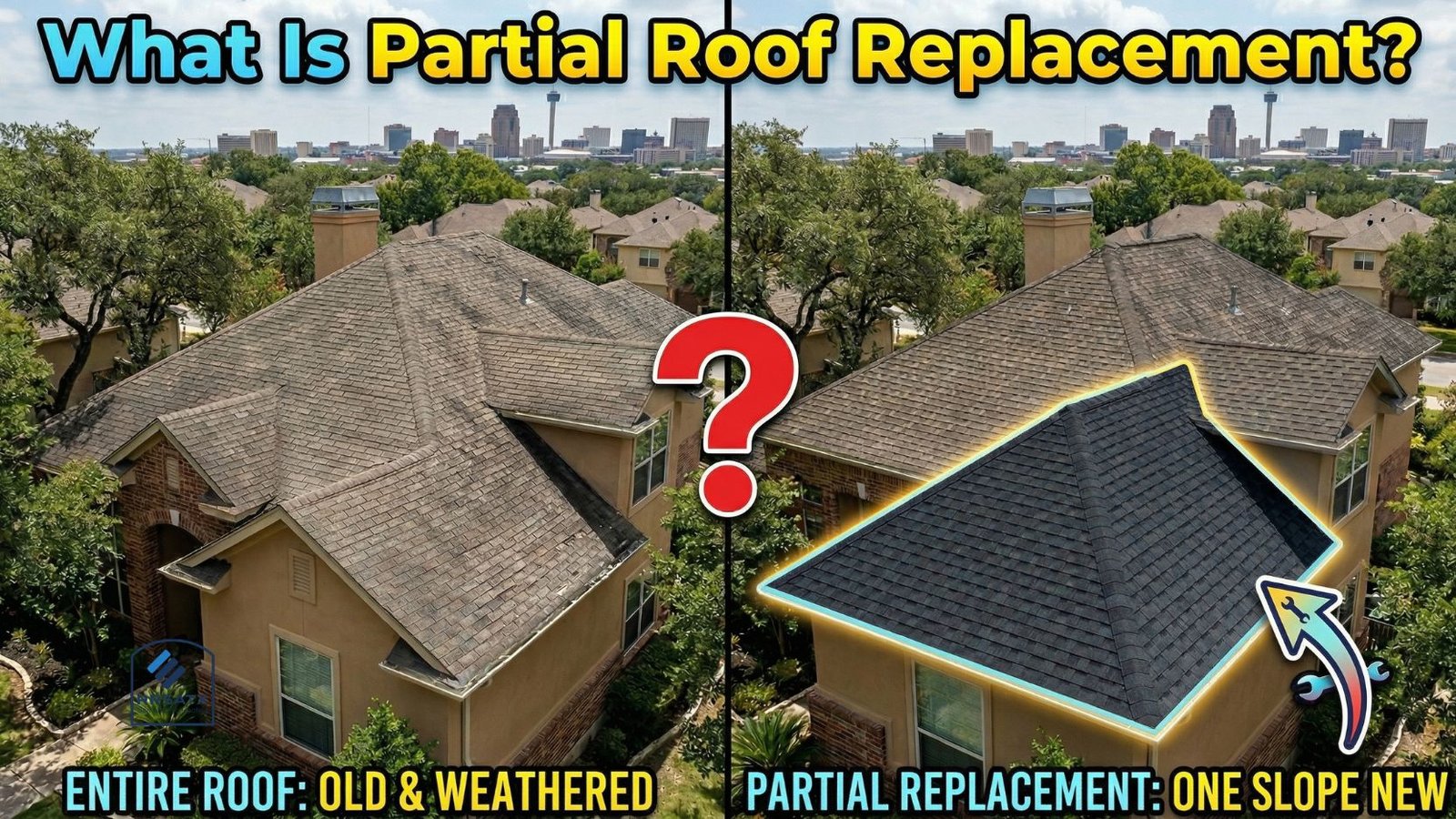
At RRSATX: San Antonio Roofing Company, our team works on roofs damaged by South Texas heat, wind, hail, and heavy rain. In real roofing situations across San Antonio, a partial roof replacement means replacing one damaged section or slope of a roof instead of replacing the entire roofing system.
That is the direct answer: partial roof replacement is a middle-ground option between a repair and a full roof replacement. It is usually considered when damage is limited to one area, while the rest of the roof is still in serviceable condition.
What Does A Partial Roof Replacement Mean?
A partial roof replacement means removing and replacing a specific section of the roof that has significant damage or wear. It is larger than a minor repair but smaller than a full replacement.
This may involve replacing:
- One roof slope
- One side of the home
- A storm-damaged section
- A section with repeated leaks
- An area with material failure near valleys, flashing, or penetrations
Key takeaway: Partial replacement is used when the roof has a localized problem, not when the whole roof is failing.
How Is A Partial Roof Replacement Different From A Roof Repair?
A roof repair fixes a small isolated problem, while a partial roof replacement removes and rebuilds a larger affected section. The difference is mostly about scope.
Roof Repair VS Partial Roof Replacement
| Roof Repair | Partial Roof Replacement |
| Fixes a small area | Replaces a larger roof section |
| Usually addresses one issue | Addresses broader localized failure |
| Lower cost | Higher cost than repair, lower than full replacement |
| Best for minor damage | Best for one damaged slope or section |
For example, replacing a few shingles after a small leak is a repair. Replacing an entire slope after hail damage or repeated leakage is a partial replacement.
When Does A Partial Roof Replacement Make Sense?
A partial roof replacement makes sense when one section of the roof is damaged, but the rest of the roof still has useful life left. It can be a practical option for budget-conscious property owners if the conditions are right.
It may be appropriate when:
- Storm damage is limited to one side of the roof
- One slope gets more sun exposure and has aged faster
- A section has chronic leaks from past installation issues
- A tree impact or localized event damaged one area
- The rest of the roof is still structurally sound
This is common in San Antonio, where one roof plane may take the brunt of sun, wind, or hail while other sections remain in better condition.
When Is A Partial Roof Replacement A Bad Idea?
A partial roof replacement is a bad idea when the roof has widespread wear, advanced age, or hidden failure in multiple areas. In those cases, a full replacement is usually the smarter long-term decision.
It may not make sense if:
- The roof is 15–20+ years old
- Materials are brittle or discontinued
- Leaks are happening in multiple places
- Storm damage affects several slopes
- Flashing, underlayment, and ventilation are all aging together
- Matching the existing roof material is difficult
Key takeaway: Partial replacement works best when the problem is truly localized and the remaining roof is still reliable.
What Is Included In A Partial Roof Replacement?
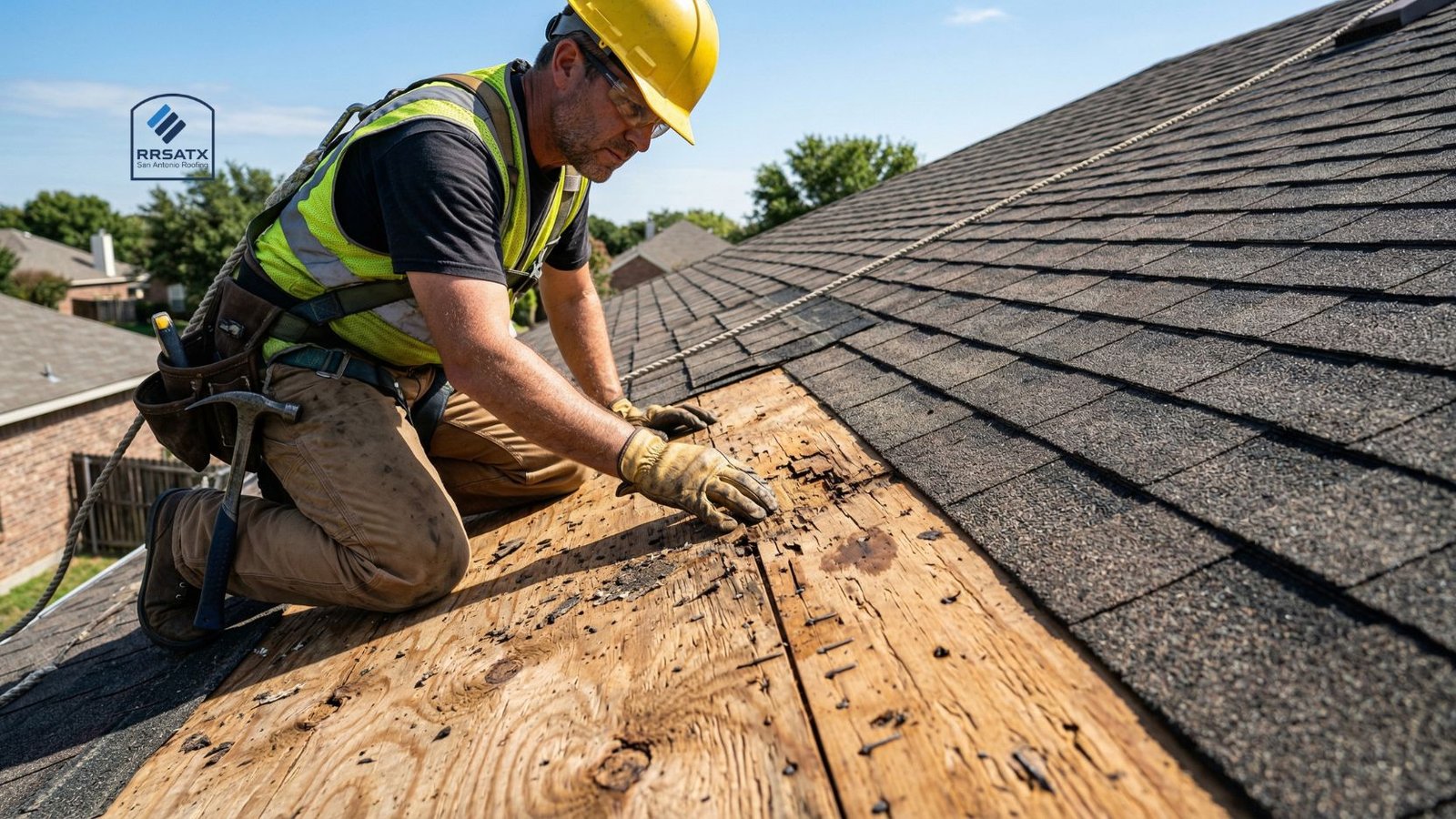
A partial roof replacement usually includes removing the damaged section, checking the deck underneath, replacing failed components, and installing new roofing materials in that area.
Typical work may include:
- Removal of shingles, metal panels, tile, or membrane in the affected section
- Inspection of decking or substrate
- Replacement of damaged wood if needed
- New underlayment in the replaced area
- Flashing updates where the section ties into existing roof areas
- Installation of new roofing material
- Sealing transition points between old and new roof sections
- Cleanup and inspection
The most important part is how the new section integrates with the old roof. Poor transition work can create future leak points.
Can You Match A New Section To The Existing Roof?
Sometimes, but not always. Color, texture, weathering, and product availability can make a perfect match difficult.
Matching challenges often involve:
- Faded older shingles
- Discontinued product lines
- Differences in granule color
- Changes in manufacturer profiles
- Visible contrast between old and new materials
For homeowners concerned about appearance, this matters. A partial replacement may solve the functional issue but still leave a noticeable color difference.
Is A Partial Roof Replacement Cheaper Than A Full Replacement?
Yes, partial roof replacement is usually cheaper upfront than a full roof replacement because less material and labor are involved. But lower initial cost does not always mean better long-term value.
A partial replacement may cost less now, but it can become less efficient if:
- Another section fails soon after
- Repeated labor mobilization is needed
- The remaining roof is near the end of its life
- Insurance only covers certain damaged areas, leaving aging areas untreated
For some property owners, partial replacement is the right budget decision. For others, it only delays a full replacement by a short time.
How Do You Know If Your Roof Qualifies For Partial Replacement?
A roof qualifies for partial replacement when the damage is limited, the surrounding roof is still in good condition, and the new section can be integrated without compromising performance. A professional inspection is the only reliable way to confirm that.
An inspection should evaluate:
- Age of the entire roof
- Extent of storm or leak damage
- Condition of adjacent sections
- Decking condition under the damaged area
- Flashing and waterproofing details
- Material compatibility and match options
For property owners near 4324 Monterey St, San Antonio, TX 78237 and 318 E Nakoma Dr #210, San Antonio, TX 78216, this is especially important after hail and wind events, where damage may look isolated from the ground but extend farther across the roof system.
Should San Antonio Homeowners Choose Partial Or Full Roof Replacement?
San Antonio homeowners should choose partial replacement when the problem is localized and the rest of the roof is still dependable. If the roof is older or failing in multiple areas, full replacement usually offers better long-term protection.
Choose partial replacement when:
- Damage is confined to one area
- The roof is still relatively serviceable overall
- Matching materials are available
- Budget is a major concern
Choose full replacement when:
- The roof is aging out
- Damage is spread across the system
- Leaks are recurring
- You want to avoid piecemeal future repairs
FAQs
Is Partial Roof Replacement Covered By Insurance?
Sometimes. Insurance may cover partial replacement when storm damage is limited to a specific area, but policy terms and inspection findings will determine scope.
How Long Does A Partial Roof Replacement Take?
Many partial replacements can be completed in a day or two, depending on size, material type, weather, and underlying deck repairs.
Will A Partial Roof Replacement Look Different?
It might. Even if the material type matches, the new section can look newer or slightly different from the weathered existing roof.