
[et_pb_section fb_built=”1″ admin_label=”section” _builder_version=”4.16″ global_colors_info=”{}”][et_pb_row admin_label=”row” _builder_version=”4.16″ background_size=”initial” background_position=”top_left” background_repeat=”repeat” global_colors_info=”{}”][et_pb_column type=”4_4″ _builder_version=”4.16″ custom_padding=”|||” global_colors_info=”{}” custom_padding__hover=”|||”][et_pb_code _builder_version=”4.27.6″ _module_preset=”default” hover_enabled=”0″ sticky_enabled=”0″]
Metal roofs cost more upfront, but the real question is what you get back over time. This guide breaks down every dollar you spend and every dollar you recover when you compare metal and asphalt shingle roofs in San Antonio.
The upfront price tag on a metal roof is real. Depending on the material and style you choose, a metal roof in San Antonio will cost two to three times more than a comparable asphalt shingle roof installed on the same home. That number stops a lot of homeowners before the conversation gets started.
But the upfront price is only one part of the equation. The full return on investment calculation has to account for how long the roof lasts, what it costs to maintain, what you save on energy and insurance, and what it does to your home’s resale value. When you run those numbers for a home in San Antonio, the picture changes significantly.
This guide walks through every factor that goes into the metal vs asphalt ROI comparison, with real numbers that reflect what San Antonio homeowners actually spend and recover.
Most homeowners compare the installation quote and stop there. A better comparison divides the total lifetime cost of each roof (installation plus maintenance plus energy impact) by the number of years it is expected to last. When you run that calculation in San Antonio’s climate, metal roofs frequently come out at a lower annual cost than asphalt shingles even though they cost more on day one. That is the number that makes the ROI conversation worth having.
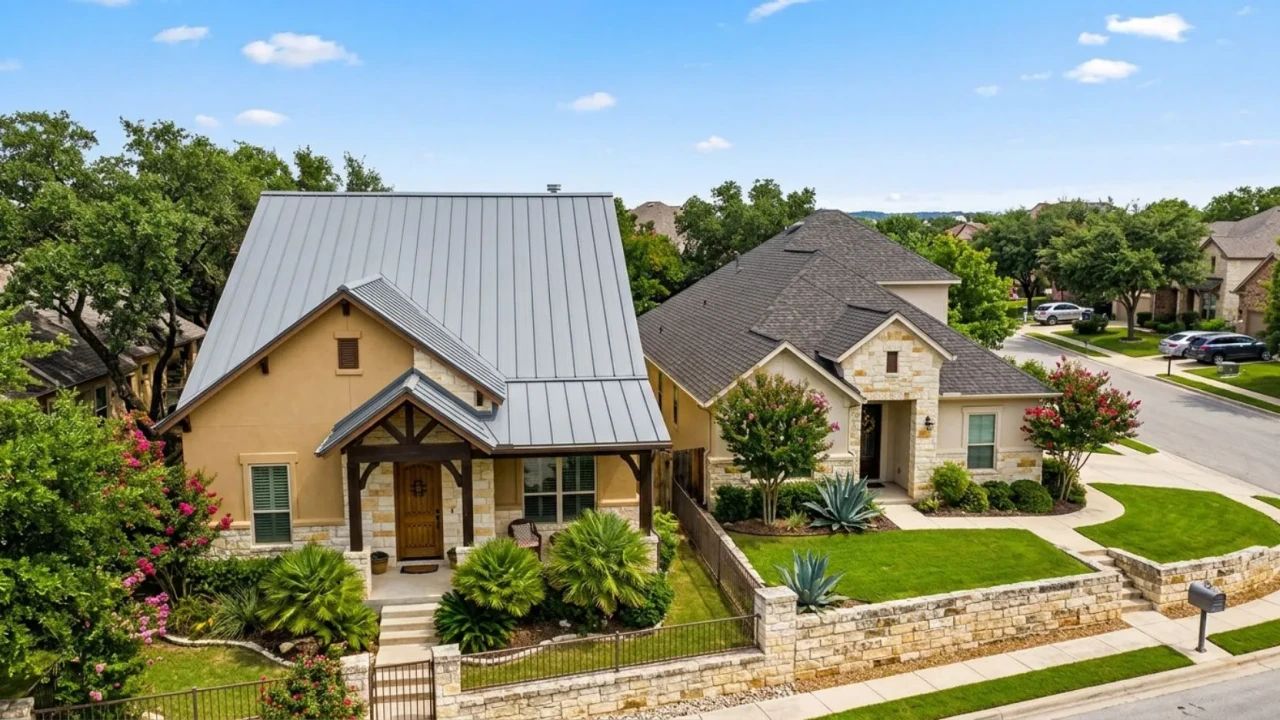
Upfront Cost
On a typical San Antonio home in the 1,500 to 2,500 square foot range, an asphalt shingle roof replacement runs between $8,000 and $16,000 depending on the shingle grade, pitch, and complexity of the roof. A metal roof on the same home runs between $18,000 and $38,000, with standing seam systems and premium materials at the high end of that range.
The gap is real, and it is important to understand what you are getting for it before concluding it is too much. Higher-grade architectural asphalt shingles narrow the cost gap somewhat, but they also come with a shorter warranty and higher maintenance frequency than metal. The comparison should always be between equivalent quality levels, not entry-level asphalt versus premium metal.
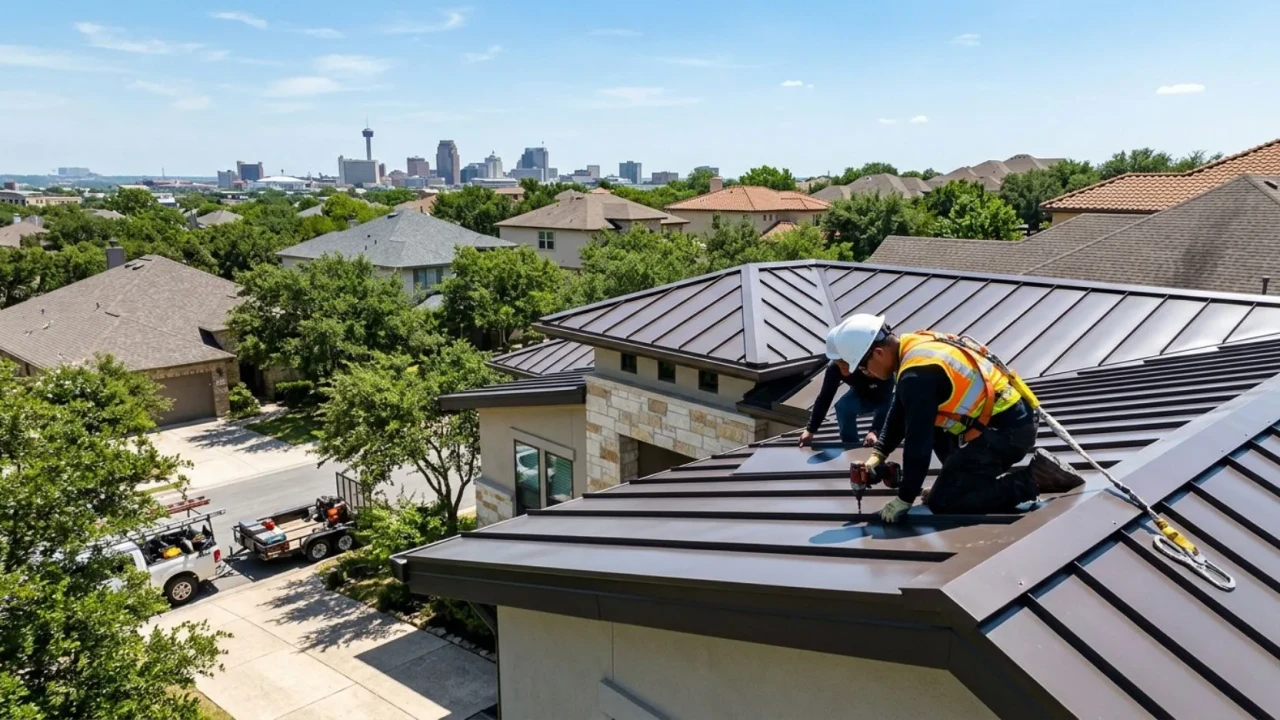
3-tab asphalt shingles: The lowest-cost option, typically $8,000 to $11,000 installed on a standard San Antonio home. Shortest lifespan of any roofing product, usually 15 to 20 years in Texas heat. Limited wind and impact resistance.
Architectural asphalt shingles: The most common choice, running $11,000 to $16,000 installed. Better appearance and 25 to 30-year lifespan under ideal conditions, though San Antonio heat accelerates degradation. Most homeowners replace them around year 18 to 22.
- Both quotes include full tear-off of the existing roof, not overlay installation
- Decking inspection and any necessary repairs are included or itemized separately
- Underlayment type specified: synthetic vs felt, and what grade for each roof type
- All flashings included: chimney, pipe boots, drip edge, and valleys
- Warranty terms confirmed: both manufacturer product warranty and contractor workmanship warranty
- Both quotes are for comparable quality tiers, not entry-level asphalt vs premium metal
Lifespan
In San Antonio, asphalt shingles face conditions that reduce their service life well below the numbers printed on the warranty. Sustained summer temperatures, UV intensity, thermal cycling between cold nights and hot days, and the occasional severe hailstorm all take years off an asphalt roof faster than the same roof would degrade in a milder climate. A 30-year architectural shingle roof in Seattle might reach 28 years of real service life. In San Antonio, 18 to 22 years is a more realistic expectation for a well-maintained roof.
Metal roofs in the same environment perform very differently. The thermal expansion and contraction that stresses asphalt granules actually matters less on a properly installed metal roof because the system is designed to accommodate movement. Metal does not granule-shed, does not crack from UV exposure the way asphalt does, and does not absorb water that then freezes and degrades the material. A quality metal roof installed in San Antonio today, with basic maintenance, should last 40 to 60 years. Standing seam aluminum systems routinely exceed 50 years of service life.
| Roof type | Realistic San Antonio lifespan | Replacements in 50 years | Cumulative replacement cost |
|---|---|---|---|
| 3-tab asphalt shingles | 15 to 20 years | 2 to 3 replacements | $24,000 to $39,000 |
| Architectural asphalt shingles | 18 to 22 years | 2 replacements | $26,000 to $36,000 |
| Metal panels (corrugated/exposed fastener) | 40 to 50 years | 1 replacement | $18,000 to $28,000 |
| Standing seam aluminum | 50 to 60 years | 0 to 1 replacement | $26,000 to $38,000 (once) |
The replacement cycle math is the most powerful argument for metal roofing in San Antonio. A homeowner who installs architectural asphalt shingles today and replaces them twice over the next 50 years will spend between $26,000 and $36,000 in roof installation costs alone, not counting maintenance. A homeowner who installs a standing seam metal roof today will spend between $26,000 and $38,000 once and potentially never again. The metal roof costs the same or less over 50 years, and that is before any energy savings, insurance discounts, or resale value premium are counted.
- What is the realistic service life expectation for this product in San Antonio’s specific climate?
- What voids the warranty in practice, and what maintenance is required to keep it in force?
- How does this material handle the temperature swings San Antonio sees between summer and winter?
- What is the expected maintenance frequency and what does that maintenance cost over 20 years?
- What condition is the roof expected to be in at the 20-year mark with normal maintenance?
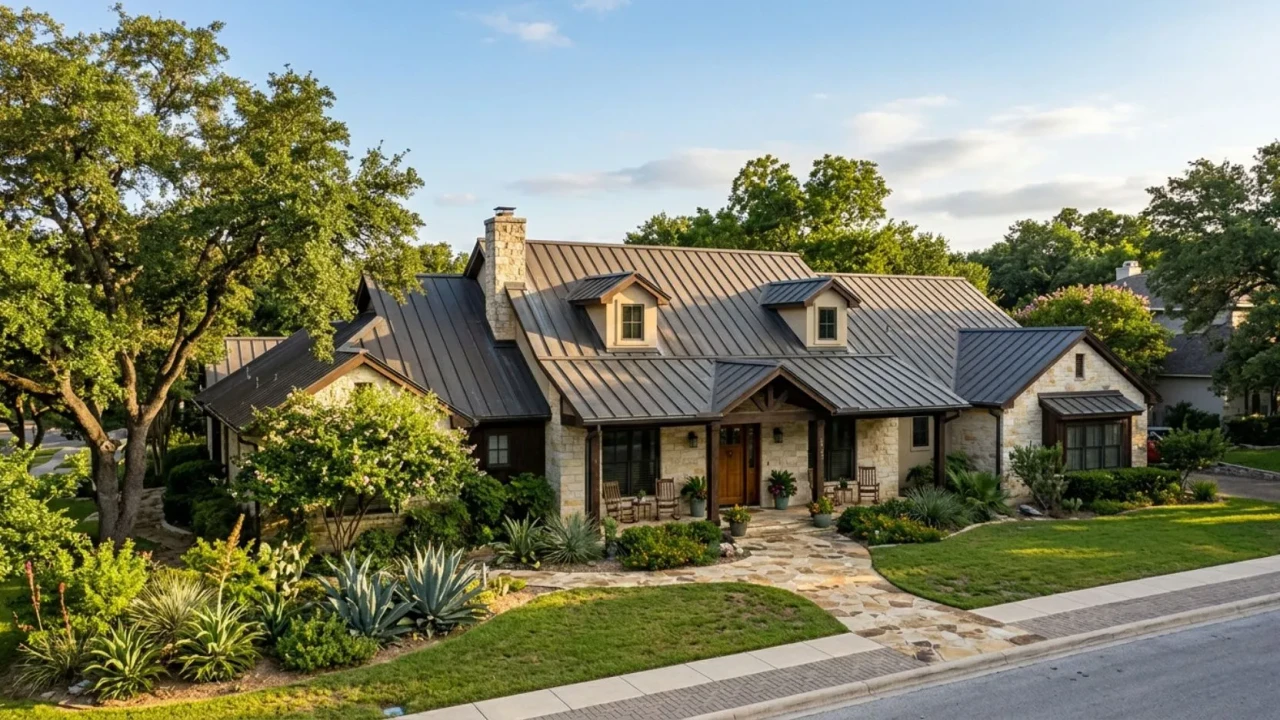
Maintenance
Asphalt shingles need attention throughout their service life. Granule loss accelerates UV penetration into the shingle base, which speeds up cracking and curling. Individual shingles blown off in wind events or cracked by hail need to be matched and replaced, and finding an exact color match for a shingle installed 10 years ago is rarely possible. Flashings around chimneys, vents, and skylights need to be resealed more frequently because the asphalt substrate expands and contracts more aggressively than metal, stressing the caulk joints.
A well-maintained asphalt shingle roof will realistically need two to four repair visits over a 20-year service life, not counting any storm-damage claims. At $300 to $700 per visit for typical repairs in San Antonio, that is $600 to $2,800 in maintenance costs before the roof is replaced. Over two roof cycles, that doubles.
Metal roofs have their own maintenance requirements, primarily around fasteners and sealant on exposed-fastener systems. But the frequency is lower, the cost per visit is comparable, and the issues that trigger repairs on asphalt roofs simply do not exist on metal. A metal roof does not granule-shed, does not curl, and does not crack from sun exposure. The most common metal roof maintenance task in San Antonio is fastener and sealant inspection every 8 to 12 years, which typically runs $200 to $500 per visit.
- Inspection frequency required to maintain the manufacturer’s warranty on each product
- Average cost per maintenance visit for each roof type in San Antonio
- Insurance deductible exposure over the expected service life of each roof
- Cost of matching replacement materials at years 10 and 15 for asphalt shingles
- Flashing re-sealing frequency: asphalt roofs typically need this every 5 to 7 years
Energy ROI
San Antonio averages more than 220 sunny days per year and routinely sees summer highs above 100 degrees. The roof surface temperature on a dark asphalt shingle roof on a July afternoon in San Antonio can exceed 160 degrees Fahrenheit. That heat radiates into the attic space and from there into the living areas of the home, forcing air conditioning systems to work harder for longer periods each day.
A reflective metal roof, particularly a light-colored or unpainted galvalume steel or aluminum system, absorbs significantly less solar heat. Depending on the color, coating, and insulation below the roof deck, a metal roof can reduce attic temperatures by 20 to 40 degrees compared to a dark asphalt shingle roof. Studies on Texas homes have shown cooling cost reductions of 15 to 25 percent in homes where a reflective metal roof replaced a dark asphalt shingle roof, without any other changes to the home’s insulation or HVAC system.
In a San Antonio home spending $2,400 per year on electricity with 35 percent of that attributed to cooling, the potential annual savings from a reflective metal roof runs between $126 and $210 per year. Over a 40-year metal roof lifespan, that is $5,040 to $8,400 in energy savings on the conservative end. Homes with poor attic insulation, older HVAC systems, or south-facing roof planes see the largest gains.
Energy savings from a metal roof are greatest on homes with minimal attic insulation, older single-pane windows, and HVAC systems running on longer cycles. If your attic already has R-38 or higher insulation and a newer 18 SEER or better air conditioning system, the marginal cooling benefit from switching to a reflective metal roof will be smaller, though still measurable. Ask your roofing contractor whether they recommend a radiant barrier in addition to the metal roof for maximum attic temperature reduction in San Antonio’s climate.
- Choose a light color or unpainted galvalume finish for maximum solar reflectance
- Ask about Energy Star-rated metal roofing products, which may qualify for federal tax credits
- Consider adding a radiant barrier under the metal roof for additional attic temperature reduction
- Review your current attic insulation level: R-38 or better is the baseline before a metal roof delivers peak energy savings
- Discuss ventilation with your contractor: proper ridge and soffit ventilation works with a metal roof to exhaust heat buildup
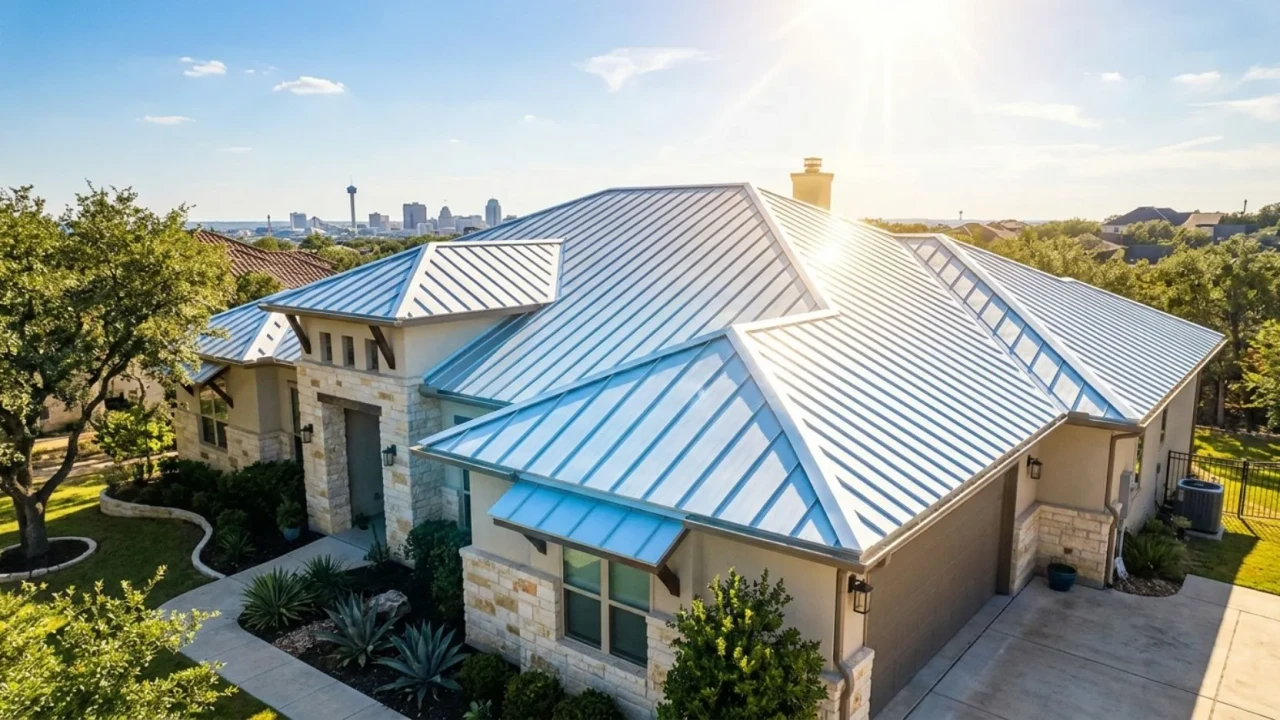
Resale + Insurance
When a home with a metal roof goes on the market in San Antonio, buyers notice. A home that is not due for a roof replacement for another 25 to 40 years is a meaningfully different purchase than a home with a 15-year-old asphalt shingle roof that will need replacement in the next few years. Real estate agents working in Bexar County will tell you that a newer or recently installed metal roof is a selling point that justifies a higher asking price and produces stronger offers from buyers who understand what they are looking at.
National remodeling cost data consistently shows that metal roofs recoup between 55 and 65 percent of their installation cost in resale value, which is comparable to or better than other major home improvements. In a market like San Antonio where buyer competition for well-maintained homes is active, the premium can run higher than the national average.
Insurance savings are a third financial benefit that varies by carrier. Not every Texas homeowner insurance company discounts metal roofs, but many do, and the discount can be significant for impact-resistant metal products. Metal roofs with a Class 4 impact resistance rating qualify for premium discounts from several major Texas carriers. In a hail-active market like San Antonio, asking your insurance agent specifically about metal roof discounts before you make a material decision is worth the phone call. Discounts of 20 to 30 percent on the dwelling coverage portion of your premium are possible with the right product and carrier combination.
| Financial benefit | Metal roof | Asphalt shingles | Advantage |
|---|---|---|---|
| Resale value contribution | 55 to 65% of install cost recouped at sale | Minimal if roof is older at time of sale | Metal |
| Insurance premium discount (Class 4) | 20 to 30% discount on dwelling coverage with qualifying carriers | Standard rate or minimal discount | Metal |
| Buyer appeal on listing | Strong positive: no replacement needed for decades | Neutral to negative if roof is aging | Metal |
| Storm damage claim frequency | Lower: metal handles hail better than asphalt | Higher: asphalt shingles need replacement after large hail | Metal |
| Energy efficiency rating (resale) | Positive: buyers value lower utility bills | Neutral | Metal |
- Request the UL 2218 impact resistance rating for any metal product you are considering: Class 4 is the highest
- Call your insurance carrier and ask specifically what discount applies to Class 4 impact-resistant roofing
- Ask your contractor for documentation confirming the product’s impact rating for your insurance file
- Keep all installation records, warranty documents, and product data sheets for disclosure at future sale
- Note the manufacturer’s warranty length on the listing when you sell: a 50-year transferable warranty is a significant selling point
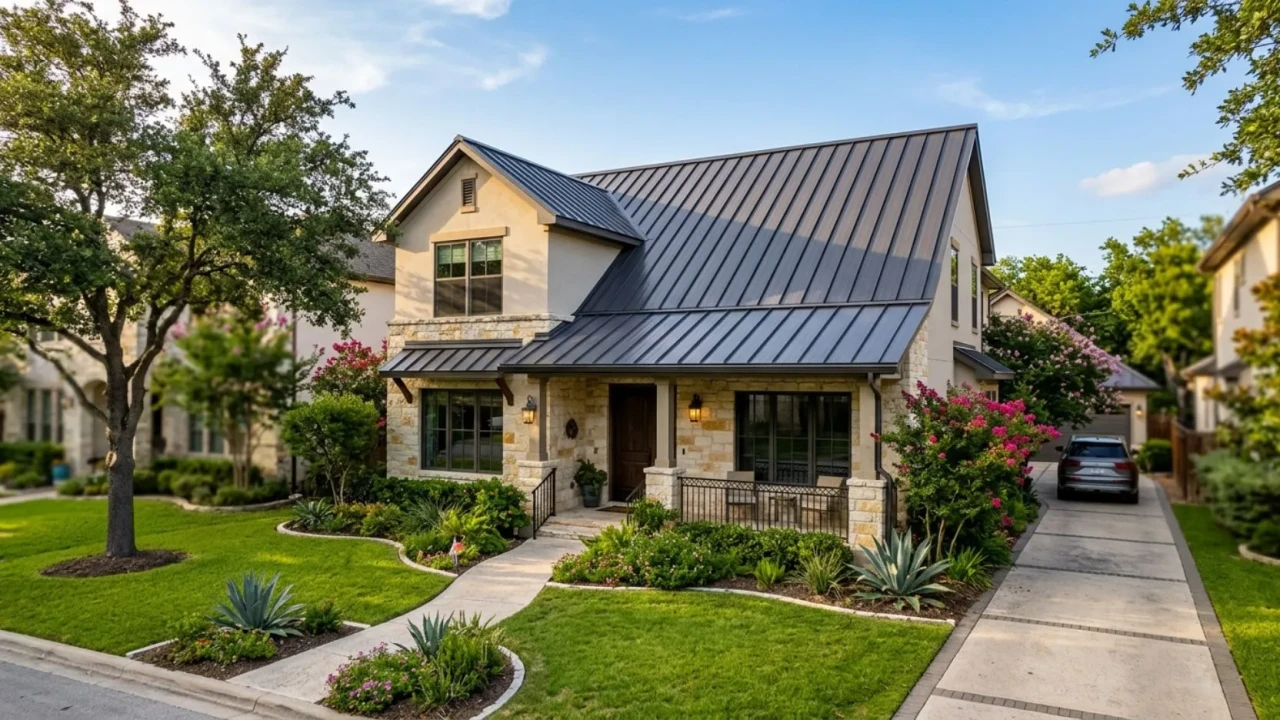
The table below pulls every cost factor together into a single 40-year comparison. All figures use mid-range estimates for a 2,000 square foot San Antonio home. Your specific numbers will vary based on roof complexity, material selection, energy use, and insurance carrier.
| Cost or savings factor | Asphalt shingles (40 years) | Metal roof (40 years) | Difference |
|---|---|---|---|
| Installation cost (initial) | $13,000 | $28,000 | Metal costs $15,000 more upfront |
| Second installation (at year 20) | $16,000 (estimated future cost) | $0 | Asphalt costs $16,000 more |
| Maintenance and repairs | $3,000 to $5,000 over 40 years | $800 to $1,500 over 40 years | Asphalt costs $1,500 to $4,200 more |
| Energy cost difference | Baseline | Save $126 to $210/yr x 40 = $5,000 to $8,400 | Metal saves $5,000 to $8,400 |
| Insurance premium savings | Baseline | $300 to $600/yr x 40 = $12,000 to $24,000 (with qualifying carrier) | Metal saves up to $24,000 |
| Resale value at sale | Minimal: aging roof is a liability at year 30+ | 55 to 65% of install cost: approx. $15,000 to $18,000 | Metal recovers $15,000 to $18,000 at sale |
| Total 40-year cost estimate | $29,000 to $34,000 spent, minimal recovery | $28,000 spent, up to $37,400 in savings and recovery | Metal wins by a wide margin over 40 years |
If you are planning to own your San Antonio home for 15 years or more, a metal roof is the stronger long-term investment in almost every realistic scenario. The upfront cost premium is real, but the combination of eliminated replacement cycles, lower maintenance costs, energy savings, potential insurance discounts, and resale value contribution make a metal roof the lower total cost option across a 30 to 40-year ownership horizon. The break-even point for most San Antonio homeowners, where the accumulated savings and value offset the higher upfront cost, is typically between 12 and 18 years after installation.

- How long do you plan to stay in the home? Metal ROI is strongest over 15 or more years of ownership
- Are you planning any major renovations that could affect the roof’s performance or longevity?
- Do you expect to sell within 5 years? If so, a high-quality asphalt roof may offer better short-term resale return
- Is the current roof at end of life, or are you making a proactive upgrade decision?
- Written quotes obtained for both metal and asphalt options, with identical scope and tear-off included
- Annual electricity bill reviewed: 40% or more spent on cooling strengthens the metal energy savings case
- Insurance agent contacted about Class 4 impact-resistant metal roof discounts available from your carrier
- Second replacement cost estimated for the asphalt option and added to the 40-year comparison
- Maintenance cost history from your current roof used to estimate ongoing repair frequency
- Impact resistance rating confirmed: Class 4 UL 2218 is the target for both insurance discounts and hail performance
- Manufacturer warranty length confirmed and whether it is transferable to a future buyer
- Color selection considered: lighter metal colors deliver the largest energy savings in San Antonio’s climate
- Underlayment type specified: high-temperature synthetic underlayment is the correct choice for San Antonio metal roofs
- Ventilation plan confirmed with your contractor: proper ridge and soffit venting maximizes the energy benefit of a metal roof
Is a metal roof worth it in San Antonio?
How much more does a metal roof cost than asphalt shingles in San Antonio?
How long does it take to break even on a metal roof in San Antonio?
Does a metal roof increase home value in San Antonio?
Will a metal roof lower my homeowners insurance in San Antonio?
How much will a metal roof save me on my electric bill in San Antonio?
Get a free roofing estimate in San Antonio
Want to see how the metal vs asphalt numbers look for your specific home? We will inspect your roof, walk through the material options, and give you a written estimate at no cost. No pressure, no obligation.
[/et_pb_code][/et_pb_column][/et_pb_row][/et_pb_section]