

[et_pb_section fb_built=”1″ admin_label=”section” _builder_version=”4.16″ global_colors_info=”{}”][et_pb_row admin_label=”row” _builder_version=”4.16″ background_size=”initial” background_position=”top_left” background_repeat=”repeat” global_colors_info=”{}”][et_pb_column type=”4_4″ _builder_version=”4.16″ custom_padding=”|||” global_colors_info=”{}” custom_padding__hover=”|||”][et_pb_code _builder_version=”4.27.6″ _module_preset=”default” hover_enabled=”0″ global_colors_info=”{}” sticky_enabled=”0″]
A roof leak in Austin does not fix itself. This guide covers every common leak source on asphalt shingle roofs, what each repair costs in 2026, how to spot damage before it becomes a water event inside your home, and the prevention steps that add years to your roof’s life.
Roof leaks in Austin follow a predictable pattern. They start small, stay hidden for weeks or months, and then become visible at exactly the wrong time during a heavy spring rainstorm when every roofer in Travis County is booked out. The homeowners who handle roof leaks well are the ones who know where to look before water appears inside, what the warning signs look like from the attic and the ground, and what a legitimate repair scope covers versus a quick patch that fails in the next storm.
This guide is built around the five most common roof leak sources on Austin homes all of which are asphalt shingle systems. It covers how to spot each one, what the repair involves, what it costs in the current Austin market, and the prevention steps that catch problems before they become emergencies. Whether you have water dripping into a bucket right now or you are doing your annual due diligence, this is what you need to know.
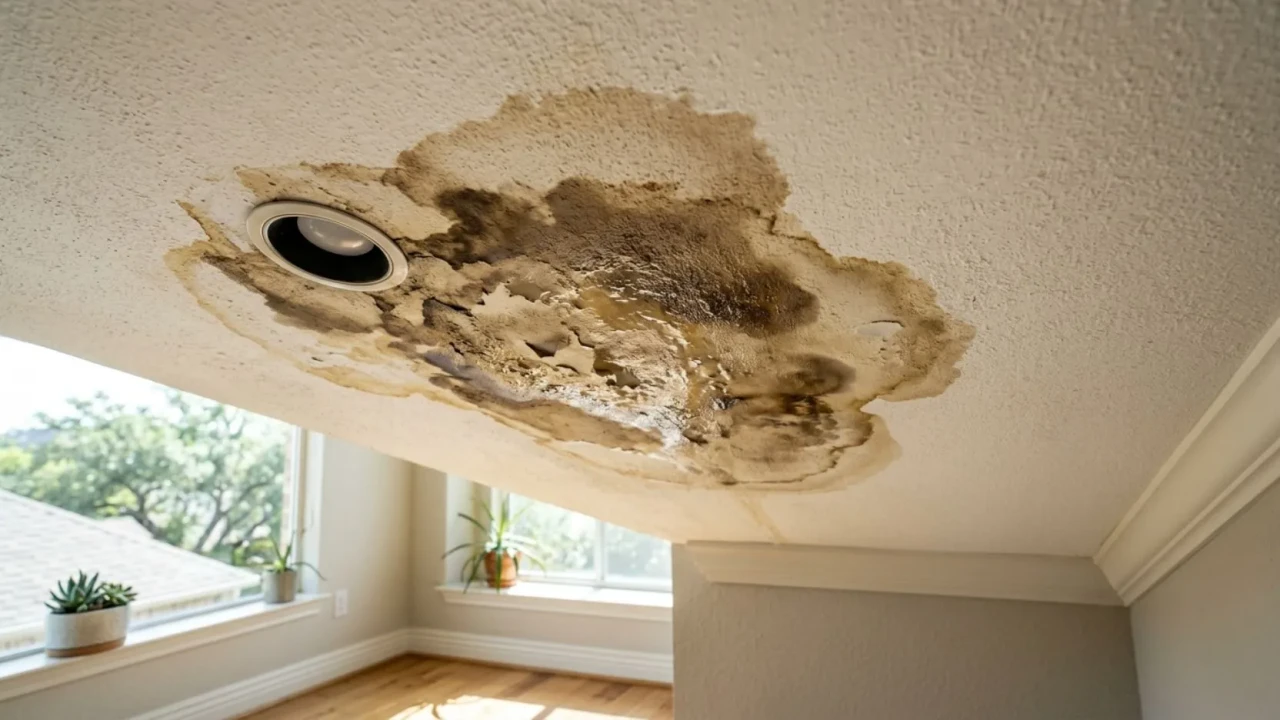
Water entering your home does not come from the same spot where the leak originates on the roof. Water travels along rafters, underlayment, and insulation sometimes for 10 to 15 feet before it drops into the ceiling or wall. Any roofer who quotes a repair without physically walking the roof and probing multiple areas has not actually diagnosed your leak. A thorough inspection is what separates a repair that lasts from a patch job that fails again in three months. Never accept a repair quote from a contractor who only looked at your ceiling stain.
Most Common
Flashing is the thin metal or rubberized material that seals the joints where your roof surface meets a vertical structure a chimney, a dormer wall, a skylight curb, or a plumbing vent pipe. These transition points are where water wants to get in, and they are also the areas most stressed by thermal expansion, UV exposure, and wind over time. Flashing failure is the single most common cause of roof leaks that roofing contractors diagnose in Austin.
There are three main failure modes. First, step flashing alongside dormers and walls can separate from the siding above as sealant dries and shrinks over the years. Second, pipe boot flashings the rubber or metal collars that seal around plumbing vent pipes crack and split under Austin’s UV intensity, typically failing between years 8 and 15 on an asphalt shingle roof. Third, chimney counterflashing that relies on caulk alone rather than a proper counter-flashing reglet cut into the masonry will begin separating as the masonry and the roof move independently through temperature cycles.
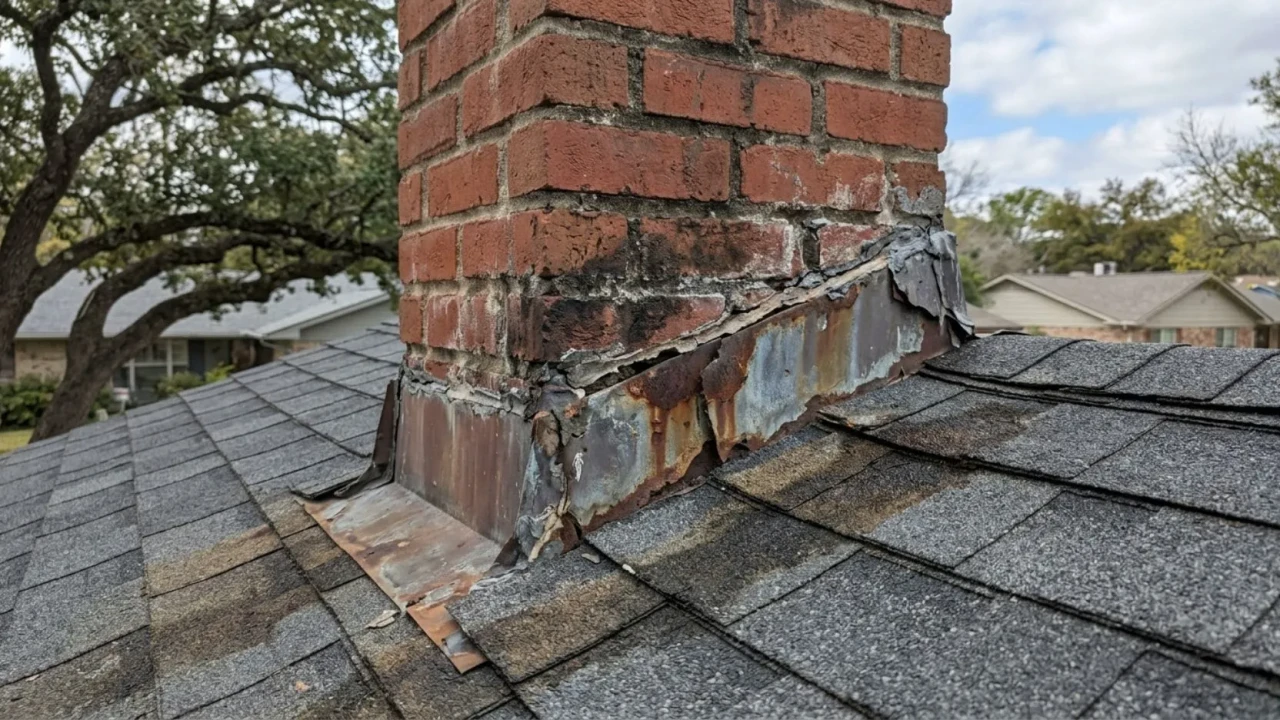
Step and counter flashing: These two-piece systems are the correct method for sealing dormers and chimneys. Step flashing weaves between each course of shingles; counter flashing overlaps from above. When one piece is missing or the counter flashing has separated, water runs directly down the wall and into the roof deck at the joint.
Pipe boot flashing: Every plumbing vent stack on your Austin home has a rubber or neoprene boot around it. These boots are one of the most frequently replaced components on any asphalt shingle roof because UV light degrades the rubber. A cracked pipe boot is one of the cheapest and fastest roof leak repairs available typically $150 to $300.
- All pipe boot flashings checked for cracks, splitting, or separation at the pipe collar
- Chimney counter flashing checked for separation from the masonry joint press with your finger to test adhesion
- Step flashing along all dormers and wall transitions inspected for lifted or missing pieces
- Valley flashing checked for corrosion, nail pops, or areas where shingles have pulled away from the metal
- Skylight curb flashing inspected for lifted edges and failed sealant at the corners
- No caulk-only repairs accepted on chimney or skylight flashing proper metal flashing is the correct fix
Storm Damage
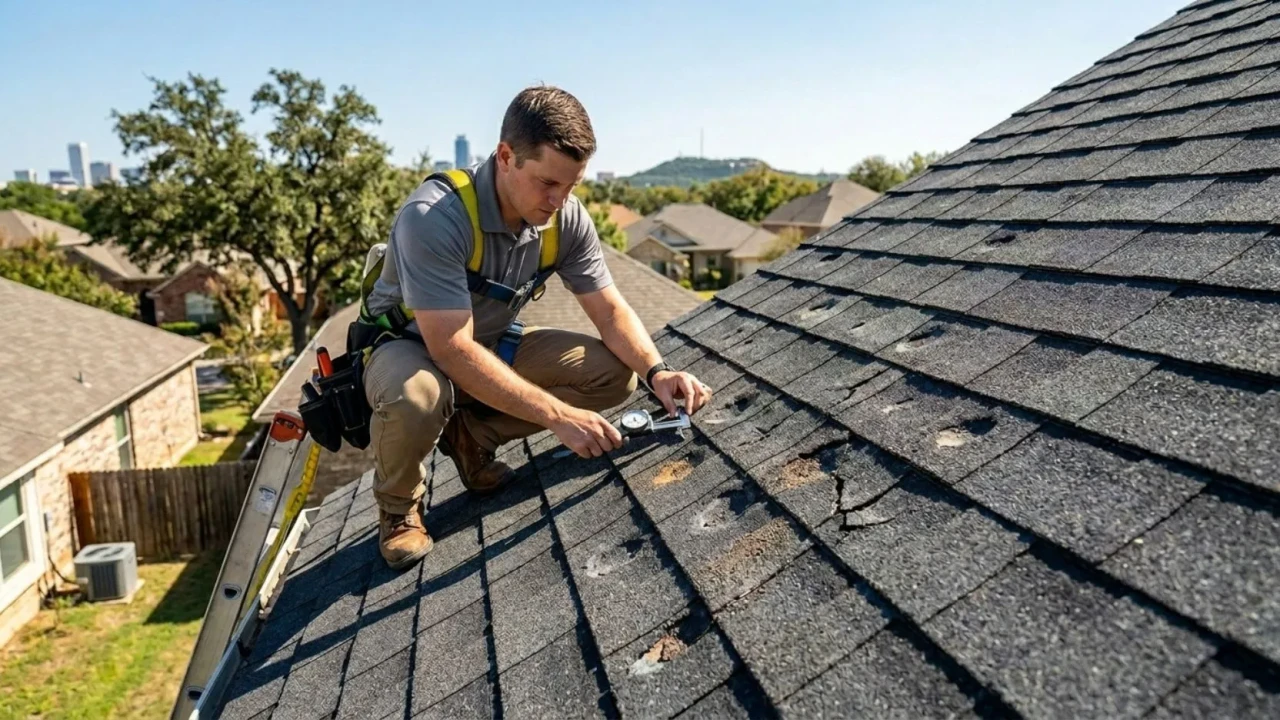
Austin sits within one of the most hail-prone corridors in the United States. Hailstorms that move through Travis County every spring and early summer create the most common single-event cause of asphalt shingle damage in the area. The problem is that hail damage on asphalt shingles is not always obvious from the ground and does not always cause an immediate leak. What it does is compromise the granule layer that protects the asphalt mat beneath and once that protection is gone, UV exposure accelerates the degradation of the shingle from that point forward.
Wind damage presents differently. Strong gusts during Central Texas thunderstorms can lift shingle tabs and break the adhesive seal strip that holds each course in place. Once a tab is lifted and the seal strip fails, water can get underneath even without the shingle being visibly missing. Repeated wind events progressively weaken the adhesive across multiple courses. An inspector walking the roof can feel loose tabs that are not detectable from the ground at all.
When evaluating shingle damage, the question is always whether the damage is isolated enough to patch or widespread enough to warrant section or full replacement. Isolated missing tabs from a single wind event can be repaired by replacing the affected shingles and re-sealing surrounding courses. Widespread hail damage that covers more than one slope is typically a full replacement situation, and most Texas homeowners insurance policies cover hail damage as a sudden weather event.
After any hail event in Austin where hailstones were at least 1 inch in diameter, schedule a professional roof inspection within 30 days of the storm date. Texas homeowners insurance policies typically have a one-year claim window from the date of the event. Adjusters are backlogged after major storm events across Travis County. Getting an independent contractor inspection done first gives you a documented scope that you can bring to the adjuster meeting rather than relying solely on the insurance company’s assessment of what needs to be repaired or replaced.
- Gutters checked for granule accumulation after any significant rainstorm heavy granule loss signals aging shingles
- Ground-level inspection after every hail event for visible missing tabs or dented metal components
- Professional roof inspection scheduled within 30 days of any hail event with 1-inch or larger hailstones
- Replacement shingles confirmed to match existing roof in profile, weight, and color before ordering
- Surrounding courses re-sealed after any shingle replacement not just the new pieces
- New underlayment installed under any replaced section not laid directly over existing felt
Hidden Cause
Not every ceiling stain or attic moisture problem in Austin comes from a hole in the roof. A significant number of calls that come in as “roof leaks” turn out to be attic condensation problems caused by inadequate ventilation. In Austin’s climate, the temperature differential between the hot attic space and the cooler air from the conditioned space below creates conditions where moisture accumulates on rafters, decking, and insulation. Over time, that moisture drips, stains drywall, and causes the same pattern of damage that an active roof leak produces.
The other ventilation-related leak source is bathroom and kitchen exhaust fans that vent into the attic space rather than out through the roof. This is a surprisingly common installation error in Austin homes. A bathroom exhaust fan that terminates in the attic rather than through a dedicated roof vent deposits warm, humid air directly onto the cold roof deck in winter and cooler seasons, causing condensation to form on the decking and drip down onto insulation and eventually ceiling drywall below. This damage is entirely preventable and has nothing to do with the condition of the shingles.
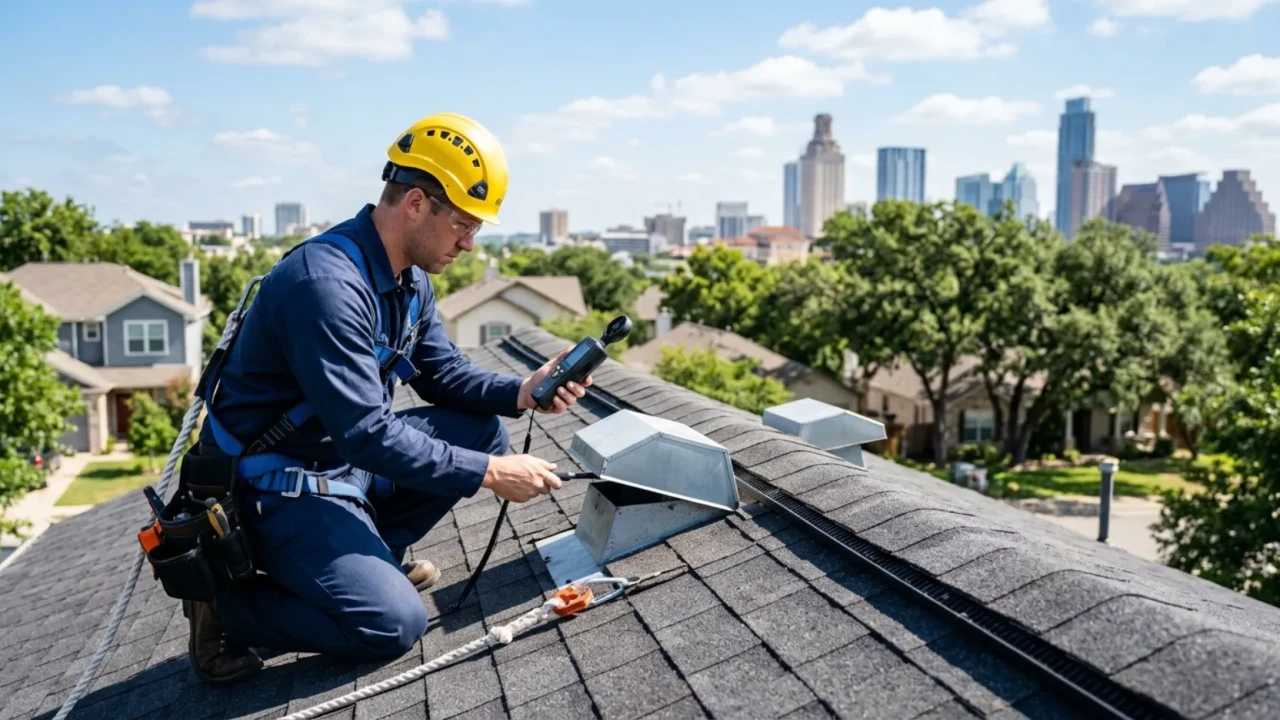
How to tell the difference from the attic: A true roof leak leaves a defined wet trail on the decking or insulation that traces back to a specific point of entry. Condensation damage is more diffuse moisture appears across a broader area, often concentrated near the ridge or at the cold side of the roof deck, without a clear single entry point. The presence of mold or mildew growth across a wide area of the attic is a strong indicator of a ventilation problem rather than a focused leak.
The attic inspection that changes the diagnosis: Before any roof repair is performed for a suspected Austin roof leak, a qualified contractor should inspect the attic first. This 15-minute step frequently changes the entire repair scope from “patch the roof” to “reroute the bathroom exhaust fan and add soffit vents.” It also prevents the frustrating situation where a roof repair is done correctly and the ceiling stain comes back because the moisture source was never the roof surface.
- Attic inspected before any roof surface repair is performed for suspected leaks without a clear source
- All bathroom and kitchen exhaust fans traced to confirm they terminate through the roof, not into the attic
- Ridge vent inspected from inside the attic to confirm insulation is not blocking the vent opening
- Soffit vents checked for paint-over, debris blockage, or damage that restricts intake airflow
- Attic floor insulation verified as not covering soffit vent baffles
- Any mold or mildew in the attic treated and the source eliminated before the mold remediation is considered complete
Edge Leaks
Ridge caps are the shingles that run along the peak of your roof where two slopes meet. They take more UV exposure, more wind, and more thermal stress than any other part of an asphalt shingle roof. On Austin homes, ridge cap shingles typically begin showing accelerated aging before the field shingles below them cracking, curling, and eventually splitting at a point in the roof’s life where the main shingle field still has years of service left. When ridge cap shingles fail, water flows directly into the decking at the highest and most structurally significant point of the roof.
At the opposite end of the roof, the eave edge is where gutters play a critical role in leak prevention. Gutters that are clogged with leaves, debris, or compacted organic material cause water to back up under the first course of shingles at the eave edge. In Central Texas, winter ice events are uncommon but not unheard of and when ice forms in a blocked gutter and works back under the first shingle course, it creates the same type of ice dam damage that is associated with northern climates, just on a smaller scale.
Drip edge flashing is a thin metal strip that runs along the eave and rake edges of the roof, directing water away from the fascia board and into the gutter. When drip edge is missing a common omission on older Austin homes water runs behind the gutter and down the fascia, rotting the board from behind and eventually creating a leak path into the soffit cavity. This is one of those repairs that costs very little when caught early and becomes an expensive carpentry and roofing project when the fascia rot has progressed for several seasons.
Gutters in Austin should be cleaned at least twice a year once in late fall after the live oak and cedar elm leaves drop, and once in spring after the spring pollen and cedar season. Austin’s tree canopy is one of the things that makes the city beautiful and one of the things that fills gutters faster than almost any other Texas city. A clogged gutter is not a minor inconvenience it is an active leak risk for the eave edge of your roof every time it rains heavily enough to cause water to back up under the first shingle course.
- Ridge cap condition inspected annually look for cracking, curling, or missing caps from the ground with binoculars
- Gutters cleaned a minimum of twice per year, more frequently if the home is under significant tree cover
- Drip edge present at all eave and rake edges absence of drip edge is a code deficiency on post-2009 Austin installations
- Gutter hangers and end caps checked for leaks at joints after heavy rainstorms
- Downspouts confirmed to discharge at least 4 feet away from the foundation
- Fascia boards inspected for soft spots or discoloration that indicate water has already worked behind the gutter

Structural Repair
The shingles on your Austin home are the first line of defense, but they are not the only one. Beneath the shingles sits the underlayment a synthetic or felt layer that provides a secondary moisture barrier and beneath that is the roof decking, typically oriented strand board (OSB) or plywood. When a leak is active for an extended period, water works through the shingles, saturates the underlayment, and begins penetrating the decking. OSB decking is particularly vulnerable to delamination and softening once moisture gets through because the adhesive that bonds the wood strands together breaks down under prolonged wet conditions.
Decking damage is often discovered during a shingle replacement project when the old shingles are removed, the contractor finds soft spots, bubbling, or visible delamination in the OSB below. Any soft or spongy area of decking must be replaced before new shingles go down. Installing new shingles over compromised decking is one of the most common installation errors that creates a warranty dispute down the road, because the nails holding the new shingles cannot achieve proper withdrawal strength in soft, water-damaged wood.
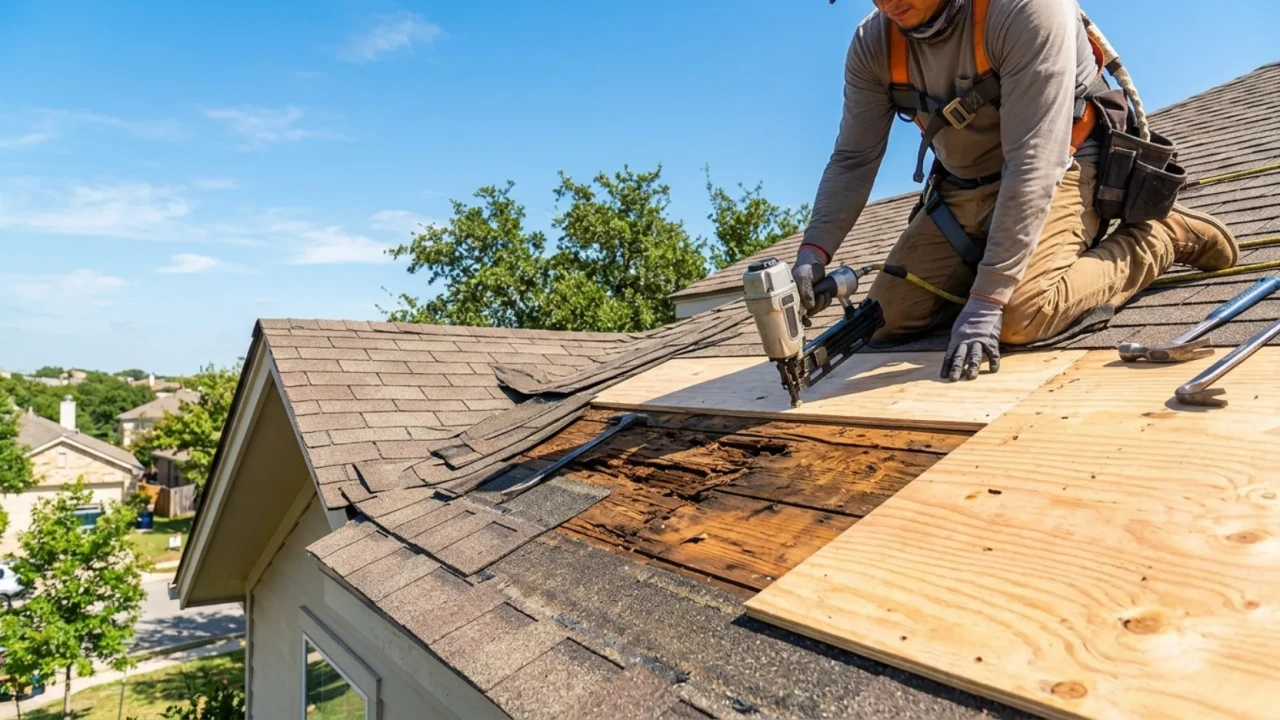
How to identify decking issues before a full tear-off: From inside the attic, walk the perimeter of the attic space with a flashlight. Press upward on the decking with your palm as you go any area that flexes noticeably is suspect. Discoloration on the underside of the decking (dark rings or streaks) indicates past or current moisture penetration even if the wood feels dry to the touch. Black mold growth on rafters or the underside of OSB is a clear indicator that moisture has been present consistently.
Underlayment failure: Synthetic underlayment products installed in the past 15 years perform significantly better than older 15-pound felt. Homes with original 15-pound felt underlayment that has been on the roof for more than 20 years should have the underlayment replaced as part of any shingle replacement project. Torn, wrinkled, or delaminated underlayment found during a tear-off should always be fully replaced partial underlayment replacement creates an uneven secondary moisture barrier that compromises the new shingle installation.
- Attic inspection performed before any shingle replacement to identify soft or discolored decking areas
- All soft or spongy decking sheets replaced before new shingles are nailed down
- Replacement decking confirmed as same thickness as existing (typically 7/16″ or 1/2″ OSB)
- Synthetic underlayment specified for any new shingle installation over existing or new decking
- Mold or mildew on rafters or decking underside treated before attic is sealed back up
- Decking replacement documented in the contractor’s written scope and reflected in the final invoice
These price ranges reflect current Austin market rates in 2026. Actual costs vary based on roof pitch, access difficulty, material costs, and the extent of the damage found during inspection. Always get a written scope of work before any repair begins a dollar amount alone is not a repair scope.
| Repair type | Typical cost (Austin 2026) | Common causes | Urgency |
|---|---|---|---|
| Pipe boot flashing replacement | $150 to $300 | UV cracking, age (8 to 15 years) | High active leak source |
| Chimney flashing repair | $400 to $900 | Sealant failure, step flashing separation | High water enters at chimney base |
| Skylight flashing replacement | $500 to $1,200 | Curb flashing corrosion, age | High interior damage risk |
| Valley flashing repair | $350 to $800 | Corrosion, improper install, shingle pullback | High high-volume water path |
| Isolated shingle replacement (1 to 10) | $200 to $500 | Wind damage, hail impact, age | High if decking is exposed |
| Partial slope shingle repair | $600 to $1,800 | Concentrated storm damage | High |
| Ridge cap replacement | $250 to $600 | UV cracking, wind removal | High ridge is highest water entry risk |
| Drip edge installation | $200 to $500 | Missing on older homes, improper install | Medium prevent before fascia rots |
| Attic ventilation upgrade | $300 to $1,200 | Inadequate intake or exhaust, blocked ridge vents | Medium address before next wet season |
| OSB decking replacement (per sheet) | $70 to $120 | Moisture penetration from active leaks | Required before new shingles go down |
| Emergency tarp installation | $200 to $600 | Major storm, acute leak, fallen tree | Immediate |
| Full roof replacement (hail damage) | $8,000 to $18,000 | Widespread storm damage | Per insurance adjuster timeline |
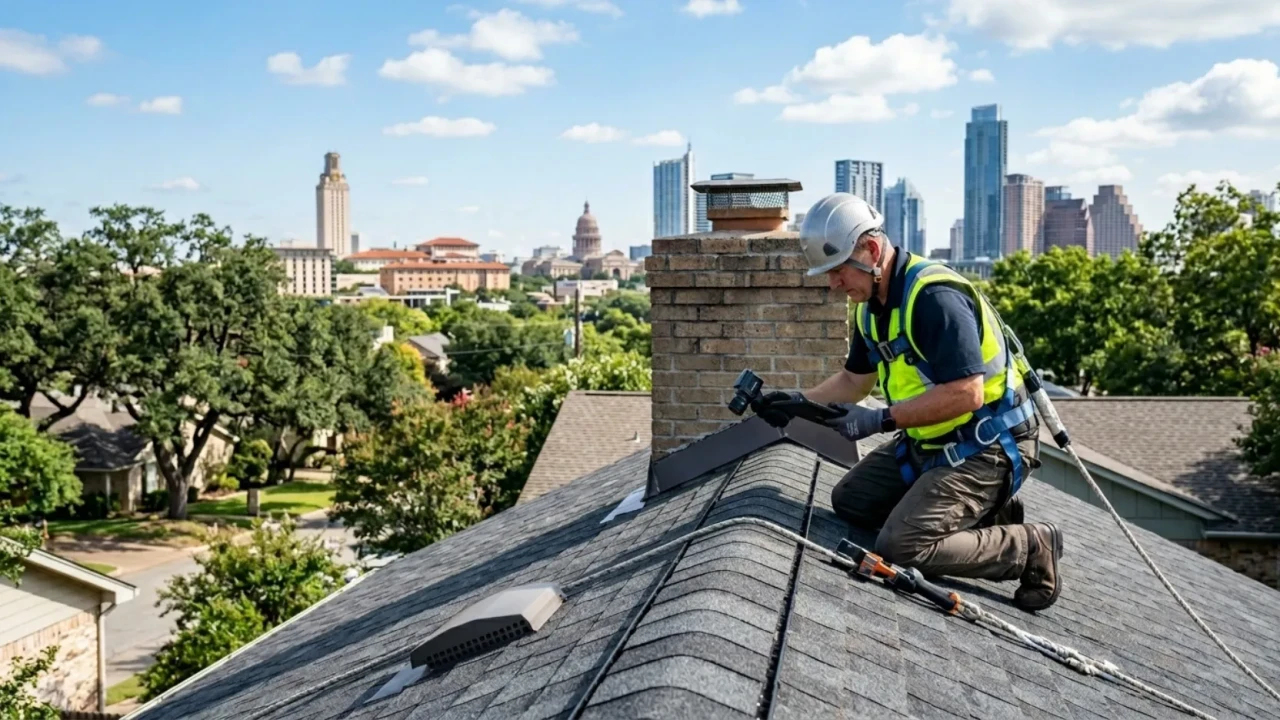
Most roof leaks on Austin homes are preventable. They develop from maintenance that was skipped, warning signs that were noticed but not acted on, and inspections that were overdue. The homeowners who rarely deal with emergency leak calls are the ones who treat roof maintenance like any other annual home maintenance item rather than something they think about only when water appears inside.
- Clean gutters completely and flush downspouts to confirm water flows freely from roof to discharge point
- Inspect gutter end caps, joints, and hangers for leaks and loose connections
- Walk the attic with a flashlight and check the underside of decking for stains, discoloration, or soft spots
- Confirm all bathroom and kitchen exhaust fans terminate through the roof, not into the attic
- Check ridge vent from inside the attic confirm no insulation is blocking the opening
- Look at the roof from the ground with binoculars for visible cracking, curling, or missing shingles
- Check gutters for granule accumulation excessive granule loss after a storm signals shingle damage
- Inspect from the ground for visible missing tabs, lifted shingles, or dented metal components
- Schedule a professional roof inspection within 30 days if hailstones were 1 inch or larger
- Document the storm date and any visible damage with dated photographs for insurance purposes
- Contact your insurance company if inspection confirms hail damage do not wait until the claim window closes
- Hire a licensed roofing contractor to walk the roof and inspect all flashing points, ridge caps, and field shingles
- Ask specifically for a report on pipe boot flashing condition these are often the first to fail
- Have the contractor assess whether any flashing sealant needs refreshing before it fails completely
- Review the estimated remaining service life of the shingle system as part of the inspection report
- Ask whether the current ventilation system is balanced and adequate for the attic square footage
- Confirm the contractor is licensed in Texas and carries at least $1 million in general liability insurance
- Require a written scope of work that describes the specific repair, not just a dollar amount
- Ask the contractor to show you the diagnosis point on the roof before repair begins
- Confirm the warranty covers both materials and workmanship ask how long each is warranted
- Do not pay more than 30 to 40 percent upfront for a standard repair balance due on completion
How much does roof leak repair cost in Austin?
How do I find where my roof is leaking?
Does homeowners insurance cover roof leak repair in Austin?
Can I fix a roof leak myself in Austin?
How long can a roof leak go unfixed before it causes serious damage?
Why does my Austin roof keep leaking after it has been repaired?
Get a free roof inspection in Austin no obligation
Tell us about your leak, your storm damage, or anything you are not sure about. We will walk the roof, inspect the attic, document what we find, and give you a clear written repair estimate at no cost.
[/et_pb_code][/et_pb_column][/et_pb_row][/et_pb_section]