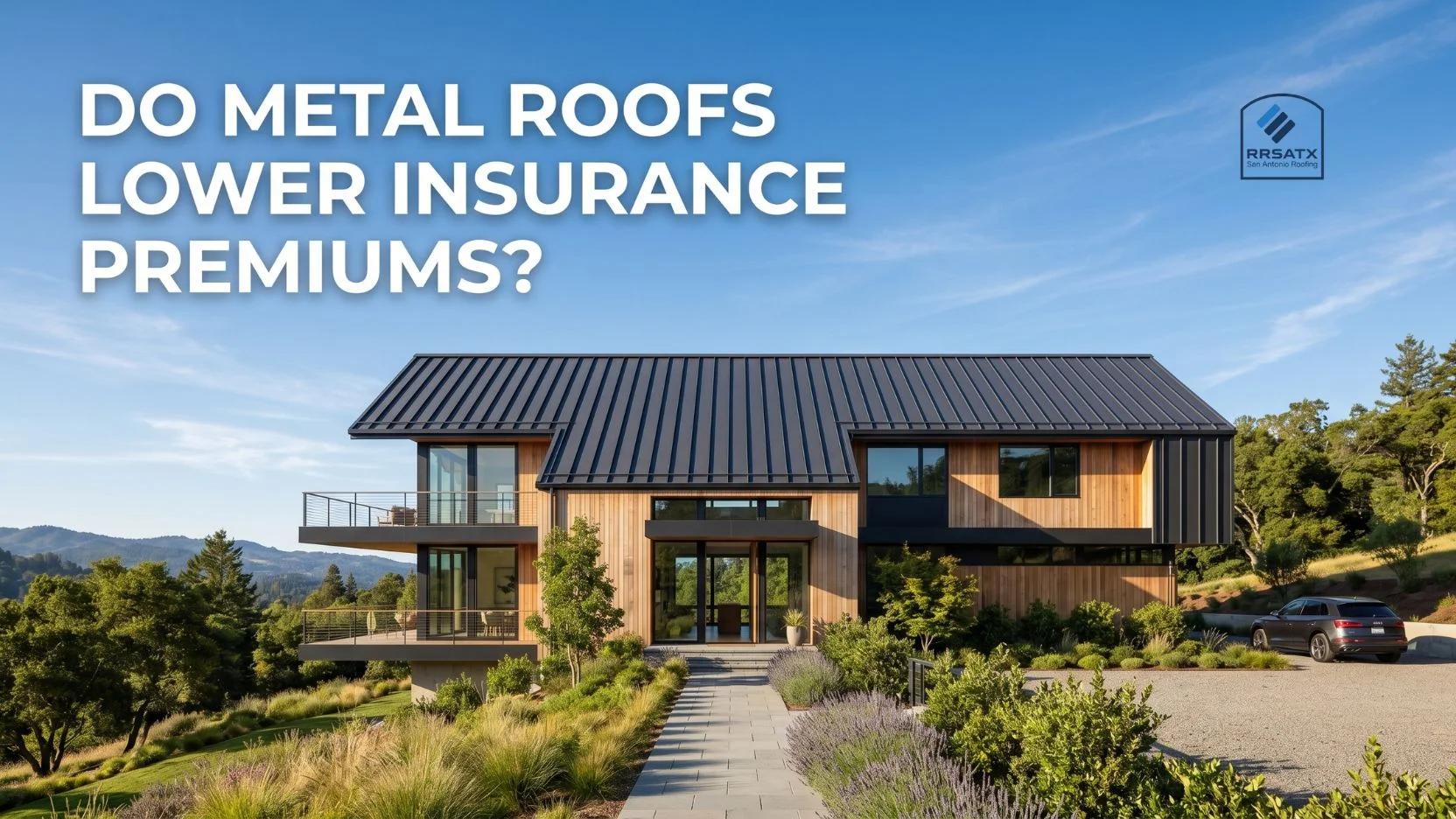
A metal roof can lower your homeowners insurance premium in San Antonio, sometimes by a meaningful margin. But the discount is not automatic, it depends on your insurer and your roof's ratings, and there is one important trade-off most contractors never mention. This guide explains exactly how it works.
The short answer is yes. In San Antonio, a metal roof can lower your homeowners insurance premium, and Texas is one of the best states in the country for it. Texas was the first state to push insurers to give homeowners a credit for impact-resistant roofing, and that guidance from the Texas Department of Insurance has been in place for more than 25 years. For a qualifying metal roof, that credit commonly lands somewhere between 20 and 35 percent on the wind and hail portion of your policy.
But "yes" comes with conditions. The discount is set by each insurer, not fixed by the state. It depends on your roof's ratings, your documentation, and where you live. And there is one trade-off many San Antonio homeowners never hear about until after a hailstorm: the cosmetic damage exclusion. This guide covers the three reasons insurers reward a metal roof, how much you can realistically expect to save, the exclusion trade-off you must understand before you sign, and the exact paperwork that gets the credit applied to your policy.
The most common reason San Antonio homeowners miss out on a metal roof discount is that they install the roof first and ask about the credit later. Some carriers want to confirm the product before installation. Some apply the credit mid-term, others only at your next renewal. And the exact wording on your invoice and certificate determines whether the credit goes through at all. A five-minute call to your agent before the first panel goes on is what turns "my roof should save me money" into an actual line item on your policy.
Hail is why Texas insurance is expensive, and hail is why a metal roof can make it cheaper. Bexar County gets hit hard and often, and hail damage to asphalt shingle roofs is one of the largest claim categories insurers pay out on in this region. Back in the late 1990s, the Texas Department of Insurance began encouraging carriers to offer premium credits for impact-resistant roofing, and Texas became the first state in the country to do it. That framework is still the reason San Antonio homeowners see real savings today.
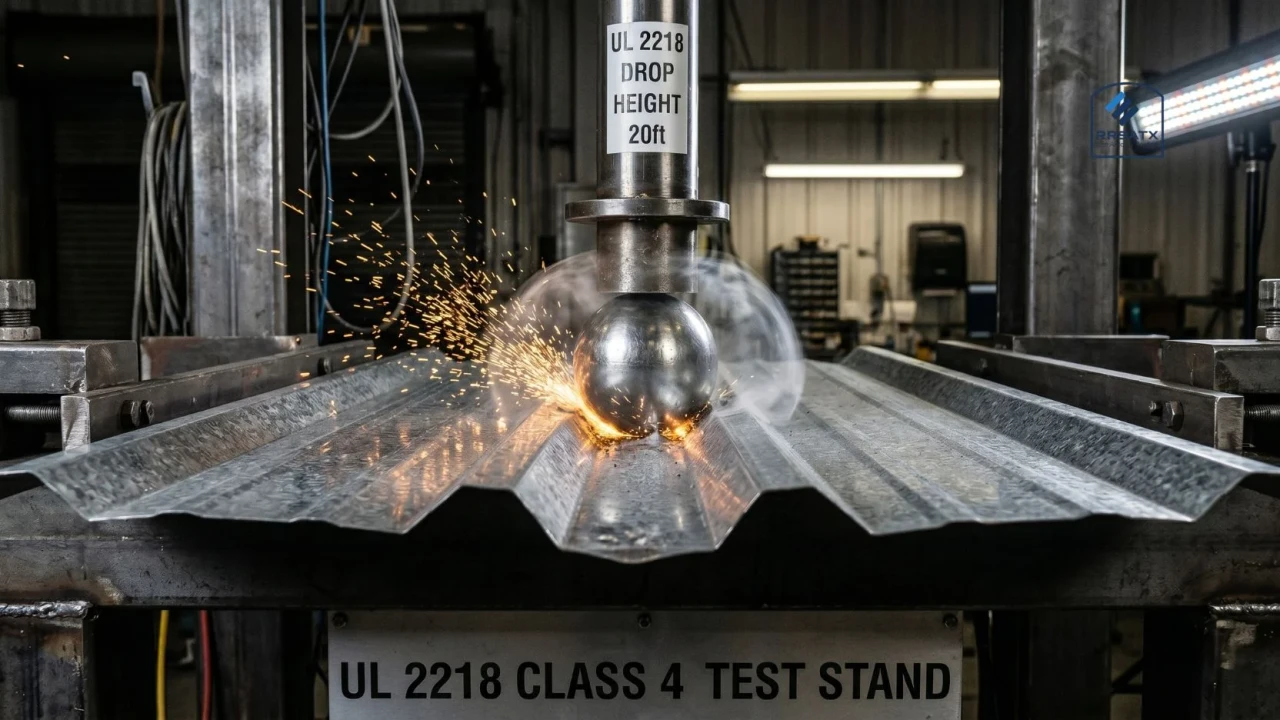
How the rating works: roofing materials are tested under the UL 2218 standard, where steel balls are dropped onto the surface from set heights. Materials that pass without cracking or splitting are graded Class 1 through Class 4, with Class 4 being the toughest. Most quality metal roofing carries a Class 4 impact rating, the same top tier that earns the largest credit.
Why insurers care: a roof that shrugs off hail means fewer expensive replacement claims. The credit is the insurer's way of rewarding a roof that lowers their risk, which is also why the discount is tied to impact resistance and not to how much the roof cost you.
- Roof product confirmed as UL 2218 Class 4 rated before purchase, not assumed
- Manufacturer name and product line documented on the invoice, not a generic "new roof" line
- Carrier contacted to confirm the exact credit they offer for a Class 4 metal roof
- Discount understood as applying to the wind and hail portion of the premium, not the whole bill
- Credit confirmed in writing on the policy after the next renewal or mid-term adjustment
Hail is the headline in San Antonio, but wind is the second factor that moves an insurer's pricing. Asphalt shingles start lifting and tearing in the 60 to 130 mph range depending on the product, because each shingle is held down by an adhesive strip and exposed at the edges. A properly installed standing seam metal roof is a different animal. The panels interlock mechanically, the fasteners are concealed, and there is no loose edge for the wind to catch.
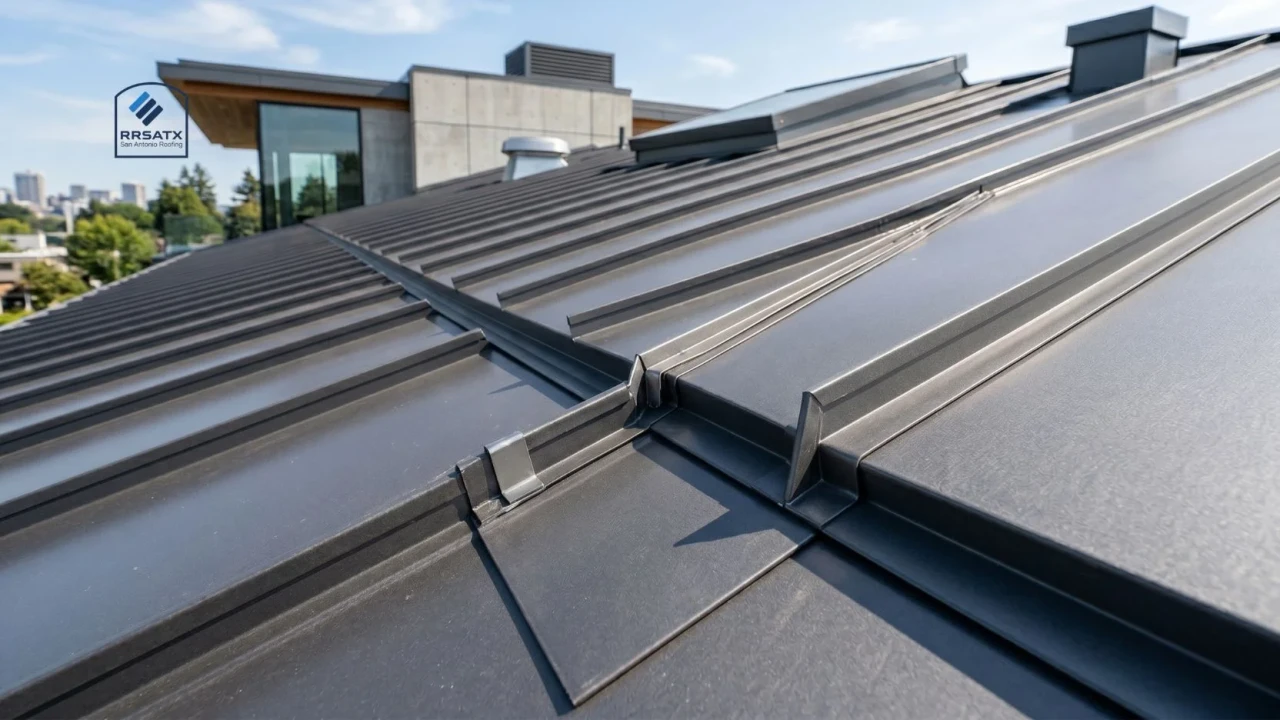
The wind numbers: standing seam systems are commonly rated for wind speeds well above what premium shingles can take. That higher rating is part of what lets insurers treat a metal roof as a lower wind risk, especially when the roof meets local building code and is installed correctly.
Installation is part of the rating: wind performance is not just the material, it is the system. Correct fastener gauge, proper panel engagement, and secured ridge caps are what make the rating real. A sloppy install can forfeit the wind benefit even on good panels.
If wind credit matters to you, ask specifically about standing seam versus exposed-fastener panels. Insurers generally view standing seam as the stronger wind performer because there are no exposed screw heads or panel edges for high wind to work against. An exposed-fastener panel can still be an excellent roof, but if your goal is the maximum wind and hail credit, raise the panel type with both your contractor and your agent before you commit.
Metal roofing carries a Class A fire rating, the highest classification a roof covering can earn. Steel and aluminum are non-combustible, so the roof will not ignite from external flame, airborne embers, or a lightning strike, and it will not feed a fire the way some other materials can. In San Antonio this is less of a headline factor than hail, but it still counts in an insurer's risk picture, and it matters more for properties near brush, open land, or wildfire-prone terrain in the surrounding Hill Country.
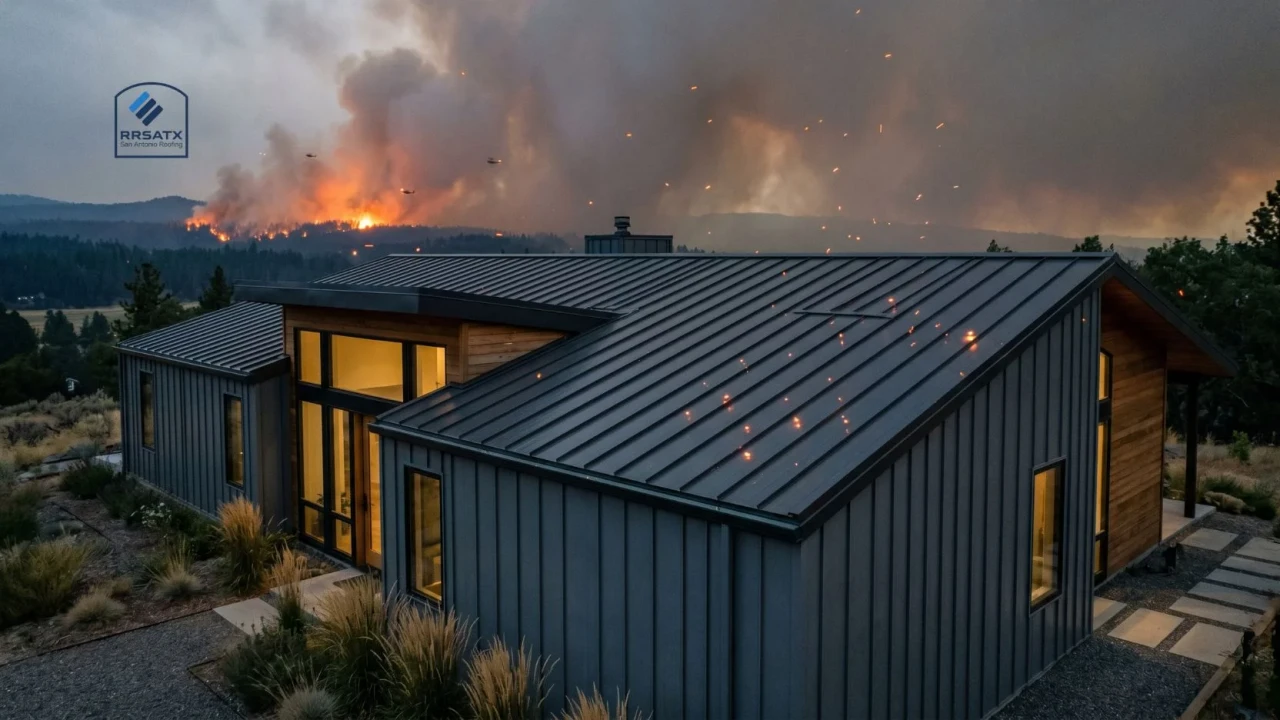
Why it factors in: a non-combustible roof lowers the odds of a total-loss fire claim, and insurers favor roofs that reduce their worst-case exposure. Where wood-shake roofs can raise premiums or even limit coverage, a Class A metal roof does the opposite.
How it stacks: on its own, the fire rating is usually a smaller piece of the savings than hail. Its real value is that it combines with impact and wind resistance, so the same roof is checking three risk boxes at once. That combination is what produces the larger end of the discount range.
This is the part of the metal roof insurance story that almost never makes it into a sales pitch, and it is the most important thing in this guide. To get the full discount on a metal roof, many Texas carriers require you to accept a cosmetic damage exclusion, often attached as a specific endorsement on your policy. In plain terms, the insurer agrees to lower your premium in exchange for not paying for hail damage that is purely cosmetic.
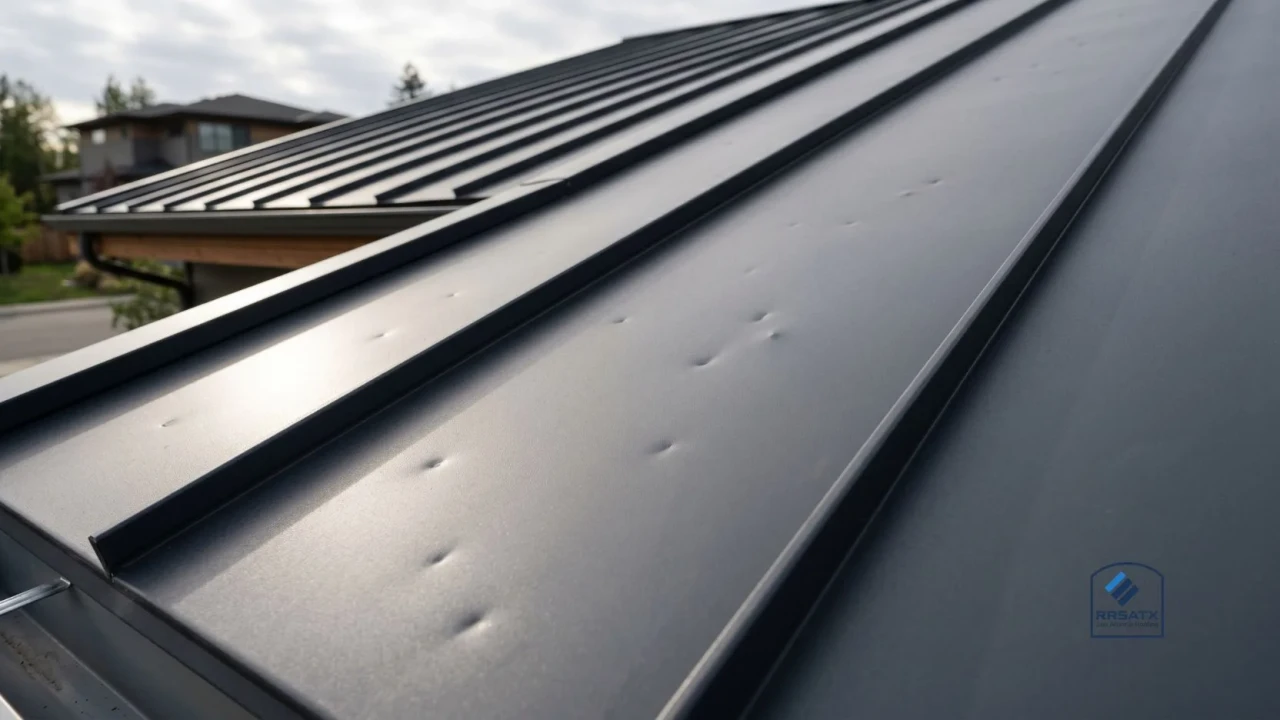
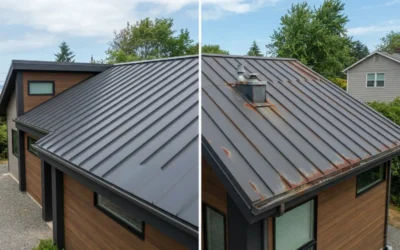
What cosmetic means here: a metal roof is tough, so hail often dents a panel without cracking it or letting water through. Policies typically define cosmetic damage as denting, marring, or discoloration that changes how the roof looks but does not stop it from keeping water out. If a storm dents your panels but the roof is not leaking, an exclusion lets the carrier decline that claim.
Why it exists: insurers found that metal roofs survive hail structurally but show dents, and paying to replace fully functional dented roofs drove up claims. The exclusion is how they keep the premium credit affordable. That logic is fair, but it shifts a real risk onto you.
Decide with your eyes open, and read the policy. In one widely cited Texas dispute, an insurer defined a cosmetic loss as damage that changes the look of the metal roof but does not let water through, and the exclusion held up when a dented but watertight roof was denied. The premium difference for that kind of exclusion can be small while the out-of-pocket gap on a dented roof can run into many thousands of dollars. Before you sign, ask your agent three questions in writing: Is a cosmetic exclusion attached to my discount, what exactly does it exclude, and what would I pay to keep full hail coverage instead. There is no universally right answer, only the one that fits your tolerance for a dented-but-working roof you might have to live with or replace yourself.
- Asked directly whether the discount requires accepting a cosmetic damage exclusion
- Read the exact exclusion wording, not just the agent's summary of it
- Compared the premium with the exclusion against the premium with full hail coverage
- Confirmed what counts as cosmetic versus functional damage under the policy definition
- Made the decision based on your own tolerance for an uncovered dented roof, not the sales pitch
A qualifying metal roof does not lower your premium on its own. The credit only gets applied when your insurer has the right documentation in hand. Plenty of San Antonio homeowners install an excellent roof and leave money on the table for years simply because the paperwork never reached the carrier. Here is the sequence that gets it done.

The documents your carrier wants: a detailed invoice that names the specific manufacturer and product line and states the UL 2218 Class 4 rating, the manufacturer's installation certificate confirming the impact rating, and in Texas the TDI impact-resistant roofing form, PC068, which your contractor completes after installation.
The timing that matters: contact your agent before installation in case the carrier requires pre-approval. After the roof is on, submit your packet promptly. Some carriers apply the credit mid-term, others wait until renewal, and processing can take a few weeks. If it has not appeared in a reasonable window, follow up.
If your current insurer offers a weak credit or none at all, shop the policy. The credit for an impact-resistant roof is set by each carrier, not fixed across the market, so two companies can price the same Class 4 metal roof very differently. Once your roof is documented, it is worth getting a few quotes. Switching carriers after a metal roof goes on often surfaces a better rate, and you are not locked into the company that happens to undervalue your roof.
- Agent contacted before installation to confirm requirements and any pre-approval
- Invoice lists the manufacturer, product line, and UL 2218 Class 4 rating, not just "new roof"
- Manufacturer installation certificate obtained from the contractor
- TDI Form PC068 completed by the contractor and delivered to your agent
- Credit confirmed on the policy after the adjustment or next renewal, with a follow-up if it is late
- Comparison quotes gathered if the current carrier's credit is small or absent
This table summarizes what drives a metal roof insurance credit, the standard behind each one, and what you need to document to claim it. Exact percentages are set by your individual carrier, so treat these as the typical ranges San Antonio homeowners encounter rather than guaranteed figures.
| Roof feature | Rating standard | Insurance benefit | What to document |
|---|---|---|---|
| Impact and hail resistance | UL 2218 Class 4 | Largest credit in San Antonio, commonly 20 to 35% on wind and hail | Invoice with product and rating, manufacturer certificate, TDI PC068 |
| Wind uplift resistance | Manufacturer wind rating | Lower wind-claim risk, strongest with standing seam systems | Product wind rating and proof of code-compliant installation |
| Fire resistance | Class A fire rating | Favorable terms, larger where wildfire exposure is a factor | Product fire classification on the spec sheet |
| Roof age and condition | New, properly installed | New roofs often qualify for replacement cost rather than depreciated value | Installation date and contractor documentation |
| Cosmetic damage coverage | Policy endorsement | Accepting an exclusion can unlock the full credit, but removes dent coverage | The exclusion wording and the premium difference, in writing |
| Energy efficiency | Reflective coating | Separate from insurance, often 7 to 15% lower cooling costs | Product energy or reflectivity rating |
- Call your insurance agent and ask what credit they offer for a UL 2218 Class 4 metal roof
- Confirm whether the discount requires accepting a cosmetic damage exclusion
- Ask whether the carrier needs to approve the product before installation
- Choose a roof product with a documented Class 4 impact rating and Class A fire rating
- Discuss standing seam versus exposed-fastener panels if wind credit is a priority
- Get an invoice that names the manufacturer, product line, and UL 2218 Class 4 rating
- Obtain the manufacturer's installation certificate confirming the impact rating
- Have your contractor complete TDI Form PC068 and provide it to you
- Read the exact cosmetic exclusion wording if one is attached to your discount
- Keep a personal copy of every document, not just the contractor's file
- Submit your complete documentation packet to your agent promptly
- Confirm whether the credit applies mid-term or at your next renewal
- Verify the credit actually appears on your policy and follow up if it is late
- Compare quotes from other carriers if your current credit is small or absent
- Keep all roof documentation on file for future claims and for resale
Get a free metal roof and insurance documentation consult in San Antonio
Thinking about a metal roof, or already have one and want the insurance credit you are owed? We will inspect your roof, confirm the impact rating, and provide the invoice, certificate, and TDI PC068 paperwork your carrier needs, all at no cost.