Shipping is one of the most overlooked line items in a metal roofing project. This guide breaks down every factor that drives freight costs, the difference between local pickup and long-haul delivery, and how to avoid the hidden fees that inflate your final bill.
You have picked your panel profile, chosen your gauge, and priced out the square footage. Then the shipping quote arrives and the project budget takes a serious hit. Metal roofing shipping costs catch a lot of homeowners and contractors off guard because the material is heavy, awkward to handle, and often has to travel long distances from a regional manufacturer or distribution center.
This guide covers every factor that drives shipping costs for metal roofing panels, what you can realistically expect to pay in 2026, and the smarter strategies that can dramatically reduce what you spend getting the material to your job site.

Every metal roofing quote should include the material price, the freight or delivery charge, any lift gate or residential delivery fees, and the fuel surcharge. A supplier advertising low panel prices who ships from a distant warehouse may end up costing more than a local supplier with slightly higher per-square-foot pricing. Always compare the delivered total, not the sticker price on the panels themselves.
Distance is the first and most obvious cost driver. A metal roofing order shipped from a nearby distribution center in San Antonio or the surrounding Texas region will cost far less to deliver than the same order shipped from a manufacturer in the Midwest or Southeast. Freight pricing is calculated by mileage, weight, and freight class, so every additional hundred miles adds real dollars to your delivery bill.

Metal roofing panels ordered online from a national supplier may appear to save you money on the material price but the shipping origin matters a great deal. A supplier based in Ohio shipping to San Antonio will charge freight rates over 1,200 miles. A Texas-based distributor serving the San Antonio market may deliver for a flat fee or even include delivery in the material quote for larger orders.
When comparing suppliers, always ask where the order ships from and confirm that the supplier's advertised delivery price reflects the actual freight distance to your specific zip code. Online quotes that show a low delivery estimate for an order to a Texas address often use a warehouse location that is not actually in Texas.
- Ask every supplier exactly which warehouse or plant your order will ship from
- Request a freight quote to your specific zip code, not an estimated shipping zone
- Compare delivered cost (material plus freight) across at least two or three suppliers
- Check whether a Texas-based distributor stocks the same product before ordering from out of state
Metal roofing panels are dense and heavy relative to other building materials. A single square (100 square feet) of 26-gauge steel roofing panels typically weighs between 100 and 150 pounds depending on the profile and coating. A 20-square residential roof order can weigh 2,000 to 3,000 pounds before any trim pieces or underlayment are added. That weight directly determines which freight class your shipment falls into and how the carrier prices the load.
The relationship between order size and shipping cost is not always linear. LTL (less-than-truckload) freight pricing often gives better per-pound rates for heavier shipments because the carrier can consolidate loads more efficiently. A homeowner ordering 5 squares for a small garage addition may pay nearly as much in freight as a homeowner ordering 15 squares for a full roof, because the fixed costs of pickup, handling, and delivery are spread across fewer units.
If you are close to a size threshold, ordering slightly more can reduce your per-square shipping cost. Many suppliers offer free or flat-rate delivery for orders above a certain weight or dollar amount, often in the range of $2,000 to $3,000 in material value. Ask your supplier what the free delivery threshold is before finalizing your order quantity. Adding a few extra panels to cover waste and future repairs may push you over that threshold and eliminate the shipping charge entirely.

- Calculate total order weight before requesting freight quotes: square count times average weight per square for your panel type
- Ask whether the supplier offers a free delivery threshold and how close your order is to qualifying
- Factor in trim, ridge cap, and underlayment weight when estimating your freight class
- Consider ordering 10 to 15 percent overage for waste and repairs to potentially reach a better rate tier
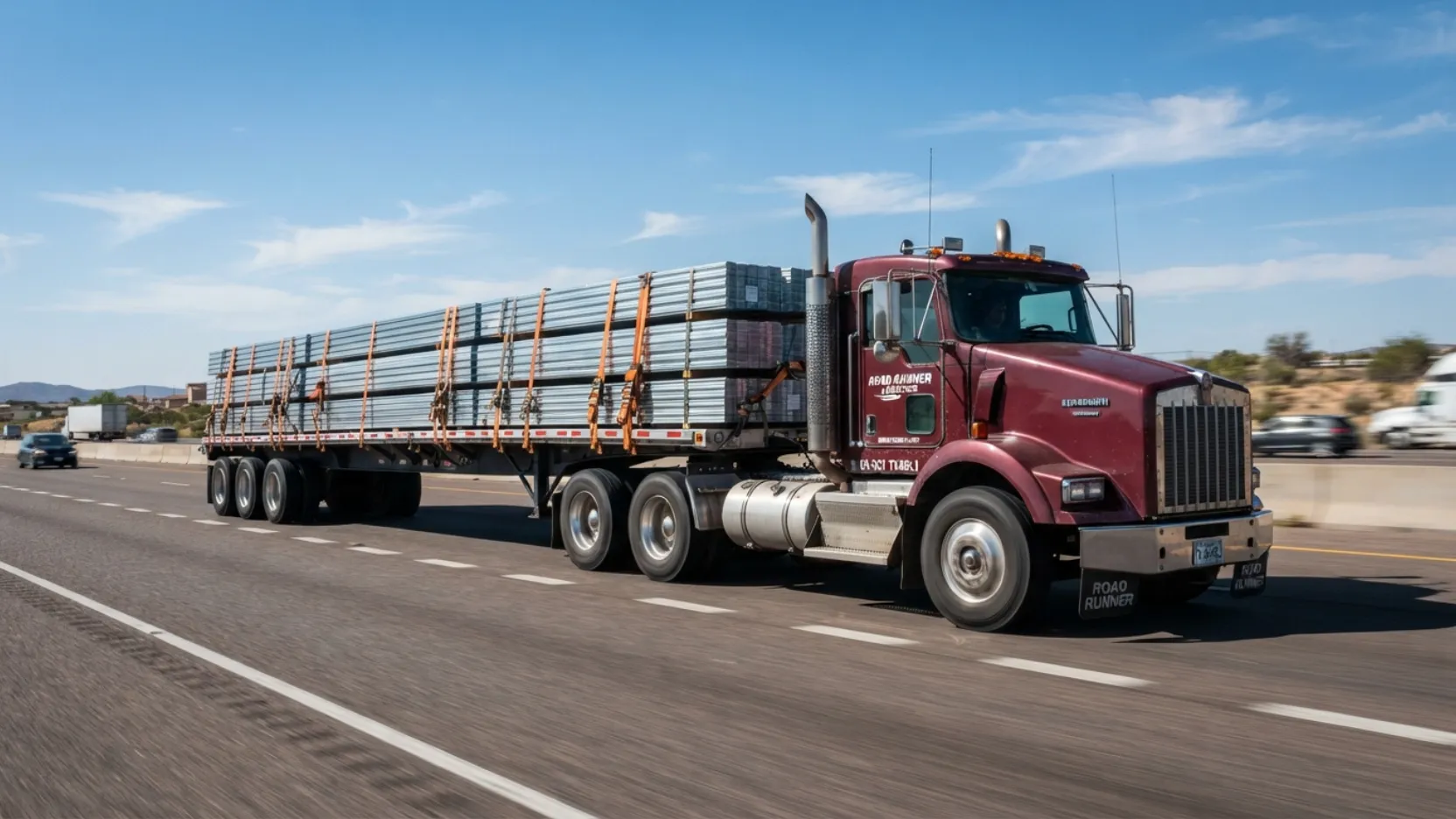
Metal roofing panels are commonly ordered in lengths from 8 feet all the way up to 40 feet for standing seam applications where a single continuous panel runs from ridge to eave. The longer the panels, the more specialized the freight equipment needs to be. Standard carriers cannot handle 20-foot or longer panels in an enclosed truck. These orders require flatbed trailers, specialized bunks or supports, and in some cases escort vehicles for panels that are legally classified as oversized loads.
The practical implication for homeowners is that if your roof design requires very long continuous panels to avoid horizontal seams, you should budget for a higher delivery cost. Some suppliers absorb the specialized flatbed cost in their standard delivery pricing for long panels; others charge a separate long-load fee that can add $75 to $200 to the base freight rate.

- Confirm the maximum panel length in your order before requesting a freight quote
- Ask whether the quoted freight rate already accounts for flatbed or specialized delivery equipment
- Check if panels over 20 feet carry any long-load surcharge in addition to the base freight rate
- Verify that the delivery site has clear access for a full-size flatbed truck to enter and unload safely
There are three ways metal roofing material typically gets from the supplier to your job site, and they differ significantly in cost, convenience, and the risk of damage or delay. Understanding the difference is important because the cheapest overall option is not always the one your supplier recommends first.
LTL freight comes with several fees that are often not included in the initial quote. A lift gate fee applies when the delivery location does not have a loading dock (which is virtually every residential job site). A residential delivery surcharge applies for deliveries to a home address versus a commercial address. A limited-access fee applies for locations that are difficult for a large truck to reach. These add-on fees can increase your LTL freight bill by $100 to $300 over the base rate.
Before accepting an LTL freight delivery, ask the supplier for a fully itemized quote that includes the lift gate fee, residential delivery surcharge, and any limited-access charges. Many online metal roofing suppliers display a base freight rate that does not include these extras. A quote that shows $175 for shipping may become $350 to $450 once the residential surcharge and lift gate fee are added. Getting the full itemized quote upfront prevents unpleasant surprises on delivery day.
- Ask whether the supplier offers direct delivery versus LTL carrier freight
- Request an itemized freight quote that includes lift gate, residential delivery, and fuel surcharge line items
- Confirm whether the delivery crew will place panels on-site or leave them at the curb
- Check whether a local pickup option is available before accepting an LTL freight quote
- Verify that your job site has adequate truck access before scheduling delivery
The base freight rate is rarely the number you pay. Freight carriers apply several additional charges that are standard across the industry but easy to overlook when comparing supplier quotes. Knowing these fees by name and asking about them before you place an order is the fastest way to avoid sticker shock on delivery day.

Fuel surcharges are recalculated by major carriers on a weekly basis based on the Department of Energy diesel index. They are usually expressed as a percentage of the base rate and can range from 8 percent during periods of low diesel prices to over 20 percent during spikes. Some suppliers build a fixed fuel surcharge estimate into their quoted shipping rate; others pass the actual carrier fuel surcharge through directly and adjust the invoice after shipping.
- Request a freight quote that itemizes fuel surcharge, lift gate, residential delivery, and limited access fees separately
- Confirm whether the fuel surcharge is fixed in the quote or adjusted to the actual carrier rate at time of shipment
- Verify delivery window with the carrier the day before the scheduled date
- Ensure an authorized person is present during the delivery window to avoid redelivery charges
- Inspect all panels before signing the delivery receipt and note any visible damage on the paperwork
Metal roofing panels are susceptible to specific types of damage in transit. Long panels can shift and bend if not properly supported. Bundles can get impacted by forklift tines. Paint coatings can be scratched if panels shift against each other during loading or at freight terminals. The good news is that freight damage is a known risk in this industry and there is a clear process for recovering the cost of damaged panels, but only if you follow the right steps at the moment of delivery.

Inspect before you sign. The delivery receipt is a legal document. Once you sign it without noting damage, you have accepted the shipment in good condition and the freight claim process becomes significantly harder. Never let a driver rush you into signing before you have had a chance to walk around the load and look at the panels.
Document everything visible. Take photos or video of any damaged panels, bent edges, torn packaging, or impacted bundles before they are unloaded from the truck. Note the damage in writing on the delivery receipt. The driver may push back but it is your right to note what you see.
Hidden damage. If you discover damage after the driver leaves, you have a limited window (typically 15 days for concealed freight damage claims) to file a claim with the carrier. Keep all original packaging and photograph the damage immediately.
File the freight damage claim with the supplier, not the carrier. Your contract is with the supplier who sold you the panels, not the freight carrier they hired. A reputable supplier will handle the freight claim on your behalf and either replace the damaged panels or issue a credit. Suppliers who tell you to file the claim directly with the carrier are shifting the burden to you and often result in a slower, more complicated resolution. Ask your supplier about their freight damage policy before placing a large order.
- Inspect all bundles visually before signing the delivery receipt
- Photograph any packaging damage, bent panels, or impacted bundles while the truck is still present
- Note all observed damage on the delivery receipt before signing
- Contact the supplier immediately if damage is found and request a freight claim or replacement order
- Keep all original packaging until the freight claim is fully resolved
- For concealed damage, file a claim within 15 days and document with photos, date-stamped
These ranges reflect real 2026 freight market rates for typical residential orders of 10 to 25 squares of metal roofing material shipped to the San Antonio, Texas area. Costs will vary based on panel type, order weight, delivery site access, and current fuel surcharge levels.
| Shipping scenario | Estimated cost (2026) | Best for | Key consideration |
|---|---|---|---|
| Local San Antonio pickup (will-call) | $0 to $75 (fuel only) | Standard profiles available locally | Requires your own flatbed trailer or truck |
| Local supplier direct delivery (San Antonio area) | $75 to $200 | Most residential orders under 25 squares | Confirm whether crew will unload or just drop at curb |
| Regional Texas supplier, LTL freight | $150 to $350 | Specialty profiles not available locally | Add lift gate, residential delivery surcharges to estimate |
| National online supplier, LTL freight | $300 to $700+ | Specific colors or profiles unavailable in Texas | Full delivered cost often exceeds local supplier pricing |
| Long panels over 20 feet, specialized flatbed | Add $75 to $200 to base rate | Standing seam applications with long eave-to-ridge runs | Confirm job site has clear access for full-size flatbed |
| Large commercial order (50+ squares) | $400 to $1,200+ | Commercial re-roofing or large residential projects | Full truckload pricing often more cost-effective at this volume |
- Confirm the shipping origin warehouse or plant location for your specific order
- Request a fully itemized delivered cost quote including material, base freight, fuel surcharge, lift gate, and residential surcharge
- Ask whether a free or flat-rate delivery threshold applies and whether your order qualifies
- Check whether a local San Antonio area supplier stocks the same panel profile
- Calculate total order weight to estimate freight class before comparing quotes
- Confirm maximum panel length in your order and whether specialized flatbed equipment is required
- Confirm your delivery window directly with the carrier the day before the scheduled date
- Ensure that someone authorized to accept freight will be present during the delivery window
- Clear a staging area large enough to receive the order without blocking street access
- Verify that a full-size flatbed truck can safely enter and turn around at the job site
- Prepare a camera or smartphone to document the delivery
- Inspect all bundles and panels visually before signing the delivery receipt
- Photograph any visible packaging damage, bent panels, or shifted bundles
- Note all damage on the delivery receipt before the driver departs
- Count panels against the packing list and note any shortage on the receipt
- Contact the supplier immediately if damage or shortage is found
Get a free metal roofing estimate in San Antonio
Ready to price out your metal roofing project? Our team can help you source the right panels, compare delivered costs, and provide a full installation estimate with no surprises at delivery.