A full roof replacement in San Antonio costs $8,000 to $20,000 or more. This guide covers every financing option available to San Antonio homeowners in 2026, how to compare them honestly, and how to avoid the traps that make a necessary repair far more expensive than it needs to be.
A new roof is not optional. When yours has crossed the line from repairable to replaceable, you are not choosing between replacing it and not replacing it. You are choosing between replacing it now and replacing it later, usually at higher cost and with water damage added to the bill. The real question most San Antonio homeowners face is not whether to replace the roof, but how to pay for it without wiping out savings or taking on the wrong kind of debt.
The good news is that there are more options available now than most people realize. The challenge is that not all of them are good options, and some that look attractive on the surface carry terms that make them genuinely expensive over time. This guide walks through every financing path available to San Antonio homeowners in 2026, what each one actually costs, who qualifies, and what to watch out for before signing anything.
A roofing salesperson who leads with the monthly payment is showing you the number designed to make the deal feel manageable, not the number that tells you what the roof will actually cost you. A $12,000 roof financed at 14.99% APR over 10 years costs more than $26,000 by the time the last payment clears. Always ask for the total cost of financing, the interest rate, the term, and whether there are origination fees or prepayment penalties before comparing any offers.
Most established roofing contractors in San Antonio now offer financing directly through third-party lenders, presented under the contractor's own brand. The application is handled at the estimate appointment, approvals can come within minutes, and the money flows directly to the contractor when the job is complete. From a convenience standpoint, it is the easiest path to a financed roof replacement.
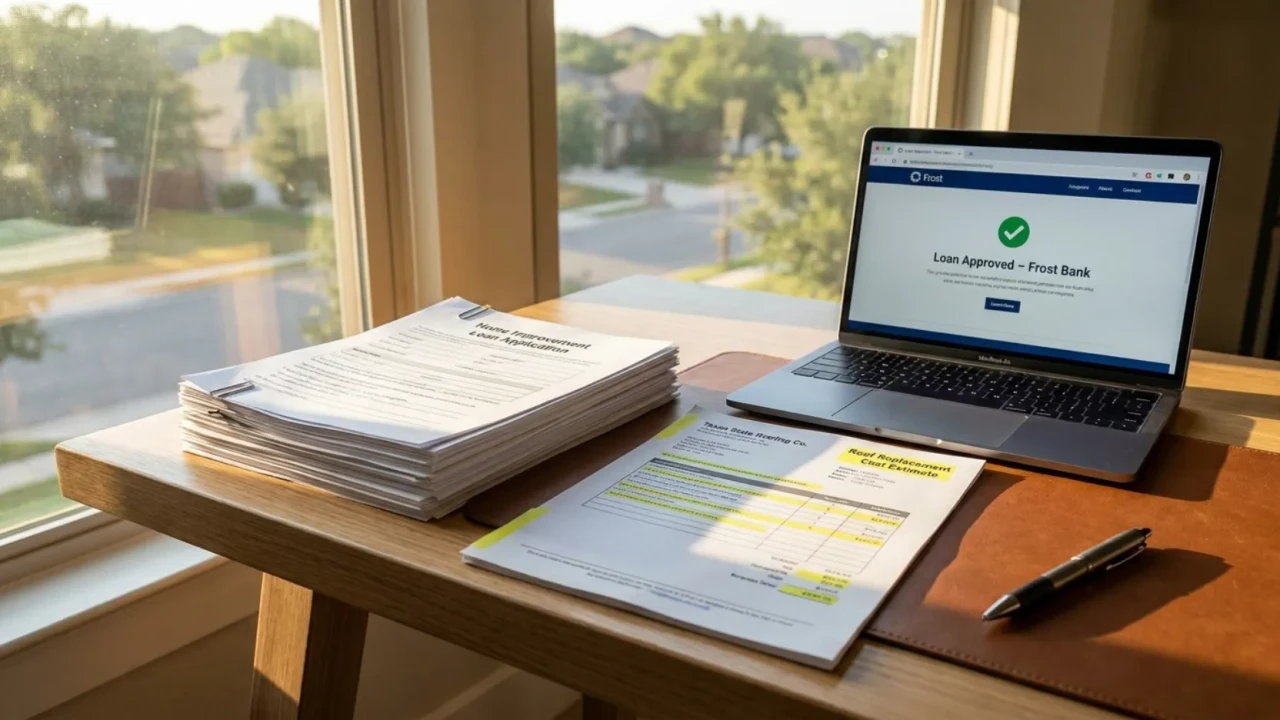
Promotional 0% APR offers: The most advertised contractor financing product is a deferred-interest or true 0% APR promotion for a fixed period, usually 12, 18, or 24 months. If you can pay the full balance within that window, this is genuinely one of the cheapest ways to finance a roof replacement. If you cannot, the terms vary significantly: some products convert to a high ongoing rate; others were structured as true 0% with no deferred interest penalty.
Standard installment loans: For homeowners who need longer terms, rates typically run from 7.99% to 18.99% APR depending on credit score, and terms range from 3 to 12 years. These are competitive with personal loans but less competitive than home equity products.
- Full interest rate and APR confirmed in writing before signing, not just the monthly payment
- Total cost of the loan over the full term calculated and reviewed
- Deferred interest vs. true 0% APR distinction confirmed in the contract language
- Origination fees disclosed: some lenders charge 1% to 5% of the loan amount upfront
- Prepayment penalty terms reviewed: you want the option to pay it off early without penalty
- The lender's name and license confirmed independently, separate from the contractor
If you have built equity in your San Antonio home, a home equity loan or home equity line of credit gives you access to some of the lowest interest rates available for a roof replacement. Rates are typically 1 to 4 percentage points lower than unsecured personal loans or contractor financing because the loan is secured by your home. For a large replacement project, that difference in rate translates to thousands of dollars in total savings over the life of the loan.
The meaningful downside is that these products use your home as collateral. If something goes catastrophically wrong with your finances and you cannot make payments, a home equity lender can foreclose. That is not a reason to avoid these products, but it is a reason to be thoughtful about borrowing more than you need and choosing a monthly payment your budget can comfortably sustain.
A HELOC is especially useful if you are planning other home improvements alongside the roof. You can draw on it for the roof replacement this year, then use remaining credit for a kitchen update or HVAC replacement later without applying for new financing. The draw period on most HELOCs runs 5 to 10 years, giving you flexibility that a lump-sum home equity loan does not. Just remember that HELOC rates are variable, so your payment can rise if the benchmark rate climbs.
| Product | Rate type | Best for | Key risk |
|---|---|---|---|
| Home Equity Loan | Fixed rate, lump sum | Homeowners who want a predictable monthly payment for the full term | Home used as collateral; approval takes 2 to 6 weeks |
| HELOC | Variable rate, revolving line | Homeowners planning multiple projects or who want payment flexibility | Rate can rise if the benchmark rate increases; requires discipline not to over-draw |
| Cash-out Refinance | New fixed mortgage rate | Homeowners with a high current mortgage rate who can reduce their rate while pulling equity | Closing costs of 2% to 5%; resets mortgage term; only makes sense if refinance rate improves your position |
- Current home appraised value confirmed or estimated through recent comparable sales in your neighborhood
- Outstanding mortgage balance subtracted from estimated value to find available equity
- Combined loan-to-value ratio checked: most lenders cap at 80 to 85% CLTV
- Closing costs calculated: home equity loans and HELOCs carry origination and appraisal fees
- Rate type confirmed: fixed for home equity loans, variable for most HELOCs
- Monthly payment verified as comfortable within current budget, not just technically possible
An unsecured personal loan from a bank, credit union, or online lender is one of the most straightforward ways to finance a roof replacement in San Antonio. You apply, get approved, receive a lump sum, and pay it back in fixed monthly installments over a set term. There is no home equity requirement, no lien placed on your home, and no restriction on how you use the funds. The approval process at many online lenders takes less than 24 hours.
The rates on personal loans are higher than home equity products because they are unsecured. For borrowers with strong credit, rates from reputable lenders run roughly 7% to 12% APR. For borrowers with fair credit, rates can reach 20% to 29.99%. The practical advice is to check your rate at two or three lenders before accepting any offer, because the rate variation on personal loans is significant across institutions.
San Antonio has several strong local credit unions worth checking before going to an online lender. Credit unions are member-owned, carry lower operating costs than banks, and frequently offer personal loan rates 2 to 4 percentage points below what commercial banks quote for the same credit profile. If you are a member of USAA, Security Service Federal Credit Union, Randolph-Brooks Federal Credit Union, or any employer credit union in the area, compare their personal loan rates first before exploring outside options.
- Check rate with at least two to three lenders before accepting any offer
- Pre-qualification with a soft credit pull confirmed so shopping does not hurt your credit score
- Origination fee disclosed: some lenders deduct 1% to 8% of the loan amount before disbursing funds
- Fixed interest rate confirmed: variable rate personal loans exist and are generally worth avoiding for this use
- No prepayment penalty confirmed: you want the flexibility to pay it off early
- Total interest cost over the full term calculated, not just the monthly payment
San Antonio sits squarely in one of the most active hail corridors in the United States. After any significant storm event, a meaningful number of roofs in Bexar County have damage that qualifies for an insurance claim. The problem is that most homeowners either do not know they have covered damage, assume the damage is not serious enough to file, or miss the claim window entirely because they waited too long after the storm.
If your roof replacement is being driven by storm damage rather than simple age, filing a homeowners insurance claim should be your first step, not your last. The potential outcome is that your insurance company funds most or all of the replacement, and your out-of-pocket cost is limited to your deductible.
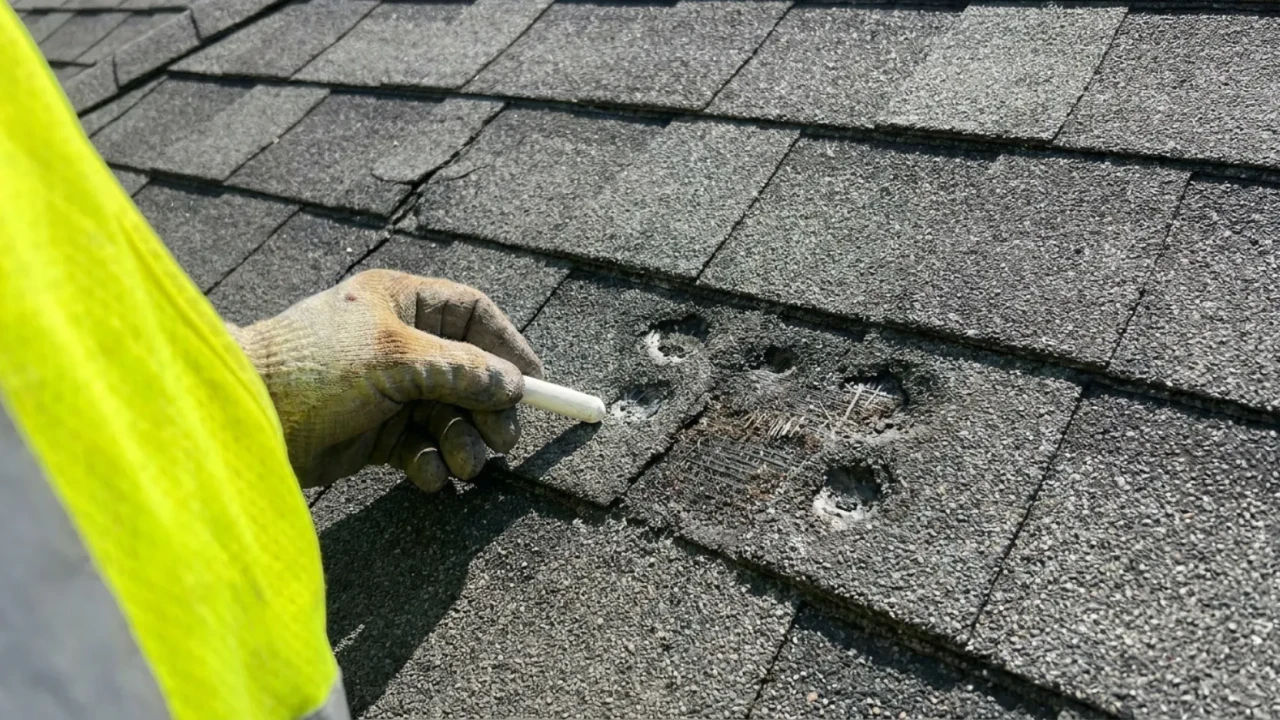
You are entitled to your own professional inspection independent of the insurance adjuster's assessment. Insurance companies are motivated to minimize claim payouts; adjusters are under pressure to keep replacement scopes as narrow as possible. A reputable San Antonio roofing contractor who is experienced with insurance work will document the damage independently, identify everything the storm affected, and provide a written estimate you can use if the adjuster's scope is lower than the actual replacement cost. If the gap is significant, a licensed public adjuster can negotiate on your behalf.
- Storm date documented: you will need to tell the insurer when the qualifying event occurred
- Independent roofing inspection completed before the adjuster visit to establish your own damage documentation
- Deductible type confirmed: flat dollar vs. percentage wind and hail deductible
- Claim filed within your policy's window: most Texas policies allow one year from the storm date
- Adjuster's scope compared to the contractor's independent estimate before accepting the settlement
- Replacement cost value vs. actual cash value coverage confirmed in your policy: ACV policies deduct depreciation, reducing the payout significantly on older roofs
Several government-backed or government-adjacent financing programs exist specifically to help homeowners fund necessary repairs and improvements. These programs are underutilized in San Antonio, partly because contractors do not always know about them and partly because homeowners assume they would not qualify. The reality is that many of these programs are more accessible than conventional financing.
The FHA Title I program allows homeowners to borrow up to $25,000 for single-family home improvements, including roof replacements, without requiring home equity as collateral. Loans are issued by approved private lenders and backed by the federal government. The program does not set a minimum credit score at the federal level, though individual lenders may have their own requirements. Terms run up to 20 years for loans over $7,500. Rates are competitive with unsecured personal loans and are fully disclosed before you commit.
PACE programs allow homeowners to finance qualifying home improvements, including cool roofs and energy-efficient roofing systems, through a special assessment added to their property tax bill rather than a traditional loan. Repayment happens over 5 to 25 years with the tax bill. PACE financing does not require a credit check and does not affect your debt-to-income ratio for most mortgage purposes. The downside is that the assessment attaches to the property, meaning it must be paid off or assumed by a buyer if you sell the home before the term ends. Not all roofing projects qualify, and PACE programs have faced scrutiny in some states over aggressive sales practices, so read all terms carefully.
The Texas Department of Housing and Community Affairs administers the HOME Investment Partnerships Program, which can provide low-income homeowners with grants or forgivable loans for roof replacement and other essential repairs. Income limits apply, and funding availability varies by year and by county. The City of San Antonio has historically offered some home repair assistance through its Neighborhood and Housing Services department. Eligibility is based on income, ownership status, and the condition of the home.
- FHA Title I lender in San Antonio identified through HUD's approved lender list at hud.gov
- Income eligibility for TDHCA programs checked at tdhca.state.tx.us before applying
- PACE terms reviewed carefully: the property tax lien follows the home, not the owner
- City of San Antonio Neighborhood and Housing Services contacted to check current program availability
- Roofing project confirmed as eligible for the specific program before investing time in the application
- All program terms in writing before any work begins or any funds are committed
Paying for a roof replacement entirely in cash is the most straightforward option for homeowners who have saved enough, but it is not always the smartest use of available savings. If you have substantial liquid savings earning meaningful interest in a high-yield savings account, depleting them completely for a roof replacement may cost you more in lost earnings than a low-interest loan would cost in interest. Running the math both ways is worth doing before deciding whether to pay entirely in cash.

A common and practical middle path is to pay a significant down payment from savings and finance only the remaining balance. A $14,000 roof replacement with a $6,000 down payment leaves only $8,000 to finance. At 8% APR over 3 years, the total interest on that $8,000 is approximately $1,030, a very manageable financing cost for a major home improvement.
Some roofing contractors in San Antonio are open to a structured payment schedule that does not involve a third-party lender at all. A deposit to secure materials, a second payment when work begins, and a final payment on completion is a standard arrangement that many contractors prefer because they avoid the 2% to 5% transaction fee that lender-facilitated financing programs charge them. If you have a strong relationship with a contractor or come with referrals, it is worth asking about a direct payment schedule before turning to outside financing. Not all contractors offer this, and you should never pay more than 10% to 30% upfront before materials are ordered.
- Full cash payment compared against interest cost of a low-rate loan before deciding which costs less over time
- Emergency fund preserved: do not empty savings entirely for a roof replacement if it leaves you without a financial cushion
- Partial payment + small loan calculated to find the combination with the lowest total cost
- Contractor payment schedule confirmed in writing with specific milestones for each payment
- Upfront deposit kept within a reasonable range: 10% to 30% is standard; avoid contractors who demand 50% or more upfront
- Final payment withheld until work is fully inspected and any punch list items are resolved
The right financing option depends on your credit, your home equity, how quickly you need the work done, and how much total interest you are willing to pay. Use this comparison as a starting framework, then get actual rate quotes before making a final decision.
| Financing option | Typical rate (2026) | Collateral required? | Speed to funding | Best for |
|---|---|---|---|---|
| Contractor financing (0% promo) | 0% if paid in the promo window; up to 29.99% after | No | Same day | Homeowners who can pay off the balance before the promotion ends |
| Contractor financing (standard) | 7.99% to 18.99% APR | No | Same day | Convenience-focused buyers with average or better credit |
| Personal loan (bank or credit union) | 7% to 29.99% APR | No | 1 to 5 business days | Homeowners without equity who want to shop rates independently |
| Home equity loan | 6.5% to 9.5% APR | Yes (your home) | 2 to 6 weeks | Homeowners with significant equity who have time before the work must begin |
| HELOC | Variable, roughly 7% to 10% | Yes (your home) | 2 to 6 weeks | Homeowners planning multiple projects or who want a reusable credit line |
| FHA Title I loan | Market rate, varies by lender | No (up to $7,500); lien above that | 1 to 3 weeks | Homeowners with limited equity and moderate credit |
| Insurance claim | Only your deductible out-of-pocket | N/A | 2 to 8 weeks | Roofs damaged by a qualifying storm event in San Antonio |
| Cash / partial cash | 0% (no financing cost) | N/A | Immediate | Homeowners with available savings who want to avoid financing costs |
There are specific financing structures and sales tactics that regularly cost San Antonio homeowners far more than they expected to pay. Knowing what to look for protects you from the most common and expensive mistakes.
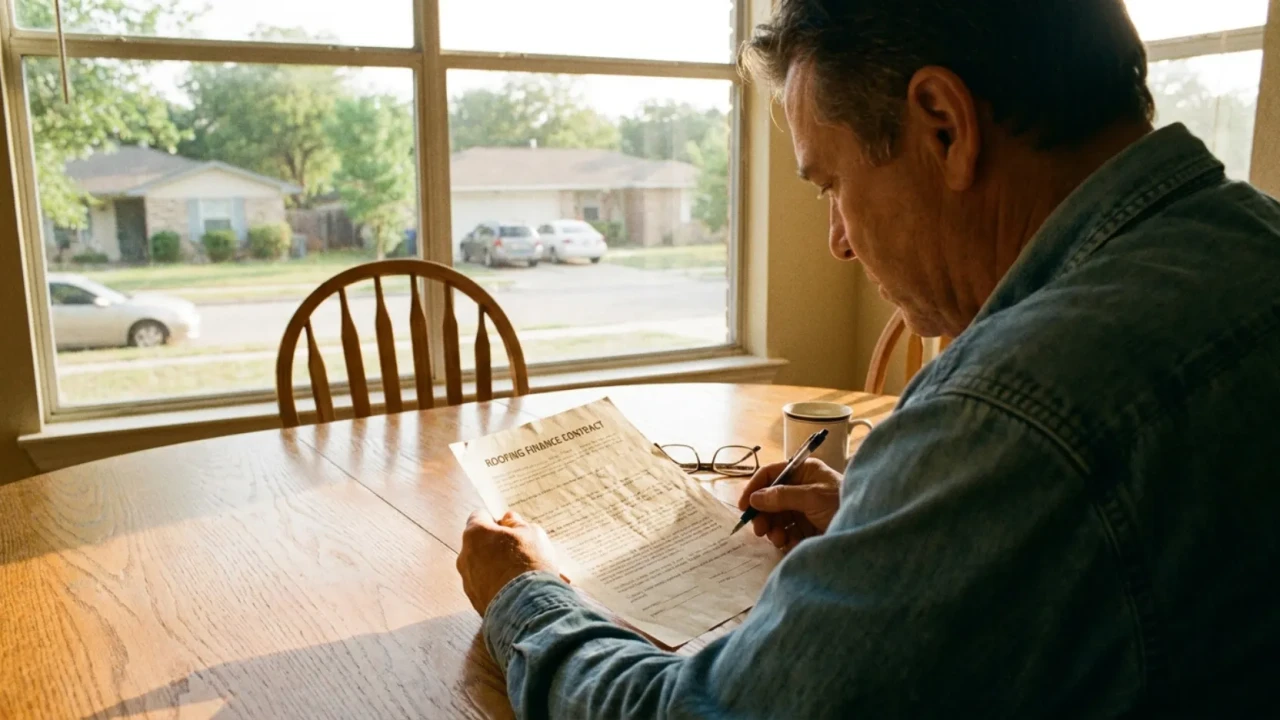
1. Accepting the first offer without comparing. Financing offers on the same loan amount can vary by 5 to 10 percentage points across lenders. On a $15,000 roof, that rate difference can mean paying $4,000 to $8,000 more over the life of a 7-year loan. Spending 30 minutes getting two or three quotes is the highest-return action you can take before signing any financing agreement.
2. Choosing a longer term to get a lower monthly payment. Extending a loan from 5 years to 10 years cuts the monthly payment but roughly doubles the total interest paid. The question to ask is: what is the total cost of this loan, not what is the monthly payment. A $12,000 roof at 10% APR over 5 years costs about $15,300 total. The same loan over 10 years costs about $19,100 total. The monthly payment on the 10-year version is lower, but the total cost is almost $4,000 more.
3. Financing with a contractor who bundles the cost into the roof price. Some less reputable roofing operations in San Antonio build the financing cost into their price, charge a premium for "accepting" certain payment methods, or mark up the job to cover a financing fee they absorb. Always get the cash price and the financed price in writing so you know exactly what the financing is actually costing you on this specific job.
4. Missing the promotional period on a deferred interest offer. This is the most common and most expensive financing mistake San Antonio homeowners make with contractor-offered financing. If your promotional period is 18 months and the balance on month 19 is $1, the deferred interest calculated on the full original loan amount may come due in full on that date. Set a calendar reminder well before the end date and pay the balance in full at least 30 days before it expires to be safe.
5. Using a high-interest credit card as a fallback without a payoff plan. Putting a roof on a credit card at 24% to 29% APR without a firm payoff timeline is genuinely expensive. If you use a card, use one with a 0% introductory APR offer and treat the payoff deadline the same way you would treat a contractor financing promo period: build a plan to pay it off before the rate resets.
- Checked whether your roof damage qualifies for an insurance claim before exploring any loan product
- Written estimates from at least two San Antonio roofing contractors in hand before shopping for financing
- Your credit score checked so you know what rate tier to expect before applying
- Home equity estimated if you own your home: this determines whether home equity products are available to you
- Government assistance programs reviewed for income eligibility before pursuing conventional financing
- Total cost of the loan calculated for the full term, not just the monthly payment
- APR compared across all offers: this is the single most useful number for comparison purposes
- Deferred interest vs. true 0% APR distinction confirmed in writing for any promotional offer
- Origination fees, processing fees, and prepayment penalties disclosed and factored into the total cost
- Promotional period end date noted with a calendar reminder 60 days before the deadline
- At least two offers compared before accepting any financing product
- Full financing contract read in its entirety, not just the summary page
- The lender's name and license verified independently from the contractor
- Your right to cancel the financing agreement within the legally required rescission period confirmed
- Monthly payment amount, term, interest rate, and total repayment amount all written into the contract
- Contractor's payment schedule confirmed: deposit amount, progress payment trigger, and final payment conditions
Get a free roof replacement estimate in San Antonio
Tell us about your roof and we will walk you through what the replacement costs, what financing options fit your situation, and whether your damage may qualify for an insurance claim. No pressure, no obligation.